

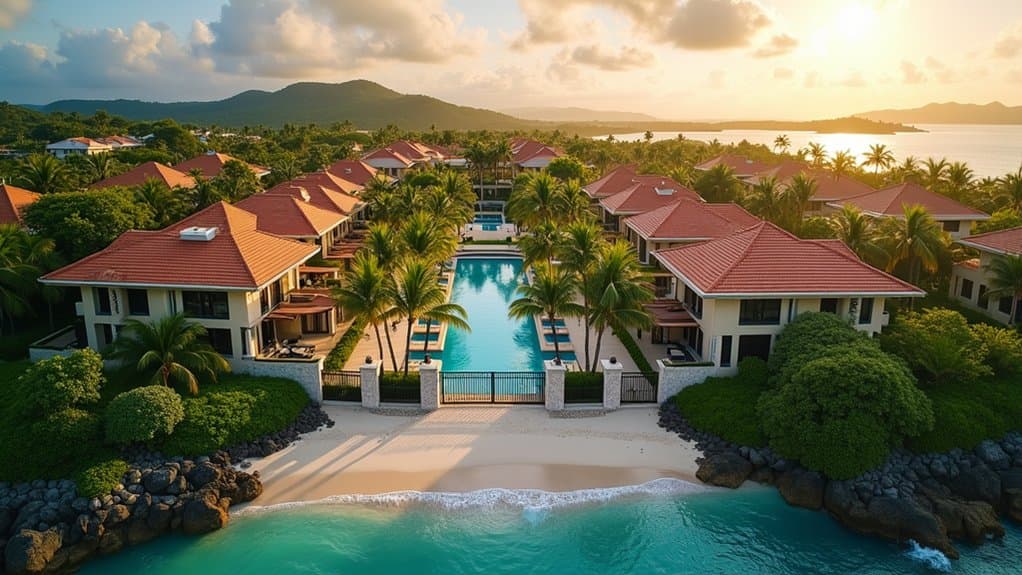
I need to tell you about a call I got last Tuesday. German investor, early fifties, ready to wire $380,000 for a three-bedroom villa in Sosua Ocean Village. He'd seen the photos—the infinity pool, the manicured lawns, the smiling families at the water park. Beautiful stuff.
Then he asked me a question that probably saved him from making a terrible mistake: "Guido, what's the electricity bill going to run me?"
Most lawyers would dodge that. It's not sexy. It doesn't close deals. But I've been doing this for 40 years, and I've learned that the unglamorous questions are the ones that separate real investments from expensive regrets.
The answer, by the way, is somewhere between $300 and $500 per month if you leave the AC running. That's the kind of detail that turns a projected 12% gross yield into a 7% net yield. Still good. But very different from what the sales brochure promised.
This is what we're going to talk about. Not the fantasy version of Sosua Ocean Village, but the actual mechanics of owning property here. The rental income that real owners actually see. The infrastructure quirks that matter when you're trying to work remotely or rent to digital nomads. The legal realities that protect—or threaten—your investment.
Because here's the thing about SOV: it's one of the better-run communities on the North Coast. The amenities are real, the security works, and the rental market has genuine depth. But it's not magic. It's a business decision that requires you to understand what you're actually buying.
Key Takeaways
- Rental Reality: Well-managed two-bedroom condos average 65-70% occupancy year-round, with net yields between 6-9% after all expenses—not the 12-15% gross yields often advertised
- Infrastructure Edge: SOV operates on a private power grid with 99.9% uptime and houses over 1,800 solar panels, solving the electricity stability issues that plague most North Coast properties
- Legal Foundation: Every property transaction must include a verified Deslinde under Law 108-05; buying without this title verification is the primary cause of ownership disputes in the DR
- Market Position: New construction prices at $2,200-$2,500 per square meter compared to $4,000+ in Miami, with three-bedroom villas trading between $450,000-$650,000 as the most liquid resale segment
- Community Scale: This is a 160-acre master-planned development, not a typical condo complex—recent expansion with 27 new buildings in "Laguna City" signals long-term developer confidence
Understanding What Sosua Ocean Village Actually Is
Most people hear "gated community" and think they understand what that means. They don't.
SOV isn't just a neighborhood with a gate. It's a privately managed micro-city covering 650,000 square meters of oceanfront land. When I say privately managed, I mean everything from the roads to the sewage treatment plant operates independently of the municipal infrastructure that serves the rest of Sosua.
This matters more than you might think.
The town of Sosua—the one you drive through to get here—suffers from the same infrastructure problems that affect most Dominican municipalities. Power outages are common. Water pressure fluctuates. Street maintenance depends on political cycles and budget availability. None of this is unusual for the Caribbean. It's just reality.
Inside SOV, those problems largely disappear. The community runs on its own circuit with backup generators that maintain 99.9% uptime. There's a centralized sewage treatment system instead of individual septic tanks. The roads are paved and lit with 390 solar-powered street lights. When the national grid fails—and it does—the lights stay on inside the gates.
You're not buying into Dominican infrastructure. You're buying into private infrastructure that happens to be located in the Dominican Republic. That distinction is worth understanding before you sign anything.
The Demographic Reality (Who Your Neighbors Actually Are)
The marketing materials show happy families at the water park. That's accurate, but incomplete.
Post-2020, the resident profile shifted dramatically. What used to be 60% retirees and 40% tourists is now closer to 30% remote workers, 40% families, and 30% retirees. This isn't speculation—it's what we see in the rental agreements and residency applications that cross my desk.
The digital nomad boom hit the North Coast hard. While Cabarete has become a popular hub on platforms like Nomad List—though rankings fluctuate significantly based on internet speed measurements and other algorithm factors—SOV captured a significant chunk of this market because it solved the two problems that kill most remote work setups: reliable internet and stable electricity.
Roughly 85% of residents speak English fluently. This creates a strange dynamic where you can live in the Dominican Republic without really living in Dominican culture. Some people love this. Some people hate it. Neither response is wrong, but you should know which camp you're in before you buy.
The community enforces a strict 10:00 PM quiet hours policy. Security patrols this actively. If you're looking for the vibrant nightlife that Sosua is famous for, you'll be disappointed. That scene exists two kilometers down the road in El Batey, but it doesn't penetrate the gates. SOV is designed for people who want to sleep with their windows open, not for people who want to hear bass thumping until 2 AM.
Over 60% of residents use golf carts as their primary transportation within the community. There are dedicated charging stations. The sidewalks are wide enough for pedestrians and carts to coexist. This isn't a detail—it's a lifestyle marker that tells you what kind of place this is.
The Price of Entry (What Money Actually Buys in 2026)
Let's talk numbers, because this is where most investors start making decisions based on incomplete information.
Entry Level: $119,000 - $250,000
The Laguna City phase launched with studio apartments at $109,000 during pre-construction. By 2026, expect to pay $119,000 to $130,000 for remaining inventory or resale units. These are genuinely affordable entry points for Caribbean oceanfront living, but understand what you're getting: small units in newer buildings without established rental histories. You're betting on the community's continued growth rather than buying into proven performance.
One and two-bedroom condos in the older phases—the ones with track records—typically run $150,000 to $250,000. These are the workhorses of the rental market. Turnkey units in good condition can hit 70% occupancy if managed properly.
The Sweet Spot: $450,000 - $650,000
Three-bedroom villas with private pools. This is where the liquidity lives. When we list a properly priced villa in this range, average days on market runs 45-60 days. Compare that to the six-month average for the broader North Coast.
Why? Because this price point captures both the long-term rental market (expat families paying $1,800-$2,500 monthly) and the short-term vacation market (nightly rates of $250-$600 depending on season). You have two exit strategies instead of one.
Luxury Tier: $1M+
Oceanfront lots command $400+ per square meter for land alone. Finished estates sell between $1.5M and $3M. This is a different game entirely—you're competing with Sea Horse Ranch and the ultra-luxury segment where buyers are less concerned with yield and more concerned with exclusivity.
The mistake I see investors make is assuming that higher price equals higher return. It doesn't. The luxury market moves slower, has fewer buyers, and often generates lower yields because the carrying costs eat into returns.
What Owners Actually Earn (The Rental Math That Matters)
Here's where we separate fantasy from reality.
A well-managed two-bedroom condo in SOV averages 65-70% occupancy year-round. During high season (January through March), you might hit 90%. During low season (September and October), you might drop to 40%. This variability is why annual averages matter more than peak performance.
Average daily rates for a three-bedroom villa run $250-$350 in low season and $450-$600 during Christmas and Easter. Do the math: that's roughly $80,000-$120,000 in gross annual revenue for a villa that might have cost you $550,000.
Sounds great until you start subtracting expenses.
Professional property management takes 20-25% of gross revenue. This covers check-in coordination, cleaning between guests, maintenance issues, and guest communication. You can try to self-manage via Airbnb, but you'll need a local person for key handovers—SOV security requires it.
Electricity is the killer. Private grid rates hit $0.24-$0.26 per kilowatt-hour base, often reaching $0.30 or higher after fuel surcharges and tier adjustments. A villa with AC running constantly can cost $300-$500 monthly. Most owners learn to program thermostats and educate guests about conservation, but it's a constant battle.
HOA fees range from $250 monthly for studios to $600+ for large villas. This covers security, water, garbage collection, and common area maintenance. It's non-negotiable and tends to increase 3-5% annually.
Property tax runs 1% annually on cumulative property value exceeding approximately $175,000—the threshold adjusts annually for inflation, so this 2026 projection is based on current trends. If you own multiple properties in the DR, they stack.
Insurance costs roughly 1% of replacement value annually for hurricane and fire coverage.
After all of this, realistic net ROI sits between 6% and 9%. Still solid by Caribbean standards. Still better than most US markets. But nowhere near the 12-15% gross yields that developers advertise.
The investors who do best here are the ones who use the property themselves for 4-6 weeks annually and rent it the rest of the year. They're not trying to maximize yield—they're trying to offset ownership costs while maintaining a vacation home. That's a different calculation entirely.
The Rental Market's Actual Drivers
Eighty percent of bookings come through Airbnb. Another 15% through Booking.com. Maybe 5% direct or referral.
This tells you something important: your success depends entirely on your Airbnb ranking and reviews. A villa with 4.9 stars and 50+ reviews will stay booked. A villa with 4.3 stars and spotty reviews will sit empty.
"Sosua Ocean Village" is the number one searched keyword for families looking for North Coast rentals on Airbnb. The community's brand does heavy lifting for individual property owners. But you still need to deliver on expectations—clean property, responsive communication, accurate listings.
The tenant profile breaks down roughly like this:
Short-term (1-7 nights): Families from the US and Canada looking for safe, all-inclusive-style accommodations without the all-inclusive resort. They want the water park, the beach club, the security. They're willing to pay $400-$600 nightly during peak season.
Medium-term (1-3 months): Digital nomads and remote workers. They want reliable internet, quiet work environments, and access to the gym and pools. They're less price-sensitive than tourists but more demanding about infrastructure. They'll pay $2,000-$3,500 monthly.
Long-term (6-12 months): Expat families with kids attending International School of Sosua. They want stability, community, and proximity to the school. They'll pay $1,800-$2,500 monthly and they're the best tenants you'll ever have—they take care of the property because they're living there.
The mistake is trying to serve all three markets with one property. You need to pick a lane. A villa optimized for short-term vacation rentals (fully stocked kitchen, beach toys, crisp linens) looks different from a villa optimized for long-term family living (durable furniture, office space, storage).
Infrastructure That Actually Works
Let me tell you why this matters more than you think.
The Dominican Republic has historically struggled with two things that kill real estate value: unreliable electricity and sketchy internet. SOV solved both problems through private investment.
The community operates on a private circuit with backup diesel generators. When the national grid fails—which happens regularly in Sosua proper—SOV maintains power. This isn't theoretical. During the widespread outages in late 2024, properties inside the gates kept their refrigerators running and their ACs humming while the rest of town went dark.
This is worth real money. A property that can guarantee 24/7 power commands premium rents from remote workers who can't afford downtime. It also protects your investment from the food spoilage and appliance damage that plague properties on the municipal grid.
Internet comes via fiber optic through Cable Del Norte and Claro, with speeds up to 300 Mbps available. Starlink is also widely used as backup, providing 100-200 Mbps median speeds. The combination gives you redundancy that few Caribbean properties can match.
Water quality deserves mention because it's rare. SOV has its own wastewater treatment plant—one of the few in the region—and a private water filtration system. You still want to drink bottled water, but you can shower and brush your teeth without worry. This is not standard in the DR.
The roads are paved and lit. This sounds basic until you've driven the potholed municipal roads outside the gates. The difference is stark enough that it affects property values—buyers pay premiums for communities where they don't need a 4x4 to reach their driveway.
5G cellular coverage works throughout the community via Altice and Claro networks. Food delivery services like PedidosYa and Komida deliver directly to villa doors. These are small things that add up to a lifestyle that feels more like suburban Florida than Caribbean island living.
The Security Architecture (What You're Actually Paying For)
SOV employs over 50 uniformed security officers working 24/7 shifts. There's CCTV surveillance at all entry points. Mobile patrols circulate through residential areas on motorcycles and golf carts. A three-meter perimeter wall with electrified fencing in vulnerable sections encloses the entire property.
Access control uses biometric/RFID cards for owners. Guests must register with passport scans at the gate. This creates friction—you can't just have friends drop by without advance notice—but it also creates the security that drives property values.
The crime index for Sosua proper sits at 65.23 (Moderate) according to Numbeo data. Inside SOV, theft incidents are statistically negligible. Less than 1% of residents report security issues annually. This gap is what you're paying for with HOA fees.
The community has a private ambulance service agreement with response times under 10 minutes. Compare that to 30+ minutes for public emergency services. There's a dedicated Politur (Tourist Police) station nearby that patrols adjacent beach areas.
Fire suppression systems meet US standards—rare for the DR. Buildings have hydrants and sprinkler systems. This matters for insurance costs and actual safety.
The noise enforcement is real. The HOA imposes $100 fines for first violations after 10:00 PM, escalating for repeat offenders. Security actively patrols for noise complaints. I've seen owners fined for late-night pool parties. This creates the quiet environment that families and retirees want, but it's not for everyone.
The Legal Foundation (What Actually Protects Your Investment)
Every competent real estate transaction in the Dominican Republic starts with one document: the Deslinde.
Law 108-05 mandates that all property sales must have a GPS-surveyed title. This is not optional. This is not bureaucratic nonsense. This is the only thing preventing boundary disputes that can drag through courts for years.
I have seen investors—smart, successful people—lose oceanfront properties because they skipped this step. They trusted the seller's word. They trusted the pretty photos. They didn't verify the title. Then they discovered their "beachfront lot" was actually 20 meters inland, or that the neighbor's property line cut through their planned pool location.
The Deslinde costs a few thousand dollars to verify. The alternative costs tens of thousands in legal fees and potentially your entire investment. This is not a difficult calculation.
The Dominican Republic has forced heirship laws for citizens, but foreigners can bypass this by holding property in a Dominican Company (SRL) or using a foreign will registered in the DR. This is critical estate planning that most buyers ignore until it's too late.
Transfer tax runs 3% on the assessed value. Notary fees add another 1-1.5% of the purchase price. Title insurance is available through Stewart Title and other major insurers—get it. Budget 5% of purchase price for total closing costs.
Some properties in SOV qualify for CONFOTUR benefits under Law 158-01. This grants 15-year exemption on the 1% annual property tax and 3% transfer tax for first-time buyers. But this only applies to newly approved properties in specific phases. Don't assume your unit qualifies—verify with legal counsel before closing.
The HOA bylaws are legally binding. They prohibit hostels, regulate exterior paint colors, and control rental policies. Violate them and you'll face fines or forced compliance. Read them carefully before buying because they affect how you can use your property.
Maritime Zone Law 305-68 establishes a 60-meter public domain from the high-tide mark. No private construction allowed in this zone. SOV respects this setback, which protects ocean views but also limits beachfront development. This is actually good for property values—it prevents the kind of overdevelopment that ruins other beach communities.
A cash transaction with clean title typically closes in 30-45 days. Financing complicates everything. Dominican banks offer loans to foreigners but expect 30% down and 8-10% interest rates. The developer financing available in SOV—50% down, 5-year term at 6.5-7%—is actually competitive by local standards.
The Amenities That Drive Value
The community features four distinct pool areas, including an infinity pool at Al Porto and a lap pool at the gym. There's a two-story oceanfront gym (International Gym) that's genuinely the best facility on the North Coast—not marketing hyperbole, actual fact.
Laguna SOV functions as an entertainment center with a fishing lagoon, inflatable water park, and two-story restaurant. This attracts weekend traffic from as far as Santiago, which creates noise and crowds on Saturdays but also demonstrates the amenity's regional appeal.
The tennis center features clay courts with professional coaching. The spa offers luxury treatments comparable to five-star hotels. There are two large playgrounds (dry and wet) that make this the primary weekend destination for expat families in the region.
On-site dining includes Al Porto (Italian/Pizza), Restaurant Maria (upscale oceanfront), and Laguna (family/casual). The food is decent, not exceptional. You're paying for convenience rather than culinary excellence. But the convenience matters—it's the difference between a property that rents easily and one that sits vacant.
Santa Fe houses a microbrewery producing craft beer on-site. This is genuinely unique for the area and creates a social hub that attracts residents and visitors.
The critical thing to understand is that these amenities drive rental demand. Families booking vacation rentals specifically search for "Sosua Ocean Village" because of the water park. Digital nomads choose SOV because of the gym and coworking-friendly spaces. The amenities aren't just nice-to-haves—they're the reason your property stays occupied.
Residency Pathways (The Plan B Blueprint)
The Dominican Republic offers several residency options that make sense for property investors.
| Visa Type | Income Requirement | Investment Minimum | Processing Time | Best For |
|---|---|---|---|---|
| Pensionado | $1,500 USD/month pension +$250 per dependent |
None | 45-60 days | Retirees with guaranteed pension income |
| Rentista | $2,000 USD/month passive income (5-year history required) |
None | 60-90 days | Digital nomads, investors with rental/dividend income |
| Investment Visa | None | $200,000 USD (registered company or bank CD) |
90-120 days | High net worth individuals, business owners |
You become a tax resident if you spend 182+ days in the DR. Foreign pensions are generally tax-exempt. Law 171-07 grants retirees tax exemptions on importing household goods and one vehicle.
Permanent residents can apply for citizenship after two years. Standard temporary residents wait five years. The citizenship path is straightforward compared to most Caribbean nations.
We work with immigration lawyers in Santo Domingo who've helped numerous investors and professionals obtain residency and citizenship. The process is bureaucratic but manageable with proper guidance.
The Global Comparison (Where SOV Actually Sits)
Let's be honest about where this investment stands relative to other markets.
| Factor | Sosua Ocean Village | Miami, Florida | Dubai, UAE | Algarve, Portugal |
|---|---|---|---|---|
| Price per sqm | $2,200 - $2,500 | $4,000+ | $3,500+ | $3,200+ |
| Property Tax | 1% (on value >$175k) | 0.8-1.5% (on total value) | 0% (one-time 4% transfer fee) | 0.3-0.8% |
| Rental Income Tax | 27% (with deductions) | 22-37% federal + state | 0% | 24% (non-resident) |
| Net Rental Yield | 6-9% | 3-5% | 5-7% | 3-4% |
| Cost of Living Index | 55 (vs US 100) | 100 | 85 | 75 |
| Climate Risk | Moderate (hurricane season) | High (hurricanes + flooding) | Low | Low |
The value proposition is clear: you're getting 40-50% lower acquisition costs than comparable markets with higher net yields. The cost of living runs 45% below US levels, which matters if you're planning to spend significant time here.
The DR grants automatic 30-day tourist visas to citizens of over 100 countries. Time zone alignment with Eastern Standard Time makes it perfect for North American remote workers—no 7-hour time difference like Dubai or 12-hour difference like Bali.
Healthcare costs are dramatically lower. A comprehensive premium health insurance plan for a couple in their fifties runs about $1,200 annually through Humano or Universal. That's not a typo.
The trade-offs are obvious. You're not getting Dubai's zero recurring property tax (though they do charge a one-time 4% transfer fee) or Portugal's EU passport access. You're getting Caribbean infrastructure with Caribbean risks. But you're also getting Caribbean prices with Caribbean lifestyle.
Who This Works For (And Who Should Look Elsewhere)
The ideal SOV investor holds for 5+ years. Data shows that investors who maintain this timeline see the highest compounding returns from appreciation plus rental yield. The 3% transfer tax and 5% realtor commissions make flipping unprofitable—you need time for appreciation to overcome transaction costs.
Seventy percent of satisfied owners cite safety and amenities as their primary reason for staying, not ROI. If you're purely chasing yield, there are better options. If you want a place where your family can vacation safely while generating income the rest of the year, SOV makes sense.
The wrong buyer profile is equally clear. If you want walkability to town nightlife, look elsewhere—downtown Sosua is two kilometers away and there's no sidewalk. If you hate HOA rules and want complete autonomy over your property, gated communities will frustrate you. If you need to flip within 12 months for quick profit, the math doesn't work.
SOV positions itself as "affordable luxury"—more expensive than open neighborhoods but 30-40% cheaper than Sea Horse Ranch. You're paying for infrastructure and security without paying for ultra-luxury finishes. Some buyers love this positioning. Others find it neither fish nor fowl.
The resale market is liquid for properly priced properties, but cash buyers dominate. Financing for resale buyers is difficult, which limits your buyer pool slightly. Plan your exit strategy accordingly.
Successful owners visit 2-3 times annually to inspect their property. Tropical salt air requires constant maintenance oversight. The investors who struggle are the ones who buy remotely and never visit—they're shocked when they discover rust, mold, or deferred maintenance issues that could have been caught early.
The Verdict (What I Actually Tell Clients)
Here's what I tell people when they ask me about SOV.
If you're looking for a place to park capital safely while generating modest income, this works. The infrastructure is solid, the rental market has depth, and the legal framework protects foreign ownership. You're not going to get rich quick, but you're also not going to lose your shirt if you do basic due diligence.
If you're trying to maximize yield at all costs, you can probably do better elsewhere. The HOA fees and electricity costs eat into returns. The 3% transfer tax and closing costs create friction. The rental income is good but not exceptional.
If you want a second home where your family can spend Christmas and Easter while covering most of your carrying costs through rentals, this is one of the better options in the Caribbean. The security lets your kids roam freely. The amenities keep them entertained. The infrastructure means you're not dealing with power outages during your vacation.
The key is buying right. Verify the Deslinde. Understand the HOA bylaws. Budget realistically for expenses. Don't trust projected yields