

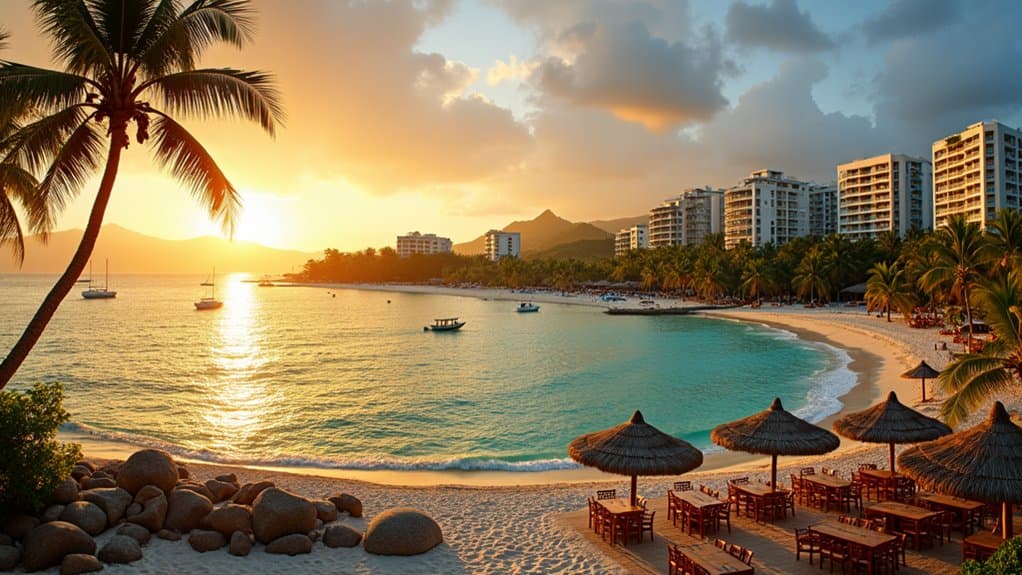
The flight from Miami to Puerto Plata Airport takes two hours and forty minutes. The drive from the airport to Sosúa takes twelve minutes if you catch the lights right. In that short span, you'll pass three billboards advertising luxury condos, two roadside fruit stands, and at least one stalled motorcycle being pushed to the shoulder. This is not a warning—it's context. Because if you're reading this expecting a sanitized pitch about Dominican Republic beaches and Caribbean sunsets, you're in the wrong place.
I've been practicing real estate law in Sosúa since 1986. That's forty years of watching investors arrive with dreams and leave with either equity or expensive lessons. The North Coast—Sosúa, Cabarete, and the stretch toward Puerto Plata—has changed dramatically in that time. But what hasn't changed is this: the people who succeed here are the ones who understand what they're buying before they wire the deposit.
Sosúa doesn't politely ask for your attention. It demands it. The town sits wedged between two bays, with Sosua Beach drawing the swimmers and Playa Alicia attracting the sunset crowd. Pedro Clisante, the main pedestrian strip, closes to traffic at 6:00 PM most evenings—enforcement has improved significantly as part of the "New Sosúa" government initiative—and transforms into a dense corridor of restaurants, bars, and noise that regularly exceeds 85 decibels. If you're expecting the quiet sophistication of Portugal's Algarve, you'll be disappointed. If you're expecting the sterile predictability of a Dubai Marina tower, you'll be confused. Sosúa is neither. It's a working town with a tourism overlay, and the friction between those two realities creates both opportunity and headache.
Key Takeaways
- Airport Proximity: Sosúa is 6.4 km from Gregorio Luperón International Airport (POP)—a genuine 10-15 minute drive, not the inflated "close to airport" claims you'll see elsewhere.
- Legal Necessity: Never purchase property without a verified Deslinde under Law 108-05. This is not optional advice; it's the difference between owning land and owning a lawsuit.
- Rental Reality: Short-term rental yields in Sosúa average 6-10% annually, with high-performing ocean-view units reaching 12%—but those numbers assume you handle vacancies, management fees (20-25%), and seasonal fluctuations honestly.
- Cost Structure: Total closing costs (transfer tax, notary, legal) run 4-5% of purchase price. The annual IPI property tax is 1% on value exceeding approximately $166,000 USD, with full exemption for owners over 65 using the property as primary residence—provided it's their only real estate holding in the country.
- Infrastructure Reality: Starlink has solved the internet problem (RD$2,900/month for reliable service), but electricity remains unstable. Solar ROI is now under three years for high-consumption households.
The Coastline: What You're Actually Buying
Playa Sosúa is the town's commercial heart. It's a crescent bay with calm, reef-protected water that stays turquoise even when the Atlantic is churning. The snorkeling is decent—parrotfish, sergeant majors, the occasional barracuda if you swim out past the buoys. But this beach is not private. It's lined with vendors selling coconuts, grilled fish on sticks, and boat tours to nowhere in particular. The sand is clean. The vibe is crowded. If you buy a condo with "beach access" in Sosúa, this is where you'll be walking.
Playa Alicia is different. Formed in 2003 when river dredging and shifting Atlantic currents dumped sand along what used to be a cliffside, it's locally called the "Miracle Beach." The sand is finer, the crowd is thinner, and the sunsets face west instead of north. Properties near Alicia trade at a premium because the beach feels more residential—fewer hawkers, more families with inflatable toys. But it's also exposed. When the wind picks up, the waves get choppy. This is not the place for calm-water swimming year-round.
Cabarete is fifteen minutes east. The beach there is famous for kitesurfing—it's consistently ranked in the Top 10 global destinations and hosts the "Master of the Ocean" tournament every year. That designation is not tourism marketing; it's a real economic driver. The kitesurfing crowd is affluent, active, and willing to pay $2,400-$3,200 USD per month for a 3-bedroom condo within walking distance of the water. The downside? The wind that makes Cabarete perfect for kiting makes it terrible for swimming. The waves are constant, the undertow is real, and the beach is lined with gear rental shops instead of beach chairs.
Then there's Playa Chiquita, the small cove near the casino that most tourists miss entirely. It's rocky, the access is awkward, and there's no infrastructure. But it's quiet. Investors who market "private beach access" are usually referring to this spot, which is technically public but functionally ignored by the tour groups.
Climate: The Trade Winds and the Green Season
The North Coast averages 3,000 hours of sunshine per year, which sounds impressive until you realize that the "Green Season" (May through November) involves short, intense bursts of rain that can flood the streets in fifteen minutes. The rain usually comes at night, leaving the days largely sunny, but the humidity during those months is oppressive. The trade winds—the Alisios—blow predominantly from the northeast and provide natural cooling, keeping Sosúa properties 3-5°F cooler than Santo Domingo during summer months. This matters for electricity costs. A well-positioned hillside villa can get by with minimal air conditioning if you orient the windows correctly. A poorly designed condo in the center of town will cost you $150+ USD per month in electricity just to stay comfortable.
Hurricane season runs June through November, though direct hits on the North Coast are rare. The bigger issue is tropical storms that stall offshore and dump rain for three days straight. The drainage in Sosúa has improved since the 1990s, but certain streets still flood. If you're buying a ground-floor unit, check the elevation relative to the street. I've seen too many investors learn about water damage the expensive way.
The Sosúa Lifestyle: Pedro Clisante and Beyond
Pedro Clisante is the pedestrian strip that defines Sosúa's nightlife. It's closed to cars most evenings after 6:00 PM—enforcement has been more consistent since the "New Sosúa" initiative began in 2024—transforming into a walkable corridor of restaurants, bars, and street vendors. The noise level is high—85+ decibels is common on weekends—and the crowd is mixed. You'll see retirees nursing beers at sidewalk tables next to groups of twenty-somethings heading to the clubs. The Dominican Republic nightlife here is not subtle. Bachata and Merengue thump from open doorways. Street vendors sell everything from cigars to knock-off watches. If you're sensitive to noise or crowds, do not buy a condo overlooking Pedro Clisante. The premium for "center of town" location is not worth the sleep deprivation.
The government has been pushing the "New Sosúa" initiative since 2024, aimed at shifting the town's reputation toward family-friendly tourism. This has meant stricter controls on street activities, noise enforcement, and visible police presence. Iconic venues like Sky Lounge have been converted into residential apartments. New upscale spots like Level Up and Bollywood Bliss are replacing older dive bars. The result is a town in transition. The gritty edge is being sanded down, but it hasn't disappeared entirely.
For families, the International School of Sosúa (ISS) is the anchor. It's accredited by SACS (Southern Association of Colleges and Schools) and offers a US-curriculum diploma. Annual tuition runs $5,000 to $11,000 USD depending on grade level—the lower end covers Pre-K through Elementary, while high school students with lab fees and matriculation costs push closer to the upper limit. That's still a fraction of comparable private schools in Miami or New York. The school has about 200 students, so it's small, but the quality is solid. If you're relocating with kids, this is your primary option unless you're willing to drive to Puerto Plata.
The expat community here is dense and established. English is widely spoken in the tourist zones, though you'll need basic Spanish for anything involving government offices, utilities, or tradespeople. The social scene splits along demographic lines: retirees tend to cluster around the beach clubs and golf courses, while younger expats gravitate toward Cabarete's yoga studios and surf spots.
Cabarete: The Alternative
Cabarete attracts a different crowd. It's younger (20s-40s), more active, and more transient. Life revolves around wind and waves—afternoons are for kitesurfing, mornings are for yoga, and evenings are for beachfront bars. The town is essentially a single strip along the beach, so everything is walkable. You don't need a car here the way you do in Sosúa.
The housing stock in Cabarete is dominated by beachfront condos. Single-family villas exist but are rare and expensive. The advantage of condos is management—most developments include property management services, which makes remote ownership easier. The disadvantage is HOA fees, which can run $200-$400 USD per month depending on amenities.
Rental yields in Cabarete are strong. Beachfront condos are generating 6-12% gross yields annually, with occupancy rates above 75% year-round. The kitesurfing crowd provides a steady base of renters who stay for weeks or months at a time, insulating you from the typical Caribbean "low season" slump. But the market is also more volatile. Kite Beach and Encuentro are the highest-performing zones, but they're also the most expensive. Pre-construction units in Encuentro are starting around $150,000, while completed beachfront condos in Kite Beach can exceed $325,000.
The vibe difference between Sosúa and Cabarete is real. Cabarete has a bohemian-chic atmosphere—vegan cafes, organic markets, expats in yoga pants carrying surfboards. Sosúa feels more traditional—supermarkets, banks, medical clinics, and a broader demographic mix. If you're under 50 and active, Cabarete will feel more natural. If you're over 50 and want access to infrastructure, Sosúa makes more sense.
Investment Analysis: What Your Money Buys
| Price Range | What You Get | Location | Rental Strategy |
|---|---|---|---|
| $150k - $250k | 1990s condo needing renovation, no ocean view | Town center or inland | Long-term local rental |
| $250k - $500k | 2-3 bedroom condo or villa, partial ocean view, modern finishes | Gated community or hillside | Short-term vacation rental |
| $500k - $750k | Beachfront condo or villa with direct ocean access | Playa Alicia or Cabarete | Premium short-term rental |
| $750k+ | Luxury estate, private pool, multiple bedrooms, turnkey | Sea Horse Ranch or Perla Marina | Personal use or ultra-luxury rental |
Premium oceanfront condos in Sosúa and Cabarete trade at $2,000-$2,800 USD per square meter. Compare that to $5,000+ in Miami or €4,000+ in Portugal's Algarve. The arbitrage is real. But so are the hidden costs. Closing costs run 4-5% of purchase price, including the 3% transfer tax and notary fees. If you're buying a $300,000 property, budget an additional $12,000-$15,000 for the transaction itself.
The annual IPI property tax is 1% on value exceeding approximately RD$10.19 million (roughly $166,000 USD as of 2025). If you're over 65 and use the property as your primary residence—and it's your only real estate holding in the Dominican Republic—you're fully exempt. If you qualify for CONFOTUR status—which applies to new tourism developments—you can get a 15-year exemption on both the transfer tax and the annual IPI. That's a potential savings of $45,000+ on a $300,000 property over the holding period. But CONFOTUR only applies to newly approved properties, not resales, so you need to verify eligibility before you commit.
Infrastructure: The Unglamorous Reality
Electricity on the North Coast is unreliable. Power outages are common, especially during the rainy season. The "real" cost of electricity for high-consumption households runs $0.18-$0.30 USD per kWh, which is higher than the US average. If you're running air conditioning in multiple rooms, budget $150+ USD per month. Solar installation has become standard for smart investors. The ROI is now under three years, and it solves the outage problem entirely if you pair it with battery storage.
Internet was a nightmare until Starlink arrived in 2022. Fiber optic lines exist in some areas, but coverage is spotty. Starlink hardware costs about RD$22,000 ($370 USD), with monthly service around RD$2,900 ($50 USD). Speeds consistently hit 150+ Mbps, which solves the digital nomad reliability issue. If you're planning to work remotely or rent to remote workers, Starlink is non-negotiable.
Water comes from either municipal supply or private wells. The municipal system is functional but not always consistent. Most gated communities have their own wells and storage tanks, which provides redundancy. If you're buying a standalone villa, verify the water source and test the quality. I've seen properties with wells that run dry during the dry season.
Roads in the town center are paved and well-maintained. Once you get into the hills or newer developments, pavement gives way to gravel. During the rainy season, some of these roads become impassable without a 4x4. If you're buying in a hillside community, drive the access road during a rainstorm before you commit.
The Legal Shield: Why the Deslinde Matters
Law 108-05 revolutionized property rights in the Dominican Republic by mandating GPS demarcation for all titled land. A property cannot be legally mortgaged or sold without a Certificate of Title resulting from a Deslinde. This is the single most important legal protection for foreign buyers, and it's the step most commonly skipped by impatient investors.
A Deslinde is a boundary survey conducted by a licensed surveyor and registered with the national land office. It establishes the exact coordinates of the property, identifies any encroachments or disputes, and produces a clean title that can be transferred. Without it, you're buying a "Constancia Anotada," which is essentially a receipt showing that your name is in the system but not a guarantee of ownership. I have seen foreign buyers lose properties—not because they were scammed, but because they purchased land that turned out to have overlapping claims or incorrect boundaries.
The Deslinde process takes 6-12 months officially, though bureaucratic delays often push this to 18 months. The cost runs $2,000-$5,000 depending on property size and complexity. It's not fast. It's not cheap. But it's the difference between owning land and owning a lawsuit.
Foreigners have the same property rights as Dominican citizens. There are no restrictions on ownership, no alien landholding licenses, and no special permits required. You only need a valid passport to buy. But that simplicity creates complacency. The fact that buying is easy doesn't mean buying correctly is easy.
Zoning and HOA rules vary by development. Some communities prohibit short-term rentals entirely. Others have restrictions on pets, exterior modifications, or parking. Read the Reglamento de Condominio before you sign. I've seen investors buy condos planning to run Airbnb operations, only to discover that the HOA prohibits rentals under 30 days. That's a $50,000 mistake.
The Rental Market: What the Numbers Actually Mean
Short-term rental yields in Sosúa and Cabarete average 6-10% annually, with high-performing ocean-view units reaching 12%. But those are gross yields. After you factor in management fees (20-25%), vacancy (typically one month per year even in prime locations), maintenance, and HOA fees, net yields drop to 5-7%. That's still competitive with US real estate markets, but it's not the double-digit fantasy some promoters advertise.
Occupancy rates in prime Sosúa locations run above 75% year-round, driven by a mix of short-term tourists and long-term "snowbird" renters who stay for 3-6 months. The digital nomad market has added a new layer of demand—remote workers who need reliable internet and stay for 1-3 months at a time. These renters are less price-sensitive than backpackers but more demanding about infrastructure. If your condo doesn't have Starlink or fiber, you'll lose this segment.
Cabarete's rental market is more seasonal but also more premium. A mid-range 3-bedroom condo rents for $2,400-$3,200 USD per month during high season (November-April), dropping to $1,800-$2,400 during the Green Season. High-end penthouses can command $3,800+ per month, but the tenant pool is smaller. The kitesurfing crowd provides a steady base, but they're also transient. You'll see higher turnover in Cabarete than in Sosúa.
The mistake I see repeatedly is investors who buy in Sosúa expecting Cabarete yields, or vice versa. Sosúa is better for long-term stability—families, retirees, and professionals who want to be near the airport and infrastructure. Cabarete is better for short-term premium rentals—active travelers who pay more but stay less. If you buy in the wrong location for your rental strategy, you'll spend years fighting the market.
Cost of Living: The Expat Budget
A single expat can live comfortably in Sosúa for $1,200-$2,000 USD per month, covering housing, food, utilities, and transportation. That's roughly 50% lower than a comparable lifestyle in Miami. Long-term rent for a 1-bedroom apartment near the beach runs $500-$1,000 per month. Monthly groceries for one person cost $200-$400, though imported goods (cheese, wine, specialty items) carry a 20-50% markup over local produce.
Healthcare is accessible but not world-class. Centro Médico Cabarete handles routine care, and there are clinics in Puerto Plata for more serious issues. Comprehensive health insurance for residents runs $40-$150 per month depending on age and coverage. For major procedures, many expats fly to Santo Domingo or back to the US.
Transportation is cheap. A scooter rental costs $200-$300 per month. A used car runs $5,000-$10,000. Gas is expensive by regional standards—about $5 per gallon—but distances are short. If you're living in Sosúa and working remotely, you can get by without a car. If you're planning to explore the island or live in the hills, you'll need one.
Residency is straightforward for retirees and investors. The Pensionado visa requires proof of $1,500 USD monthly income (plus $250 per dependent). The Rentista visa requires $2,000 USD monthly income. Both paths lead to permanent residency after maintaining the income requirement for the qualifying period. The process takes 6-12 months and costs $3,000-$5,000 in legal and filing fees.
The Comparative Reality
The Dominican Republic welcomed 11.6 million visitors in 2025, with projections hitting 12.5 million in 2026. That's more than Jamaica, Barbados, and the Bahamas combined. The tourism infrastructure is mature, the flight connections are extensive, and the dollar peg provides currency stability that most Caribbean markets lack.
Property prices in Sosúa and Cabarete are still significantly below competitor markets. Barbados trades at $3,500+ per square meter. The Bahamas range from $1,925-$2,500+ per square meter, often much higher for beachfront. The Dominican Republic sits at $1,668-$2,200 per square meter, depending on location and condition. That gap is narrowing—the North Coast saw 4-6% appreciation in 2025—but the arbitrage opportunity still exists.
The difference between the DR and places like Portugal or Turkey is regulatory simplicity. Foreigners here have the same property rights as citizens. There's no alien landholding license. There's no requirement to use a local partner. The legal framework is straightforward, provided you respect the Deslinde requirement and work with experienced counsel.
The downside is infrastructure. Power is less reliable than Portugal. Internet required Starlink to become viable. Roads are rougher. Bureaucracy is slower. If you need everything to work perfectly all the time, you'll be frustrated. If you can tolerate occasional inefficiency in exchange for lower costs and higher yields, the trade-off makes sense.
Who Thrives Here
The investors who succeed in Sosúa are the ones who understand what they're buying. They visit during both high season and Green Season. They drive the access roads in the rain. They ask about power outages, internet reliability, and HOA restrictions before they sign. They hire local legal counsel who verifies the Deslinde and checks for liens. They budget for the real costs—management fees, vacancy, maintenance—not the fantasy yields in the marketing brochure.
The investors who fail are the ones who treat this like a passive investment. They wire money without visiting. They skip due diligence because the developer seems trustworthy. They assume that "beachfront" means direct ocean access when it actually means "you can see the water if you lean out the window." They buy in Sosúa expecting Cabarete yields, or they buy in Cabarete expecting Sosúa stability.
This is not a sterile, resort-only experience. It's a working town with real infrastructure challenges and real cultural friction. But it's also a market where $300,000 still buys you ocean-view property, where rental yields hit double digits if you manage correctly, and where the legal framework protects foreign ownership if you respect the process.
The North Coast in 2026 is not what it was in 2006, and it won't be what it is now in 2036. The "New Sosúa" initiative is real. Infrastructure is improving. Prices are rising. The window for entry-level arbitrage is closing, but it hasn't closed yet.
If you're serious about investing here, start with the Deslinde. Verify the title. Check the zoning. Walk the neighborhood at 10:00 PM on a Saturday. Test the internet speed. Ask about power outages. Budget for the real costs, not the advertised yields. And work with local counsel who has been here long enough to remember when none of this existed.
Forty years of practice has taught me this: the investors who do the boring work upfront are the ones who still own their properties ten years later. The ones who skip steps are the ones calling my office asking how to fix a problem that should never have existed.