

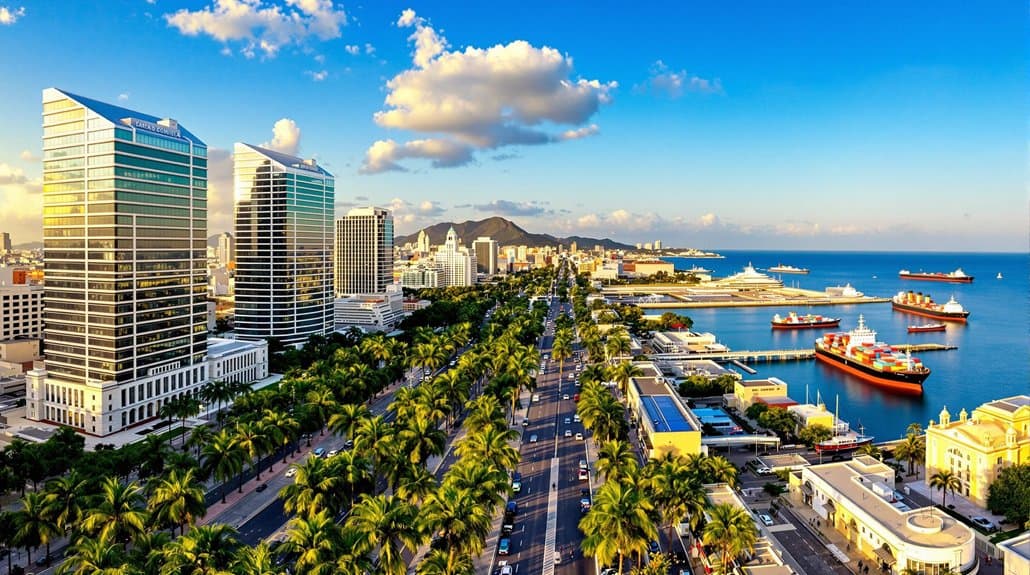
The question lands on my desk every week, usually phrased as: "I love the beaches, but is my money actually safe here?"
Fair question. Most Caribbean marketing materials show you infinity pools and palm trees. They don't show you the Central Bank's inflation reports or explain why the Dominican peso has held a predictable 2-3% annual depreciation against the dollar for the last decade while Turkey's lira collapsed by 60%. They definitely don't mention that the country just set a record for Foreign Direct Investment—$4.5 billion in 2024—making it the top FDI recipient in the entire Caribbean.
After forty years of practice in Sosúa, I've watched investors make two types of mistakes. The first group buys based on gross promises: "This condo generates $60,000 a year!" They forget to subtract the property manager's 25% cut, the $350 monthly electricity bill, and the maintenance reserve for when the water heater explodes during peak season. The second group never buys at all because they confuse "political risk" with "unfamiliar systems." They equate the Dominican Republic with countries that actually have currency crises or property confiscation problems, which this country hasn't experienced in over fifty years of continuous democracy.
This isn't a sales pitch. It's an audit. We're going to examine the actual mechanisms that protect your investment: the legal framework that prevents title disputes, the economic data that shows why this market outperforms its neighbors, and the hidden costs that determine whether a 7% rental yield actually puts money in your pocket or just looks good on paper.
Key Takeaways
- FDI Validation: The Dominican Republic received $4.5 billion in Foreign Direct Investment in 2024, the highest in Caribbean history, signaling institutional confidence from global capital.
- Dollar Insulation: Real estate transactions occur in USD, not Dominican pesos, shielding your asset value from local currency fluctuation.
- Legal Certainty: Law 108-05 requires GPS-verified "Deslinde" surveys for all property transfers, eliminating the boundary disputes that plagued earlier decades.
- Tax Shields: CONFOTUR (Law 158-01) offers 15-year exemptions on the 1% annual property tax and the 3% transfer tax—savings that compound to over $80,000 on a $500,000 property.
- Democratic Stability: President Luis Abinader's 2024 re-election marked the continuation of pro-business policies, ensuring a predictable four-year policy cycle for investors.
The Stability Question: What "Safe" Actually Means for Capital
When clients ask if the Dominican Republic is safe, they're usually conflating three separate risks: physical safety, political stability, and economic security. Let's separate them.
Physical safety first. The US State Department assigns the DR a Level 2 travel advisory—"Exercise Increased Caution." That's the same rating as France, Germany, and the Bahamas. The primary concern isn't violent crime against foreigners; it's petty theft in tourist areas and traffic accidents. The country has one of the highest traffic mortality rates globally—roughly 65 deaths per 100,000 inhabitants annually. I tell clients: lock your car doors, don't flash jewelry, and drive defensively. Standard precautions for any developing market.
Political stability is where the Dominican Republic separates itself from regional peers. The 2024 Economist Intelligence Unit Democracy Index cited the DR as making the "biggest improvement" in the region while other Latin American nations backslid. This isn't propaganda. The country has maintained peaceful democratic transitions for decades. No military coups. No property confiscations. No sudden policy reversals that wipe out foreign investments overnight.
The economic security piece requires looking at actual numbers. The IMF projects the DR to maintain strong growth through 2026, with a forecasted GDP expansion of 4.8%—making it one of the fastest-growing economies in Latin America and the Caribbean. That's not a developing-world boom-bust cycle; it's sustained expansion driven by tourism (11.19 million visitors in 2024, a 9% increase over 2023) and a diversified economy that produces 85% of its own food. Food sovereignty matters. During global supply chain disruptions, this country didn't face the shortages that hit import-dependent islands.
Currency stability is the hidden advantage. The Dominican peso has depreciated at a managed, predictable 2-3% annually against the dollar for the last decade. Compare that to Argentina's hyperinflation or Turkey's lira losing 60% of its value in a single year. The Central Bank (BCRD) successfully anchored inflation between 3.5% and 4.0% in late 2024, returning to the target range faster than most US and EU counterparts. But here's the key: you're not actually exposed to peso risk because real estate transactions in the DR are denominated in US dollars. Your property value, your rental income, your sale proceeds—all in USD.
The banking sector tells you a lot about institutional health. The Dominican banking system maintains a solvency ratio of 16.8%, well above the 10% regulatory requirement. That means local banks are highly liquid and stable for expat deposits. Standard & Poor's upgraded the country's credit rating to BB in December 2023, citing sustained economic growth and improved institutional strength. Moody's followed suit in August 2025 with an upgrade to Ba2, though they had already shifted to a "Positive" outlook throughout 2024.
The Legal Framework: Why Title Security Matters More Than GDP Growth
You can have a booming economy and still lose your shirt if the legal system doesn't protect property rights. Law 108-05, passed in 2005, revolutionized the Dominican land registry by digitizing titles and requiring a "Deslinde"—a GPS-verified boundary survey—for all property transfers. This eliminated roughly 99% of the boundary disputes that were common in the 20th century.
Before 108-05, you could buy a property and later discover that your neighbor's fence was on your land, or that the seller had already sold part of the parcel to someone else. The Deslinde requirement forces a government surveyor to physically mark the boundaries and verify them against the registered coordinates. No Deslinde, no valid transfer. Period.
I never close a transaction without verifying the Deslinde myself. The process costs around $1,500-$3,000 depending on property size, but it's the difference between owning a clearly defined asset and owning a legal headache. Buyers who skip this step to save money usually end up paying ten times that amount in legal fees when a dispute arises.
The Foreign Investment Law (16-95) guarantees equal treatment for foreign and local investors. Foreigners have the same rights to land ownership as citizens. No local partner required. No trust structure needed (though we often recommend holding property in a Dominican company for estate planning purposes). You can own beachfront land outright. The only restriction is on border zones, which doesn't affect the North Coast investment areas.
CONFOTUR (Law 158-01) is the tax incentive structure that makes the numbers work. Projects approved under CONFOTUR receive a 15-year exemption on the 1% annual IPI property tax and a 100% exemption on the 3% transfer tax. On a $500,000 property, that's $15,000 saved at closing (the 3% transfer tax) plus $5,000 saved annually (the 1% IPI tax). Over 15 years, that compounds to over $80,000 in tax savings.
Not every property qualifies. The specific development must have its own active CONFOTUR certification. New condo projects in Sosúa and Cabarete often apply for this status to attract buyers. If you're evaluating two similar properties and one has CONFOTUR status, the tax savings alone can justify a higher purchase price.
The law also provides exemptions on rental income tax and capital gains tax under certain conditions. This requires careful legal structuring, which is why I insist on reviewing the specific CONFOTUR certificate before closing. The devil is in the implementation details.
The Real Economics: A Cabarete Case Study
Let's ground this in specifics. I recently worked on a transaction for a 4-unit eco-lodge in Cabarete. The property sits two blocks from Kite Beach, within walking distance of the water sports hub that drives year-round rental demand. Purchase price: $785,000.
But that's not the real number. The total cash required to secure a functioning, legally protected asset was:
- Purchase Price: $785,000
- Solar Installation: $38,000 (essential—I'll explain why)
- Water Cistern System: included in build
- Legal Fees & Due Diligence: $43,175 (1% legal fee + 18% VAT + 3% transfer tax, assuming no CONFOTUR exemption)
- Residency Processing: $7,500
Total Cash Invested: $873,675
The solar investment isn't optional luxury. Electricity rates in the DR are tiered; high consumers (above 700 kWh/month) pay the highest rate on all usage—roughly 12-14 Dominican pesos per kWh, or about $0.22 USD. A 4-unit property running air conditioning can easily hit $800+ monthly in electricity costs. A $38,000 solar system reduces that to under $50 per month, yielding a 3-4 year ROI. Without solar, your operating expenses destroy your net yield.
The water cistern is standard in Cabarete. Municipal water can be intermittent. A 10,000-gallon underground reservoir ensures 2+ weeks of water autonomy. This is a "Stability Enhancement"—not about luxury, about ensuring your property remains rentable during utility disruptions.
The legal fees include the 3% transfer tax (which would be eliminated if the property had CONFOTUR status), the 1% legal fee plus 18% VAT (ITBIS), and the cost of thorough due diligence: verifying the Deslinde, checking for liens at the Title Registry, confirming the seller's legal capacity to transfer, and reviewing HOA documents if applicable.
The residency processing fee covers the Residence Visa application, temporary residency filing, and legal assistance navigating the Department of Migration. The property value ($785,000) exceeds the $200,000 minimum for the Residency by Investment program, qualifying the buyer for expedited permanent residency.
Now the operating reality. This property generates approximately $120,000 in gross annual rental income. Cabarete has a unique 10-month rental season driven by water sports: high season (December-April), wind season (June-August), and shoulder months. Average occupancy for well-managed properties runs 65-75%.
Gross revenue means nothing. Here's where the money goes:
- Property Management (25%): $30,000
- Electricity (post-solar): $600 annually
- Water: $480 annually
- Property Tax (IPI): $6,130 (1% on value above ~$172,230)
- Insurance: $1,800 annually
- HOA Fees: $4,800 annually (if applicable—this property is standalone)
- Maintenance Reserve (1.5% of property value): $11,775
- Internet/Utilities: $1,200 annually
- Cleaning Supplies & Incidentals: $2,400 annually
- Legal/Accounting: $1,500 annually
- Residency Renewal: $500 annually (during temporary residency phase)
Total Annual Expenses: ~$61,185
Net Operating Income: $58,815
Cash-on-Cash Return: 6.73% (based on total cash invested of $873,675)
That's the real number. Not 12%. Not the gross yield the developer advertised. A 6.73% return on a property you can also use personally for vacations, in a market where property values have appreciated 5-8% annually over the last five years.
Is that worth it? Depends what you're comparing it to. You can get 5% in a US high-yield savings account with zero effort. But you can't vacation in your savings account. You can't benefit from real estate appreciation. You can't structure the ownership through a Dominican company to optimize estate planning. And you're not diversifying out of a single currency system.
The "Life-Adjusted" yield includes factors that don't show up on a spreadsheet: personal use value, appreciation potential, and the option to retire here under a favorable tax regime. The Dominican Republic has a territorial tax system. Foreign-sourced income—US pensions, stock dividends, rental income from US properties—is generally tax-exempt for residents. That's a massive advantage over countries with global tax nets.
The Hidden Costs: What the Brochures Don't Tell You
The IPI property tax threshold for 2025 is RD$10,190,833 (approximately $172,230 USD). Properties valued below this pay zero property tax. Value above that threshold is taxed at 1% annually on the excess. A $500,000 property pays roughly $3,278 annually. Unless it has CONFOTUR status, in which case it pays nothing for 15 years.
Health insurance for expat couples (ages 50-60) costs approximately $1,500-$2,000 USD annually through local providers like Humano or Monumental. That's comprehensive private coverage with access to premier clinics like Centro Médico Bournigal in Puerto Plata. Compare that to US health insurance costs.
Schooling costs matter if you have children. The International School of Sosúa (ISS), accredited by SACS (USA), charges annual tuition ranging from $6,000 to $7,500 depending on grade level. That's significantly lower than comparable private schools in the US ($20,000+), but it's still a line item to budget for.
Domestic help is affordable. A full-time housekeeper earns $250-$400 USD monthly. A gardener or pool cleaner charges $25-40 USD per day for skilled labor. This is a lifestyle upgrade for most expats, but it's also an ongoing expense.
Propane for cooking and hot water costs approximately $50 USD for a 100lb tank refill, lasting a small household 2-3 months. Internet—fiber optic from Claro or Altice—runs about $50 USD monthly for 100Mbps. Starlink is fully operational in the DR for remote workers requiring redundancy.
The corrosion factor is real. The salty, humid North Coast air accelerates wear on electronics, appliances, and metal fixtures. You'll replace air conditioning units, water heaters, and outdoor furniture more frequently than in non-coastal climates. Budget for this in your maintenance reserve.
Comparative Reality: Dominican Republic vs. Global Alternatives
Beachfront property in the DR averages $2,000-$3,000 per square meter. Compare that to $8,000+ in Miami, $4,500 in Portugal's Algarve, or $6,000 in Dubai. You're getting significantly more value for money, but you're also accepting different infrastructure standards and bureaucratic processes.
Portugal's Golden Visa now requires a €500,000 fund investment—the real estate option was removed. The DR's Residency by Investment program requires a $200,000 property purchase or proof of $2,000 monthly income. The entry barriers are much lower.
Currency risk matters. Buying in Turkey exposes you to the volatile Lira, which has seen 60%+ inflation. Buying in the DR is effectively a USD asset class, insulating you from local currency crashes. That's a structural advantage.
The time zone alignment with the US East Coast (Atlantic Standard Time, GMT-4) makes the DR ideal for remote workers. Dubai is 8-9 hours ahead. Europe is 5-6 hours ahead. The DR allows you to maintain normal US business hours while living on a Caribbean beach.
Climate consistency is underrated. Cabarete has an average annual temperature of 25°C (77°F). Unlike Southern Europe (cold winters) or Dubai (unbearable 45°C+ summer heat), the DR offers a year-round outdoor lifestyle. You're not fleeing the property for half the year.
Access is the final piece. The DR has eight international airports. The North Coast is served by Puerto Plata (POP) and Santiago (STI). Direct flights from Miami, New York, and Charlotte take 2-4 hours. Compare that to 20+ hours of travel to Bali or Thailand.
The Cultural Integration Factor
The Dominican Republic has welcomed over 300,000 US citizens as residents, according to US State Department estimates. This isn't a new phenomenon. Sosúa has an established expat community dating back to the 1940s, when Jewish refugees settled here. That's eighty years of cultural integration, English-speaking support networks, and infrastructure built to accommodate foreign residents.
"Dominican Time" is real. The culture values relationships over rigid punctuality. Successful expats embrace the "tranquilo" lifestyle rather than fighting it. If you need everything to run on a German schedule, this isn't your market.
Learning basic Dominican Spanish—understanding "qué lo qué" (what's up), knowing how to negotiate at the colmado (corner store)—is the number one hack for lowering costs and increasing safety. English is widely spoken in tourist zones, but navigating government offices, banks, and utility companies requires functional Spanish or a hired translator.
The North Coast has access to HOMS in Santiago, the largest and most advanced robotic surgery hospital in the Caribbean, just 60-90 minutes away. For routine care, Puerto Plata has multiple private clinics. For serious conditions, Santo Domingo offers world-class facilities.
Shopping has improved dramatically. The arrival of PriceSmart (Costco equivalent) and major supermarket chains like Sirena and Jumbo in Puerto Plata means expats no longer need to import their lifestyle. US brands are readily available. You can get organic groceries, specialty items, and familiar products without flying to Miami.
The upcoming Amber Highway—shortening the drive from Santiago to Puerto Plata to 30 minutes—is expected to drive property values up by increasing accessibility for wealthy domestic tourists from Santiago. Infrastructure improvements directly impact real estate appreciation.
| Investment Factor | Dominican Republic (North Coast) | Dubai, UAE | Portugal (Algarve) | Turkey (Antalya) |
|---|---|---|---|---|
| Avg. Price per Sqm (Beachfront) | $2,000 - $3,000 | $6,000+ | $4,500+ | $1,800 - $2,500 |
| Currency Risk | Low (USD-denominated) | Low (AED pegged to USD) | Medium (Euro exposure) | High (Lira volatility) |
| Residency Investment Minimum | $200,000 property | ~$545,000 property | €500,000 fund (real estate removed) | $400,000 property |
| Gross Rental Yield | 6% - 10% | 4% - 6% | 3% - 5% | 5% - 8% |
| Time Zone (from US East Coast) | Same (GMT-4) | +8 hours | +5 hours | +7 hours |
| Flight Time from Miami | 2.5 hours | 14+ hours | 9+ hours | 12+ hours |
| Tax Incentives | CONFOTUR (15-yr exemptions) | 0% income tax | NHR regime (limited) | Citizenship incentives |
| Community Authenticity | Established expat villages (80+ yrs) | Transient, high-rise | Tourist-heavy coastal towns | Growing expat presence |
The Verdict: Building Wealth on Verified Foundations
Living in the Dominican Republic is not for investors seeking "automatic" returns or those who expect First World infrastructure at Third World prices. It's for savvy individuals willing to perform due diligence, embrace cultural differences, and structure their investments through proper legal channels.
The data supports the stability argument. Record FDI, sustained GDP growth, a managed currency, and a modernized legal framework for property rights. The Economist Intelligence Unit's recognition of democratic improvement. The Central Bank's successful inflation control. These aren't marketing claims; they're verifiable metrics.
But metrics don't protect you from buying a property with a clouded title or from underestimating your operating expenses. The difference between a successful investment and an expensive lesson comes down to execution: hiring an experienced attorney to verify the Deslinde, budgeting for the real total cash required (not just the purchase price), understanding the tax implications of CONFOTUR status, and being realistic about rental yields after expenses.
The North Coast—specifically Sosúa and Cabarete—offers a combination of factors that competing markets can't match: USD-denominated real estate, proximity to North American time zones and airports, established expat infrastructure, year-round rental demand from water sports tourism, and legal protections that have been refined over decades.
My advice after forty years: verify first, trust later. Don't buy based on gross revenue projections. Calculate the net operating income after every expense. Don't skip the Deslinde to save $2,000. Don't assume CONFOTUR benefits apply without seeing the actual certification. Don't budget based on 100% occupancy.
And when you're ready to move forward, work with professionals who have navigated this market through multiple economic cycles. The real estate tuition here is expensive. The couple who bought without proper due diligence and later discovered their property line was disputed paid for their lesson with their ocean view. The investor who skipped the solar installation is now paying $800 monthly in electricity bills that destroy their cash flow.
Secure your piece of this market with the guidance of professionals who understand both the opportunities and the pitfalls. The Dominican Republic offers genuine investment potential, but only for those willing to approach it with eyes open and legal protections in place.