

The search for eco-friendly homes on the North Coast usually starts with a Pinterest board and ends in my office with a stack of documents that don't match. A couple from Vancouver shows me glossy brochures promising "100% solar-powered villas" in Cabarete. Beautiful renderings. Persuasive copy about living off-grid in paradise. Then I ask to see the Deslinde.
"The what?"
That's when the conversation gets real.
The Dominican Republic's North Coast—specifically Sosúa and Cabarete—is experiencing something unusual. Real estate values are climbing 3-7% annually, driven by pre-construction eco-developments that promise sustainability and tax breaks. CONFOTUR projects dangle 15-year exemptions on transfer taxes and property taxes. Rental yields hover between 7-9% for properties marketed as "green." The numbers look compelling.
But here's what the brochures don't tell you: the difference between a profitable eco-investment and a legal nightmare often comes down to a single piece of paper you've never heard of. And the solar panels everyone's excited about? They're only part of the equation when you're dealing with 80% humidity, salt air that corrodes metal in months, and a power grid that treats blackouts as a feature, not a bug.
If you're serious about sustainable living in the Dominican Republic, you need to understand what "eco-friendly" actually means in a tropical climate where termites eat pressure-treated wood and hurricanes arrive on schedule. This isn't about virtue signaling. It's about building something that works.
Key Takeaways
Legal Foundation First: No property purchase in the DR should proceed without a verified Deslinde under Law 108-05—banks won't finance it, you can't get construction permits, and resale becomes nearly impossible without this GPS-demarcated title.
CONFOTUR Reality: Single-family homes only qualify for the 15-year tax exemption (3% transfer tax + 1% annual IPI) if they're part of a developer-certified tourism project—not standalone purchases on random lots.
Solar ROI in Context: With Dominican electricity rates exceeding $0.30 USD/kWh for high-consumption users (common for villas with air conditioning), a full solar installation ($15,000-$25,000) pays for itself in 3-4 years, but only if you account for battery storage and the inevitable backup generator you'll need.
Construction Costs: High-quality eco-friendly construction in Sosúa/Cabarete runs $1,200-$1,400 USD per square meter, with sustainable features adding 10-15% to baseline costs—but reducing long-term maintenance by using marine-grade materials that resist salt corrosion.
The "Green Premium": Eco-certified properties in Cabarete see 75% year-round occupancy versus 60% for traditional condos, driving higher rental yields—but only if the infrastructure (water, power, waste treatment) actually functions as promised.
What "Eco-Friendly" Actually Means When Salt Air Corrodes Everything
Let's start with the uncomfortable truth: most of what gets marketed as "sustainable architecture" on the North Coast is standard construction with solar panels bolted on afterward. Real eco-design in the tropics requires understanding physics that don't apply in Portland or Berlin.
The Dominican Republic receives 5-6 peak sun hours daily. That's excellent for photovoltaic systems. A standard 3-bedroom villa needs a 10-12kW solar setup to run air conditioning units without draining batteries by midnight. But here's what the solar installers often skip: those panels need to survive Category 3 hurricanes, and the inverters need to handle voltage fluctuations when you switch back to the grid during three-day rainstorms.
I've seen $20,000 solar installations destroyed because the mounting brackets were standard aluminum instead of marine-grade 316L stainless steel. Salt spray from the ocean—even three kilometers inland—corrodes regular metal in under six months. Your eco-investment becomes a rust sculpture.
Passive cooling is the other piece everyone talks about but few execute properly. High ceilings and louvered windows sound romantic until you realize that "passive ventilation" in 80% humidity just means you're circulating hot, wet air. The homes that actually work use cross-ventilation oriented to the prevailing easterly trade winds, combined with thermal insulation layers under the roof that lower indoor temperatures by 3-5°C.
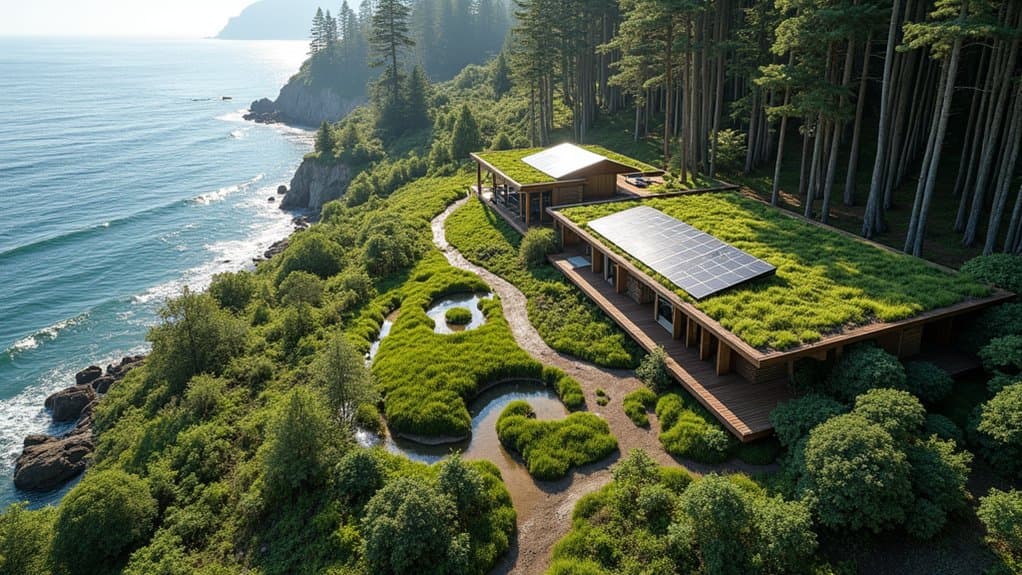
And here's where it gets specific: concrete roofs absorb massive heat. The eco-friendly solution isn't just insulation—it's either green roofs (vegetation that provides shade and evaporative cooling) or reflective coatings that most contractors have never heard of. I've walked through "sustainable" villas where the second floor felt like a sauna because the developer saved $3,000 on proper insulation.
Water is the other reality check. Municipal supply in Cabarete is inconsistent. Sustainable homes install cisterns—5,000 gallons minimum—to collect rainwater for irrigation and non-potable uses. But if you're planning to drink that water, you need a whole-house UV filtration system, not just a Brita filter. The local groundwater often contains high mineral content that will destroy your eco-friendly appliances through scale buildup within a year.
Then there's waste. Traditional septic tanks leach into the limestone water table. A genuine eco-home requires a biodigestor system—sealed units that treat sewage onsite and recycle water for gardens. The Ministry of Environment is increasingly strict about this. You need a "Minimal Impact" permit for septic installation, and if you're caught using a wildcat system, they can halt your entire project.
The materials matter more than you'd think. Using locally sourced Coralina stone and sustainable timber reduces your carbon footprint compared to importing marble from Italy. But here's the catch: much of the "precious wood" sold locally is illegally logged. You need FSC-certified wood or you're complicit in deforestation. The alternative is imported treated pine or sustainable bamboo (Guadua), which actually performs better in humid conditions but requires contractors who know how to work with it.
Impact-resistant glazing is another non-negotiable. Those beautiful floor-to-ceiling windows in the renderings? They need to be hurricane-rated glass that also blocks thermal transfer. Standard glass turns your eco-villa into a greenhouse. The right glazing costs 30% more but cuts cooling costs by 25%.
This is what "eco-friendly" means in practice. Not a concept. Not a lifestyle brand. A specific set of engineering decisions that either work or fail when the first tropical storm arrives.
The Numbers Behind Sustainable Construction (And Why They're Higher Than You Think)
Construction costs in Sosúa and Cabarete currently run $1,200 to $1,400 USD per square meter for high-quality finishes. That's $111-$130 per square foot if you're thinking in imperial units. Adding genuine eco-features—advanced solar systems, biodigesters, superior insulation, marine-grade fixtures—typically increases that baseline by 10-15%.
So a 200-square-meter villa (roughly 2,150 sq ft) with real sustainable infrastructure costs $240,000-$280,000 just for construction. That doesn't include land, permits, architectural fees, or the pool that every buyer seems to want.
Solar systems are the biggest single eco-investment. A robust setup—inverter, batteries, panels—for that 3-bedroom villa runs $15,000 to $25,000. But here's the math that makes it worthwhile: Dominican electricity rates for high-consumption households—the kind you have when running air conditioning in a villa—exceed $0.30 USD per kilowatt-hour. That's one of the highest rates in the Caribbean. A properly designed solar system pays for itself in 3.5 to 4 years, which is significantly faster than the 8-10 year average in the United States.
The catch is battery storage. If you want true energy independence, you need lithium iron phosphate (LiFePO4) batteries, not the cheaper lead-acid versions that die in three years under constant cycling. Good batteries add $8,000-$12,000 to the system cost, but they're the difference between "eco-friendly" and "constantly frustrated when the grid fails."
And the grid will fail. Starlink solved the internet problem—you can get 69.6 Mbps download speeds in remote areas now, which makes off-grid digital nomad life feasible. But electricity? You still need a backup generator. Budget another $3,000-$5,000 for a quality propane unit that can handle your critical loads during the 5% of time when solar isn't enough and the grid is down.
Landscaping for a sustainable, drought-resistant tropical garden costs around $10,000. This isn't optional decoration—it's natural cooling and privacy. The right plants create shade that lowers your home's thermal load. The wrong plants (imported ornamentals that need constant watering) defeat the entire purpose of sustainable design.
Then there are the soft costs. Architectural design and structural engineering fees run 10-15% of total construction value. For a $250,000 build, that's $25,000-$37,500 just for the professionals who make sure your eco-villa doesn't collapse during the first hurricane season.
If you're importing high-end eco-finishes—double-glazed windows from Europe, German solar inverters, Italian biodigestor systems—expect import duties to add 20-30% to those specific items unless your project has CONFOTUR status. And that brings us to the tax question everyone wants answered.
CONFOTUR: The 15-Year Tax Break That Isn't What You Think
Law 158-01 (and its amendment Law 195-13) offers compelling incentives: 100% exemption on the 3% transfer tax and 100% exemption on the 1% annual property tax (IPI) for 15 years. On a $300,000 property, that's $9,000 saved immediately at closing, plus roughly $33,000 over the life of the exemption. Rental income from CONFOTUR properties can also be exempt from the 27% income tax for 10-15 years, depending on the specific project classification.
The numbers work. But here's what the sales presentations don't clarify: CONFOTUR status is granted to developments, not individual buyers.
You cannot buy a random lot in Cabarete, build your dream eco-villa, and then apply for CONFOTUR. It doesn't work that way. The developer must apply for and receive certification for the entire project before you purchase. The benefits are attached to the property within that certified tourism project—a gated community, a resort development, a master-planned eco-community.
I've had clients show me purchase agreements for "CONFOTUR properties" that turned out to be marketing fiction. When I ask to see the Resolution from the Ministry of Tourism and the Ministry of Finance—the actual legal proof of CONFOTUR status—suddenly there's confusion. The developer "applied" or "is in the process" or "has been verbally assured."
None of that matters. Without the official Resolution, there are no tax benefits. Period.
If you're buying a resale villa in an established CONFOTUR community with 10 years remaining on the exemption, you inherit those 10 years. The benefits transfer with the property. But you need to verify the exact status during due diligence. Some projects received partial CONFOTUR approval—meaning only certain phases or certain property types within the development qualify.
Single-family homes absolutely can qualify, but only within these certified projects. A standalone purchase on raw land? No. Building your own custom eco-home outside a CONFOTUR development? You're paying full taxes.
And here's a detail that catches people: the IPI (annual property tax) only applies to property values exceeding approximately 10.19 million Dominican pesos—roughly $170,000 USD at the current exchange rate of about 60 pesos to the dollar. Many smaller eco-cabins fall below this threshold and are tax-exempt by default, even without CONFOTUR. But if you're building a $400,000 villa, that 1% annual tax becomes $2,300 per year. Over 15 years, the CONFOTUR exemption saves you $34,500.
The transfer tax exemption is immediate and certain. The rental income tax exemption requires proper corporate structuring—usually buying through a Dominican SRL (limited liability company)—and strict compliance with tourism regulations. You can't just declare your property "tourism-related" and stop paying taxes. The Ministry of Tourism audits these classifications.
One more thing: CONFOTUR benefits don't exempt you from other obligations. You still need building permits. You still need environmental licenses. You still need a Deslinde. The tax breaks are real, but they don't replace due diligence.
Law 108-05 and the Deslinde: The Unglamorous Document That Determines Everything
Since 2007, Law 108-05 has governed real estate registration in the Dominican Republic. The practical effect is simple: a property without a Deslinde doesn't legally exist as a distinct parcel. It's a percentage share of a larger parent lot, with no defined boundaries.
The Deslinde process uses GPS coordinates to officially demarcate your property. It involves three mandatory steps: a survey (Mensura) by a licensed surveyor, judicial approval by the Land Court, and registration that issues the new Title Certificate. Skipping the judicial approval step is the most common scam I see.
Sellers present a "Constancia Anotada"—a preliminary title document—and claim it's equivalent to a Deslinde. It isn't. The Constancia Anotada is essentially a claim to ownership of a percentage of the parent lot. It offers zero protection regarding specific boundary lines. You could "own" 1,000 square meters, but that 1,000 square meters could technically be located anywhere within the larger tract.
No bank will finance a property without a Deslinde. The Registrar of Titles generally freezes or rejects transfers of properties lacking this documentation. You cannot obtain construction permits from the Ministry of Public Works without a clear Deslinde Title. If you plan to subdivide or establish a condominium regime for a small eco-community, the Deslinde is the absolute first requirement.
I've seen investors lose six-figure sums because they built on land that lacked proper demarcation. A neighbor claims you constructed on their portion of the shared parent lot. Without a Deslinde, you have no legal map to prove otherwise. The courts can order demolition. That's not theoretical—it happens.
The verification process is straightforward but requires local knowledge. You request a "Certificación de Estado Jurídico" from the Registry of Titles. This document confirms the property is free of liens, mortgages, and litigation. It must be dated within 30 days of your transaction. Then you verify the Deslinde itself—checking that the GPS coordinates match the physical boundaries and that the judicial approval step was completed.
I have a direct contact in the Puerto Plata land office. That relationship exists because I've been doing this for 40 years, and I know which titles are clean and which ones will cause problems six months after closing. Most foreign buyers don't have that access. They rely on the seller's attorney—who has a vested interest in completing the sale—to verify documentation.
Here's my standard advice: hire an independent attorney before you sign anything. Not the developer's lawyer. Not the real estate agent's recommended contact. Someone whose only loyalty is to you. The cost is typically 1-2% of the purchase price. That fee prevents problems that cost ten times as much to fix later.
Properties with verified Deslindes command higher market prices and sell faster. Properties without them are considered distressed assets. If you're building an eco-friendly home as an investment, the Deslinde isn't bureaucratic overhead—it's the foundation of your asset's liquidity.
The Cabarete Reality: What Works, What Fails, and What Nobody Mentions
Cabarete attracts a specific type of buyer. Kitesurfers. Digital nomads. Retirees who want "authentic" Caribbean life without the sterility of gated resorts. The eco-friendly home concept fits this demographic perfectly. The problem is that infrastructure in Cabarete was built for a fishing village, not for the influx of foreign investment we've seen over the past decade.
The road from Cabarete to Santiago is finally drivable, though the potholes near the entrance remain a persistent headache. Starlink provides reliable internet—critical for remote workers—but the electrical grid treats blackouts as routine. A home marketed as "off-grid" better have that backup generator, or you'll be sitting in darkness during peak work hours.
Water supply is inconsistent. Municipal service exists but can't be trusted for continuous availability. Every serious eco-home needs that 5,000-gallon cistern and a well with proper INDRHI permits. Wildcat drilling—just hiring a local guy with a rig—is increasingly penalized under 2025 environmental enforcement. You need the official permit from the National Institute of Hydraulic Resources, which takes time and requires geological surveys to ensure you're not depleting aquifers.
Security is another consideration that eco-marketing conveniently ignores. Open-plan tropical designs with floor-to-ceiling glass look stunning in photos. They're also an invitation if you're leaving the property empty for months. Real eco-homes in Cabarete integrate security—perimeter walls, motion-sensor lighting, alarm systems—without ruining the aesthetic. That integration costs money and requires architects who understand both sustainability and Caribbean reality.
The "60-meter law" catches people by surprise. Under Law 64-00 (General Law on Environment and Natural Resources) and Law 305 (from 1968), the first 60 meters from the high tide line are public domain. Permanent structures built in this zone without a presidential decree—which is rarely granted for private homes—are subject to demolition. I've seen investors purchase "ocean view" land for eco-resorts without checking Ministry of Environment zoning. The land was in a protected buffer zone, rendering it unbuildable. The only fix was selling the land at a loss or spending years petitioning for exemptions that rarely get granted.
Flooding is another issue. Tropical downpours deliver inches of rain per hour. Site planning must include aggressive drainage solutions—French drains, swales, proper grading—to prevent foundation erosion. Standard concrete slabs crack when water pools underneath. Elevated foundations on piers work better but cost more and require structural engineering that accounts for hurricane wind loads.
Then there's the social reality. The concept of "Vecindad"—neighborliness—is vital in Dominican culture. Unlike the solitary nature of some off-grid living elsewhere, North Coast expat life is highly social. Your eco-villa isn't an isolated retreat. You're part of a community, which means dealing with "Hora Dominicana"—Dominican time. Construction projects take longer than scheduled. Permits arrive when they arrive. Patience isn't just a virtue here; it's a requirement.
The food situation is better than you'd expect. The Cibao region inland from Cabarete produces 80% of the country's food supply. "Farm to table" isn't marketing—it's logistical reality. Fresh produce, local fish, organic options are genuinely available. But if you need specific imported items—certain supplements, specialty foods—you're ordering from Santo Domingo or Miami.
For families, the International School of Sosua offers US-accredited education for $6,000-$7,000 USD per year. That's significantly cheaper than international schools in Europe or Asia, and it provides continuity if you're relocating with children. But it also means your eco-retreat needs to be within reasonable driving distance of Sosúa, which limits your options for truly remote locations.
The medical infrastructure is adequate for routine care. Serious emergencies require transport to Santiago or Santo Domingo. That's a reality of choosing sustainable living in a developing area. You're trading convenience for cost savings and lifestyle benefits.
The Financial Reality of Eco-Ownership: Yields, Costs, and What Actually Happens After You Buy
Rental yields in the 7-9% range sound attractive until you account for occupancy fluctuations, property management fees, and maintenance costs that exceed what you'd experience in a temperate climate.
Eco-certified properties in Cabarete are seeing 75% year-round occupancy compared to 60% for traditional condos, according to 2025 AirDNA data. That "green premium" exists because conscious travelers will pay 5-10% higher nightly rates for properties marketed as sustainable. But that premium only materializes if your infrastructure actually functions.
A solar-powered home saves $300-$600 USD monthly in electricity costs. Over a year, that's $3,600-$7,200 in operating expense reduction. If you're renting the property, those savings flow directly to net yield. But if your solar system fails during peak season because you cheaped out on batteries, you're running a diesel generator at $4-$5 per gallon while your guests complain about the noise.
Maintenance costs for eco-homes should be lower due to durable materials—marine-grade fixtures, sustainable timber, proper insulation. But only if those materials were actually used. I've seen "eco-villas" built with standard hardware that corrodes in salt air, requiring replacement every two years. The annual maintenance budget for a properly built sustainable home runs about 1% of property value. For a poorly built one, it's 3-4%.
Property management fees in Cabarete typically run 20-25% of gross rental income. That's higher than many markets, but it reflects the hands-on nature of managing vacation rentals in a location where things break and need immediate attention. Some eco-developments include HOA fees that cover common area maintenance, security, and amenity upkeep. Those fees range from $150-$400 monthly depending on the community.
Resale value for eco-homes shows a 10-20% premium compared to conventional properties, according to local market analysis. But liquidity depends entirely on having clean documentation. A property with a verified Deslinde, clear CONFOTUR status (if applicable), and maintained infrastructure sells in 60-90 days. A property with title issues or deferred maintenance sits on the market for months.
The tax situation for rental income requires attention. Non-residents are subject to 27% withholding tax on rental income—the standard corporate income tax rate (ISR) applied to Dominican source income paid to non-residents. But expenses—maintenance, management fees, HOA dues—are deductible. Proper corporate structuring through a Dominican SRL can optimize this, but it requires annual filings and compliance with local accounting standards. The DGII (tax authority) is increasingly strict about enforcement, especially for properties listed on Airbnb and other platforms that provide transaction data.
Capital gains tax on resale is another consideration. If you hold the property for more than three years and it's your primary residence, you may qualify for exemptions. If it's a pure investment, you're paying tax on the gain. CONFOTUR status can affect this calculation, but the specifics depend on your corporate structure and the exact terms of your project's certification.
The investment residency program requires a $200,000 USD property purchase under Decree 950-01. That's significantly lower than "Golden Visa" programs in Europe, which often start at €500,000. The DR pathway also leads to citizenship eligibility in two years for investors, versus five or more in most European jurisdictions. But residency requires annual renewals, ongoing documentation, and compliance with local tax filing requirements even if you owe nothing.
Insurance is the final piece. Hurricane coverage for coastal properties runs 1.5-2.5% of insured value annually. Building with non-standard eco-materials like bamboo or super-adobe can make obtaining coverage difficult. Concrete remains the most insurable structure, which creates tension with certain sustainable building philosophies. You need to balance environmental ideals with practical risk management.
How to Actually Buy an Eco-Friendly Home Without Getting Burned
The process starts with defining why you're buying. Investment yield versus lifestyle retreat. Those two objectives require different property types, different locations, and different tolerance for infrastructure limitations.
If you're prioritizing rental yield, you need proximity to Cabarete's beach and kite zones, reliable internet, and amenities that appeal to the digital nomad demographic. If you're building a personal retreat, you can accept more remote locations and infrastructure challenges in exchange for privacy and lower costs.
The legal first step is hiring an independent attorney to perform a title search and Deslinde verification. This happens before you make an offer, not after. The Certificación de Estado Jurídico confirms the property is free of liens and litigation. The Deslinde verification confirms the GPS-demarcated boundaries match the physical property and that judicial approval was completed.
If the property is in a CONFOTUR development, request the official Resolution from the Ministry of Tourism and Ministry of Finance. Verify which phases and property types are covered. Some projects have partial certification where only certain sections qualify for tax benefits.
The environmental audit is next. Verify the property isn't in a protected zone (the 60-meter coastal buffer, watershed protection areas, national park boundaries). Check flood plain maps. Confirm water access—municipal supply, well permits, cistern capacity. Test the soil if you're planning septic or biodigestor installation.
The infrastructure test involves visiting the property during both dry and rainy seasons if possible. Check the electrical service—how often does it fail, what's the voltage stability, is three-phase power available if you need it. Test the internet speed with your own device. Drive the access roads during rain to see if they're passable.
For new construction, review the developer's track record. How many projects have they completed? Can you visit finished properties and speak with owners? What's the warranty structure? Who handles post-sale service?
The purchase itself should be structured through a Dominican SRL if you're a foreign investor. This provides liability protection, simplifies estate planning (avoiding the 3% inheritance tax issues for direct foreign ownership), and optimizes tax treatment of rental income. The SRL formation costs $2,000-$3,000 and requires an annual filing with the Chamber of Commerce.
Payment terms matter. Never pay 100% upfront for pre-construction. Standard terms are 30% deposit, 40% during construction milestones, and 30% at completion. Payments should be held in escrow and released based on verified progress. I've seen developers take deposits and disappear. Escrow isn't optional.
Title transfer happens at the Registry of Titles. Both parties appear with their attorneys. The transfer tax (3% unless CONFOTUR exempt) is paid. The new title is issued in your name or your company's name. This process takes 2-4 hours if documentation is correct. It takes weeks if there are problems discovered at the last minute.
Post-purchase, you need to establish utilities, property management if you're not living there full-time, and insurance coverage. If you're pursuing investment residency, that application process begins after closing and requires certified copies of the title, proof of the purchase price, and various personal documents.
The entire process from initial search to closing typically takes 3-6 months for resale properties with clean titles. For new construction, add the development timeline—usually 12-18 months for a quality build, longer if there are permit delays or material shortages.
What the Market Looks Like Right Now (And Where It's Actually Heading)
The North Coast real estate market in early 2026 is experiencing a specific dynamic: pre-construction eco-developments are driving price appreciation while completed inventory remains relatively stable.
Properties in established communities like Encuentro Residences and Encuentro Surf Village—developments my firm has worked with extensively—are seeing steady demand from buyers who prioritize proven infrastructure over cutting-edge sustainability claims. These projects were built before "eco-friendly" became a marketing term, but they incorporated many sustainable principles because they made practical sense: solar for cost savings, proper drainage for longevity, natural ventilation because air conditioning is expensive.
The newer wave of developments markets sustainability more aggressively. Some deliver on those promises. Others are standard construction with better branding. The market is still learning to distinguish between the two.
Appreciation rates of 3-7% annually are realistic for well-located properties with clean documentation. That's not explosive growth, but it's steady and backed by genuine demand from North American and European buyers seeking alternatives to increasingly expensive markets in Portugal, Costa Rica, and Mexico.
The comparison to those markets is instructive. In Mexico's "Restricted Zone" (within 50km of the coast), foreigners cannot hold direct title and must use bank trusts (Fideicomisos) that cost $2,000 setup plus $550-$1,000 annually. In the DR, foreigners have the same property rights as citizens and hold fee simple title in their own names with zero annual holding fees if the property value is below the IPI threshold. Costa Rica charges 0.25% base property tax plus a luxury tax of 0.25-0.55% on homes over approximately $233,000. The DR charges 0% on the first ~$170,000 and 1% on the excess only.
The residency comparison is similarly favorable. Portugal's Golden Visa program recently increased minimum investments and eliminated certain categories. The DR's investment residency remains at $200,000 with a clear path to citizenship in two years. For buyers seeking both property and residency, that combination is compelling.
But the market has risks. Construction timelines are unpredictable. Municipal approvals take longer than buyers from the US or Europe expect. The legal framework is solid, but enforcement can be inconsistent. You need patience and local expertise to navigate successfully.
The environmental regulations are tightening. The Ministry of Environment is increasingly strict about septic systems, well permits, and construction in sensitive areas. That's positive for long-term sustainability, but it means projects that would have been approved five years ago now face additional scrutiny and delays.
The rental market for eco-properties is strong but seasonal. Peak season (December through April) sees high occupancy and premium rates. Summer months (June through August) are slower. You need to model cash flow based on realistic occupancy patterns, not year-round averages that inflate projected returns.
The future trajectory depends on infrastructure improvements. If the government follows through on planned road upgrades and power grid stabilization, the North Coast becomes significantly more attractive for both eco-tourism and permanent relocation. If infrastructure remains inconsistent, the market will continue serving primarily adventurous buyers who accept those trade-offs.
My assessment after 40 years watching this region: the fundamentals are sound for patient investors who do proper due diligence. The legal framework exists to protect property rights. The tax incentives are real. The lifestyle appeal is genuine. But this isn't a get-rich-quick market. It rewards careful selection, proper verification, and realistic expectations.
The Unglamorous Truth About Sustainable Living in Practice
The solar panels work until they don't. The biodigestor functions until it needs servicing. The rainwater harvesting system collects water beautifully until the filter clogs and you don't notice for three weeks.
Sustainable living in the tropics requires active management. It's not a passive investment where you hand keys to a property manager and collect rental income. The systems that make a home eco-friendly also require understanding and maintenance that most property managers don't provide.
I've worked with clients who bought solar-powered villas and never learned how to check battery levels or reset inverters. When something failed, they couldn't troubleshoot remotely. The property sat dark while they tried to find a technician who understood the system. That's not the installer's fault or the property manager's fault—it's a mismatch between the buyer's expectations and the reality of owning complex infrastructure.
The cultural adjustment is real. Dominican contractors work on Dominican time. A repair scheduled for Tuesday might happen Thursday. Or the following Tuesday. This isn't incompetence—it's a different relationship with time and scheduling. If you need German punctuality, you'll be perpetually frustrated. If you can accept that things eventually get done and the quality is usually good once they do, you'll be fine.
The bureaucracy is Byzantine. Getting a simple permit can require multiple visits to multiple offices with documents that need to be notarized, apostilled, and submitted in triplicate. My firm handles this because we know which offices to visit in which order and which officials to speak with. Foreign buyers trying to navigate this alone often give up in frustration.
The language barrier matters more than people expect. Yes, many people in Sosúa and Cabarete speak English. But the government offices, the utility companies, the contractors—they operate in Spanish. You need either fluency or a trusted local partner. Relying on Google Translate for legal documents is a recipe for expensive mistakes.
The lifestyle benefits are real but specific. If you value space, privacy, natural beauty, lower cost of living, and escape from overcrowded tourist zones, the North Coast delivers. If you need reliable Amazon delivery, Whole Foods, and predictable municipal services, you'll be disappointed.
The community of expats in Cabarete is tight-knit and generally helpful. But it's also small enough that everyone knows everyone's business. That can be comforting or claustrophobic depending on your personality.
The weather is consistently warm but not consistently sunny. The rainy season (May through November) brings afternoon thunderstorms that can be spectacular or merely inconvenient depending on your