

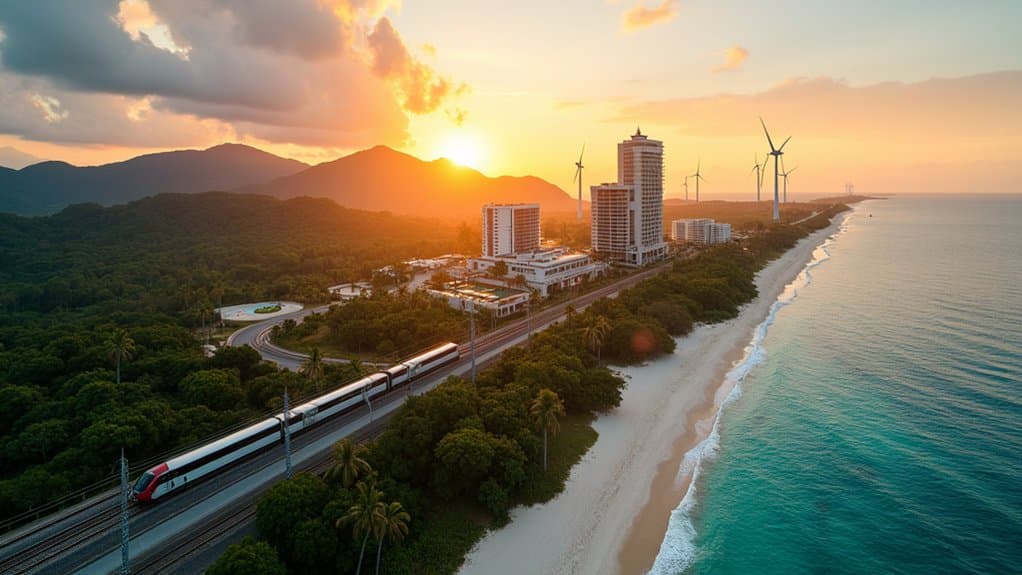
You want to know if the Dominican Republic North Coast is a real opportunity or just another Caribbean fantasy? Go stand on the road between Sosúa and Santiago at 7 AM on a Wednesday. Count the cement trucks. I did this last month—twelve in forty minutes, all heading toward the coast. That's not marketing. That's concrete reality.
For twenty years, my firm has watched developers wave glossy brochures while the power went out mid-presentation. We've seen "luxury communities" where the entrance road turned into a river every August. The North Coast has always had potential. What's different in 2026 is that the government is finally backing that potential with actual steel, fiber optic cable, and functioning sewage systems. Not everywhere. Not perfectly. But enough to change the investment equation if you know where to look.
The infrastructure conversation matters because it separates properties that will appreciate from properties that will languish. A villa in Sosúa with a clean title but no reliable water pressure is a headache, not an asset. A condo in Cabarete with ocean views but a four-hour drive from the nearest international airport is a hard sell when your renters want convenience. The projects going in right now—the highway expansions, the port upgrades, the utility grid modernization—these are the unglamorous factors that determine whether your Dominican Republic villas for sale become a smart diversification play or an expensive lesson in due diligence.
Key Takeaways
- The Amber Highway Project: A US$400 million highway connecting Santiago to the North Coast will cut travel time from 100 minutes to 30 minutes, effectively merging two international airports into one catchment area and opening the coast to 3 million domestic weekend tourists from the Cibao region—though the project's tender was cancelled in 2024 and its restart timeline remains uncertain.
- Sosúa Bay Transformation: The government's RD$600 million waterfront revitalization is removing 200+ informal vendors and shacks, installing surveillance systems, and rebranding Sosúa from nightlife hub to family-friendly luxury destination—properties in El Batey overlooking the beach have already seen rental inquiry increases of 30%.
- Utility Grid Reality: While Fiber-to-the-Home now offers 300 Mbps speeds and Starlink provides satellite backup, the North Coast still averages 3-5 blackouts weekly—a 10-20kW backup generator remains mandatory for luxury properties, with propane systems offering cleaner and cheaper operation than diesel.
- Legal Non-Negotiables: Since the 2009 Property Registry Law, every property must have a Deslinde (GPS demarcation) to be legally sold; properties qualifying under CONFOTUR Law 158-01 receive 15-year exemptions from both the 3% transfer tax and 1% annual property tax, but this only applies to newly approved developments.
- Investment Entry Point: Luxury ocean-view villas in Sosúa average $1,800-$2,500 per square meter compared to $4,000+ in Costa Rica or $8,000+ in Turks & Caicos, but construction projects typically run 30-40% behind schedule—factor "island time" into your timeline expectations.
The Highway That Changes Everything
The Amber Highway isn't finished. Let me be clear about that upfront. More than that, the project's original tender process was cancelled in May 2024 by the DGAPP under Resolution CNAPP-01-2024 because the private sector proposals required excessive state guarantees—shadow tolls that the government refused to underwrite. The project exists on paper. The commitment appears genuine. But the execution model is still being figured out.
What we know for certain: the technical design remains sound. This 32.7-kilometer stretch will bypass the winding, dangerous "La Turística" mountain road that currently connects Santiago to Puerto Plata. That drive takes 100 minutes on a good day. The new highway design—four lanes, two major tunnels through the Septentrional mountain range—will cut it to 30 minutes when completed.
Why does this matter for real estate? Santiago is the economic engine of the Cibao region, home to over 3 million people with disposable income. Right now, the North Coast is a vacation destination for them, not a weekend home option. Cut the drive time by 70%, and suddenly Puerto Plata real estate becomes viable for weekend commuting. The demand profile shifts from pure tourism rentals to a hybrid market that includes wealthy Dominican families looking for second homes.
We're already seeing this in land values. Plots adjacent to the projected highway exits in Montellano have jumped 25% in asking price since the original project was announced. That's speculation, yes. But it's informed speculation based on access. The highway doesn't just connect Santiago to the coast—it effectively merges Gregorio Luperón International Airport (POP) and Santiago's Cibao International Airport (STI) into a single tourism catchment area. An investor evaluating Sosua real estate can now market to visitors arriving at either airport with equal convenience.
The construction timeline is the variable. After the tender was declared void, the government remains committed to finding a viable public works model—possibly a revised PPP structure or direct government funding. But weather delays are real, material supply chains are unpredictable, and the tunnels through the mountains are complex engineering. If you're buying property today expecting the highway to be operational in 12 months, you're setting yourself up for disappointment. If you're buying with a 3-5 year investment horizon, you're positioning yourself ahead of the completion surge when prices will adjust to the new reality.
Sosúa's Waterfront Gamble
The Ministry of Tourism is investing RD$600 million—approximately $10 million USD—to completely redesign Sosúa Bay. This is not cosmetic. They're demolishing over 200 informal vendor shacks, relocating the occupants with compensation, and replacing the chaotic beachfront with two open-air plazas for gastronomy and arts, new public restrooms, and a dedicated Politur security center.
The project includes 50+ surveillance cameras connected to the 911 emergency system, beach renourishment to widen the sandy area by 15 meters, and a 300-vehicle parking lot to eliminate the traffic congestion that currently clogs the main highway during high season. Demolition of the old "casetas" began mid-2024. The target completion date is late 2025.
Here's the strategic shift: Sosúa has historically been known for nightlife—specifically, a certain type of nightlife that attracted single men but deterred families. The waterfront revitalization is an explicit attempt to rebrand the town as a family-oriented luxury destination. Whether that works depends on execution. The government can remove the shacks, but changing a town's reputation takes years.
What we're seeing in the market right now: condos in Los Charamicos, which overlook the beach, have seen rental inquiries rise 30% as the view of the "shantytowns" is removed. Properties in El Batey—the historic core of Sosúa—are benefiting from the security upgrades and improved pedestrian access. The secondary streets, two or three blocks back from the beach, remain undervalued compared to the oceanfront but are within easy walking distance of the new plazas. If the revitalization succeeds in attracting a different demographic, those secondary streets will see significant appreciation.
The risk? Government projects in the Caribbean have a habit of stalling at 80% completion. The parking lot might open, but the landscaping might take another year. The cameras might be installed, but the monitoring center might lack staff. We've seen this pattern before in Puerto Plata's historic center renovation, which took five years longer than projected but ultimately did increase property values by over 30% once completed.
For buyers evaluating Sosua real estate today, the question isn't whether the revitalization will finish—it will, eventually. The question is whether you're comfortable with a 2-3 year timeline before the full impact materializes in rental rates and resale values.
| Zone | Current Price/sqm | Infrastructure Benefit | Risk Factor |
|---|---|---|---|
| El Batey (Beachfront) | $2,200 - $2,800 | Direct plaza access, security cameras | Already premium-priced |
| El Batey (Secondary Streets) | $1,500 - $1,900 | Walkable to revitalized beach | Depends on sustained tourism shift |
| La Mulata | $60 - $90 (land) | 5 min from center, new villa developments | Requires new construction, no beach views |
| Sosúa Ocean Village (Inland Phases) | $1,600 - $2,000 | Gated community amenities, security | HOA fees $250-$600/month |
The Unglamorous Truth About Utilities
Fiber optic cable and backup generators don't make for sexy marketing brochures. But they determine whether your Cabarete condos for sale actually rent, and at what price point.
The Dominican Electric Transmission Company (ETED) is executing a $450 million expansion plan through 2028 to strengthen the high-voltage grid. Major providers like Claro and Cable Del Norte have rolled out Fiber-to-the-Home in Cabarete, offering speeds up to 300 Mbps. Starlink satellite internet, which received its license and began shipping to the Dominican Republic in mid-2022, provides 150-250 Mbps speeds as a backup option. The National Institute of Potable Water (INAPA) has launched a RD$4 billion aqueduct project to guarantee potable water for Puerto Plata, Sosúa, and Cabarete for the next 20 years.
All of this is real progress. It's also incomplete.
The North Coast still averages 3-5 short blackouts per week. Despite improvements and the ETED expansion, the electrical distribution from EdeNorte remains unstable compared to Santo Domingo or Punta Cana. Municipal water pressure fluctuates. Salt air corrosion is aggressive on any property within a kilometer of the ocean. A cistern of at least 5,000 gallons is standard for any villa. A 10-20kW backup generator is mandatory for luxury properties. Modern units use propane (LPG), which is cleaner and cheaper than diesel, but you're still looking at installation costs of $5,000-$8,000 and ongoing maintenance.
The grid upgrades matter most for digital nomads and long-term expat rentals. The average stay duration in Cabarete has increased from 7 days to 28+ days due to remote workers. These renters require reliable internet—not just for video calls, but for consistent uptime. A property with Fiber-to-the-Home plus Starlink backup can command a 20-30% price premium over properties with standard cable internet. The proliferation of co-working spaces in Kite Beach acts as an anchor for this demographic, keeping occupancy high year-round rather than just during wind season.
For buyers, the calculation is straightforward: factor $10,000-$15,000 into your budget for utility redundancy (generator, inverter/battery backup, cistern, water pump). Properties that already have these systems installed are worth more than their asking price suggests if they're priced at the same per-square-meter rate as properties without them. Properties that don't have them will require the investment before they're competitive in the rental market.
The voltage stability upgrades to local substations have reduced the risk of hardware damage to expensive tech equipment—laptops, monitors, servers—which matters to the digital nomad market. The implementation of smart meters allows transparent remote monitoring of electricity consumption, crucial for landlords managing long-term rentals where tenants pay their own utilities. These are boring, technical details. They're also the difference between a property that rents for $2,500/month and one that rents for $3,500/month to the same demographic.
Where the Money is Moving
Cabarete has a finite amount of beachfront land. Building height restrictions—typically 3-4 stories depending on zone—prevent overdevelopment. This creates scarcity. Kite Beach is consistently ranked among the top 10 kitesurfing destinations globally. Encuentro is the #1 surf break in the DR. These are not trends that will reverse.
Properties on Kite Beach have a near-zero vacancy rate during wind seasons (December-April and June-August). The "Master of the Ocean" tournament, held annually, spikes rental prices by 200% for that week. Beachfront condos in Cabarete command $2,150-$3,000+ per square meter. Off-beach villas in communities like Pro Cab average $1,800 per sqm, offering a balance of value and access.
The shift from "surf shack" to "luxury surf condo" in Encuentro has attracted affluent millennials. Property values in this zone have increased 15-20% in recent years. The explosion of yoga retreats, organic markets, and fitness centers supports a high-yield rental market focused on wellness travelers. The walkability of Cabarete—beach, gym, food, nightlife all within 15 minutes on foot—is a resale driver for buyers seeking a car-free lifestyle.
The resale market in Cabarete moves 30% faster than Puerto Plata city due to international brand recognition. Properties are bought, sold, and rented in US Dollars, which protects the asset's value from local inflation and makes resale seamless for international buyers. The year-round resident expat community ensures restaurants and amenities stay open 365 days a year, which supports consistent property demand.
The limitation: inventory. New construction in Cabarete is constrained by land availability. The supply of beachfront land for new development is 90% exhausted. This drives up resale values but also means buyers need to move quickly when quality properties become available. The market for Cabarete condos for sale is competitive. Properties that are well-maintained, have modern amenities, and are priced reasonably sell within 60-90 days.
For buyers evaluating the North Coast, Cabarete offers the highest liquidity and the most predictable rental demand. Sosúa offers better value per square meter with upside potential tied to the waterfront revitalization. Puerto Plata city offers the lowest entry prices and access to commercial infrastructure but less tourism-driven rental demand. Rio San Juan offers eco-luxury positioning with large lots but requires buyers comfortable with lower density and longer distances to amenities.
The Legal Reality That Protects You (Or Doesn't)
Law 108-05 modernized the Dominican title system. You must have a "Certificado de Título" to prove ownership. Since 2009, every property must have a "Deslinde"—a GPS demarcation of the property boundaries. Banks cannot lend on, and you cannot legally transfer, a property without a Deslinde. While you can technically sign a purchase contract without one, you cannot complete the title transfer, making this requirement practically mandatory for any legitimate sale. This is not optional. It's the foundation of your legal protection.
The standard transfer tax is 3% of the government-assessed value (DGII value), which is not necessarily the purchase price. The annual property tax (IPI - Impuesto al Patrimonio Inmobiliario) is 1% on individual properties valued above RD$10,190,833 (approximately US$172,230 as of 2025). The Dominican Tax Authority adjusted this exemption threshold for inflation for the 2025 fiscal period to exactly this amount. You only pay 1% on the value above this threshold.
Properties under the CONFOTUR Law (Law 158-01) are exempt from the 1% IPI tax and the 3% transfer tax for 15 years. This is one of the most generous tax incentives globally. But CONFOTUR benefits only apply to newly approved developments, not to resale properties. If a developer tells you a resale property has CONFOTUR benefits, verify it directly with the Ministry of Tourism. We've seen this misrepresented.
The "Promesa de Venta" (Promise of Sale) is a legally binding contract used to secure a property while due diligence is completed. It usually requires a 10% deposit. This contract locks the price and prevents the seller from selling to someone else while you verify the title, check for liens, and complete your legal review. The deposit is refundable if the due diligence reveals problems with the title.
Essential due diligence: Request a "Certificación del Estado Jurídico del Inmueble" from the Title Registry to ensure no liens or mortgages exist. Verify the seller is current on IPI taxes—unpaid taxes stay with the property, not the owner. Confirm the property has a valid Deslinde. If the property is in a development, verify the developer has the "Licencia de Construcción" from MOPC before putting money down.
Dominican inheritance law includes "forced heirship" provisions, which can complicate estate planning for foreigners. However, ownership through a holding company or specific will provisions can often bypass this. Legal structuring is not optional if you care about what happens to the property when you die.
In the DR, a Notary Public must be a licensed lawyer with a specific government appointment. Using a "notary" from another country is not valid for real estate transactions. The Notary's role is to verify the legality of the transaction, not just witness signatures. This is a higher standard than in the US or Canada.
Squatters' rights exist but are weaker for properties with a Deslinde. A guarded or gated community eliminates this risk entirely. For properties outside gated communities, regular inspections and maintaining visible occupancy (even if it's just a caretaker) prevent squatter claims.
What It Actually Costs to Live Here
A couple can live comfortably in Sosúa or Cabarete for $2,500 USD per month, including rent, food, and utilities. This is not backpacker living. This is a modern apartment, regular dining out, and occasional trips to Santiago for shopping.
Fresh milk costs $1.40 per liter. A local beer (Presidente) costs $2.30. A loaf of quality bread costs $2.00. A "Plato del Día" (local lunch) costs $4-6 USD. A mid-range dinner for two at a beach restaurant costs $30-50 USD. These are 2026 prices. They fluctuate with the exchange rate, but the Dominican Peso has shown relative stability against the USD compared to other Latin American currencies.
A full-time housekeeper or maid costs approximately $300-$400 USD per month. This is standard for expats and retirees. It's not a luxury; it's part of the local economy. Domestic help is affordable, reliable, and makes daily life significantly easier in a tropical climate where dust and humidity are constant.
Electricity is expensive. The tiered pricing structure can reach $0.30 per kilowatt-hour for high usage. Running air conditioning all day in a 3-bedroom villa can lead to bills of $300+ per month. Solar panels have become economically viable; ROI is now under three years for properties with high electricity consumption. Many new developments are integrating solar as a selling point.
Healthcare costs are low by North American standards. The Centro Médico Cabarete, located in Sosúa, is a modern private hospital accepting international insurance (Cigna, Aetna). A standard doctor's visit costs $40-60 USD without insurance. Prescription medications are significantly cheaper than in the US—often 50-70% less for the same drugs.
Schooling for families: The International School of Sosúa (ISS) offers a US-accredited curriculum (Pre-K to 12) with tuition ranging from $6,000-$10,000 per year. ISLA Academy in Cabarete focuses on inquiry-based learning and is popular with digital nomad families; tuition is approximately $7,000 per year. These are competitive with international schools in other Caribbean locations but a fraction of US private school costs.
The IPI tax threshold for 2025 is RD$10,190,833 (approximately US$172,230). If your property is valued below this, you pay no annual property tax. If it's valued above this, you pay 1% on the amount above the threshold. A property valued at $300,000 USD would pay approximately 1% on $127,770, which is $1,277 annually. CONFOTUR-exempt properties pay nothing for 15 years.
HOA fees in gated communities range from $250 to $600 per month. This covers security, backup power during outages, trash collection, and common area maintenance. These fees are non-negotiable and should be factored into your cost of living or rental yield calculations. The municipal government often fails to provide reliable trash collection or security, so the HOA fee is effectively paying for services that should be public but aren't.
The Residency Path (If You Want It)
Foreigners have the same rights as citizens to purchase property in the Dominican Republic under Decree 21-98, which abolished the previous requirement for Presidential authorization. No residency or special permission is required for the purchase itself. But if you want to live here long-term, residency offers significant benefits: tax-free import of household goods and a car (one time), ability to open local bank accounts easily, and avoidance of the tourist overstay fees charged when you leave the country.
The Pensionado Visa requires proof of a monthly pension of at least $1,500 USD (plus $250 per dependent). This is for retirees with guaranteed income from a pension or Social Security. The Rentista Visa is for those with passive income from rentals or investments; the requirement is $2,000 USD monthly. The Investment Visa offers fast-track residency for investors buying property valued at $200,000 USD or more, but the property must be purchased through a registered company. These income thresholds are established by the General Law on Migration and Decree 631-11.
Residency processing typically takes 4-6 months. Unlike some countries, the DR does not enforce strict day-count requirements to maintain residency status. You need to renew every 1-4 years depending on your visa type, but there's no requirement to spend 183 days per year in the country to maintain status. This makes it attractive for investors who want residency as a backup option but don't plan to live here full-time immediately.
You can apply for Dominican citizenship after 2 years of permanent residency, or 6 months for fast-track Investment Visa holders. The DR allows dual citizenship, so you don't need to renounce your original nationality. The passport provides visa-free access to 70+ countries, though not the US or EU.
The residency process requires working with a local attorney who specializes in immigration. The paperwork is extensive: background checks, apostilled documents from your home country, proof of income, medical exams. Trying to navigate this without local representation is possible but inadvisable. The bureaucracy is Byzantine, and small errors can delay the process by months.
Why This Isn't Dubai (And Why That Matters)
Dubai offers similar rental yields (6-9%), but entry prices for beachfront property are 3x higher than the DR. Portugal's yields in prime areas (Algarve, Lisbon) have compressed to 3-5%, and the Golden Visa no longer applies to real estate purchases. Turkey offers low entry prices but comes with currency risk and political instability. The DR operates in US Dollars, which protects investors from local currency devaluation.
A luxury 2-bedroom ocean-view condo in Cabarete costs $350,000. A comparable unit in Miami Beach costs $1.5 million or more. The DR is 2 hours from Miami and 3.5 hours from New York. Dubai is 14+ hours. For North American investors, the DR offers accessibility that Middle Eastern markets cannot match.
The DR has enjoyed 50+ years of political stability and is the largest economy in the Caribbean and Central America. The IMF projects the DR economy to grow by 5% in 2025, outperforming the regional average. The government's goal is 15 million visitors by 2030, ensuring long-term rental demand. The tourism volume—the Dominican Republic officially celebrated reaching 10 million visitors (air and cruise combined) in December 2023—provides a consistent demand funnel that smaller islands cannot match.
The banking sector is robust, with high solvency ratios. US Dollar accounts are standard. Local banks offer mortgage financing to foreigners, typically up to 50-60% loan-to-value, increasing market liquidity. This is rare in the Caribbean, where cash purchases are the norm.
The CONFOTUR 15-year tax holiday is one of the most generous incentives globally, superior to Spain's tax regime for non-residents. The DR's combination of dollar-denominated real estate, political stability, strong tourism infrastructure, and accessible financing creates a unique value proposition for investors seeking diversification outside traditional markets.
The Window (And Why It Won't Stay Open)
Real estate prices in the North Coast are projected to appreciate 5-8% annually over the next five years due to infrastructure completion. The supply of beachfront land in Cabarete is 90% exhausted. The Amber Highway, when completed, will fundamentally change access patterns and demand. The Sosúa waterfront revitalization will rebrand the town to a higher demographic.
These are not speculative claims. They're based on observable construction activity, government budget allocations, and historical precedent from similar projects in Puerto Plata's historic center, which saw property values increase over 30% within five years of completion.
The current inventory of Dominican Republic villas for sale offers a window before prices adjust to the new infrastructure reality. Properties in undervalued zones—La Mulata, El Choco, Perla Marina, secondary streets in El Batey—are positioned to benefit from spillover appreciation as primary beachfront inventory becomes scarce.
The risk is timing. Construction projects in the DR typically run 30-40% behind schedule. Weather delays, supply chain issues, and bureaucratic slowdowns are real. If you're buying with a 12-month investment horizon expecting immediate appreciation, you're gambling. If you're buying with a 3-5 year horizon, you're positioning yourself intelligently.
Developer financing is currently the most accessible option, with terms often requiring 50% down and interest rates of 5-7%. Local bank financing for foreigners is possible but difficult, with rates of 10-12%. Most purchases are cash. This creates opportunity for buyers with liquidity, but it also means the market is less leveraged and therefore less volatile than markets where 90% financing is common.
Due diligence takes 2-3 weeks if done properly. Starting the process now positions buyers for high season (January-April) rental income. A "Discovery Tour"—spending 3-5 days viewing properties, meeting developers, and understanding the micro-climates of Sosúa versus Cabarete—is the recommended first step. You cannot evaluate this market from a laptop. The difference between a property 200 meters from the beach and one on the beach is not just price; it's breeze, noise, view quality, and salt air corrosion.
The infrastructure boom provides the growth engine. Legal due diligence provides the safety. Both are necessary. Neither is sufficient alone. The investors who succeed in this market are the ones who verify first and trust later. The cement trucks on the road to Santiago are real. The timeline for the highway is uncertain. The opportunity exists in the gap between those two facts.