

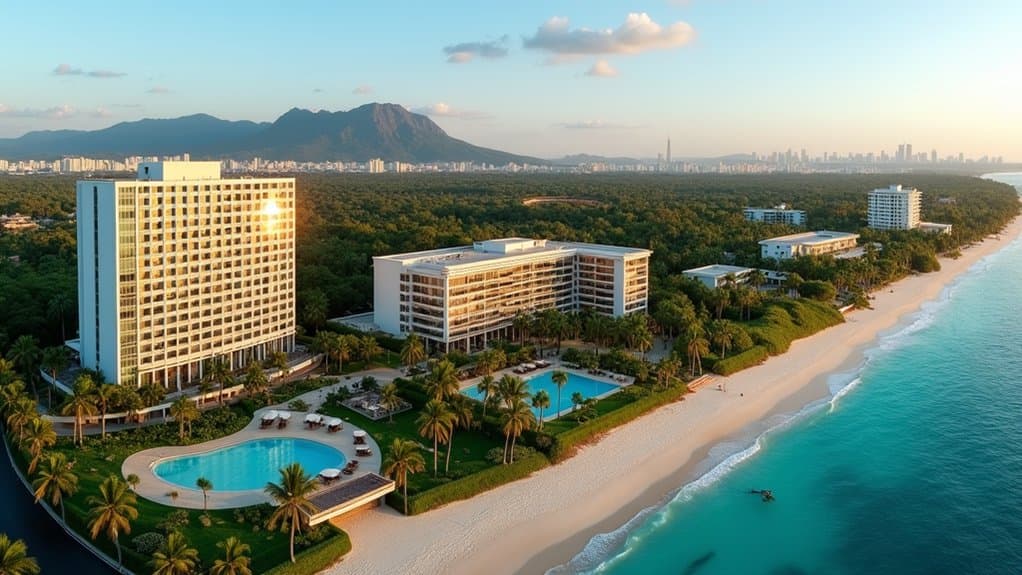
A Canadian entrepreneur walked into my office last month with a problem. He'd just wired $50,000 to a "reputable" real estate company in Sosúa—one with a glossy website, English-speaking agents, and a portfolio of beachfront condos that looked perfect for his retirement plan. The deposit was supposed to secure a pre-construction unit. Instead, it secured him a front-row seat to a very expensive lesson about how the largely unregulated Dominican Republic real estate market actually works.
The developer had no CONFOTUR approval. The land had no Deslinde. The "escrow account" was just the developer's operating account with a different name on the bank statement. And the agent who sold him the dream? Not a member of the AEI, no RNC registration, and—as we discovered—not even a legal resident of the country.
This isn't a story about bad luck. It's a story about what happens when you treat the Dominican Republic real estate market like it has the same consumer protections as Toronto or Miami. It doesn't. But that doesn't mean it's a minefield. It means you need to understand the specific legal architecture that makes this market work—and the specific gaps where things fall apart.
I've been practicing real estate law in Sosúa since 1986. I've watched the North Coast transform from a sleepy fishing village into a serious investment destination. And I've seen every variation of the same mistake: foreign buyers who assume that Dominican Republic real estate companies operate under the same rules as their home markets. They don't. Here's what you actually need to know.
Key Takeaways
- No Licensing Requirement: As of February 2026, while a bill to regulate real estate services has been introduced to the Chamber of Deputies, it hasn't been enacted or enforced. There is still no government-mandated license to practice real estate in the Dominican Republic, meaning anyone can legally call themselves an agent. Verify legitimacy through AEI membership and RNC registration.
- Deslinde is Critical But Not Absolute: Properties without a completed Deslinde (Law 108-05) cannot be financed by banks and trade at a 15-30% discount. You can legally buy and sell rights to property via a Constancia Anotada, but you're purchasing undefined rights to a percentage of a larger parcel rather than a specific plot. The Title Registry won't issue a clean, individual Certificate of Title until the Deslinde is complete.
- CONFOTUR Verification is Manual: Projects claiming tax benefits under Law 158-01 must have an official "Resolución" from MITUR. The exemptions (3% transfer tax, 1% annual property tax) only apply if the specific phase you're buying has Definitive Classification.
- Financing Reality: Dominican banks offer mortgages to foreigners at 7.5-10.5% interest rates for USD-denominated loans (11-14%+ for Peso loans, which foreigners rarely take due to currency risk). LTV ratios are capped at 60-70% for foreign buyers. Developer financing for pre-construction is often more viable, but only with a proper Fideicomiso structure under Law 189-11.
- Construction Costs: Building in the North Coast in 2026 realistically ranges from $950-$1,200 USD per square meter for decent standard finishes, $1,200-$1,800 for luxury. Factor in $3,000-$5,000 for cistern/pump systems and $15,000-$25,000 for solar infrastructure.
Why the Absence of Regulation Matters More Than You Think
The Dominican Republic has no government-mandated real estate license. Zero. A bill to regulate real estate services and brokerage has been sitting in the Chamber of Deputies, but as of February 2026, it hasn't changed anything on the ground. The Asociación de Empresas Inmobiliarias exists, but membership is voluntary. What this means in practice is that the person showing you a $400,000 beachfront villa in Cabarete might have decades of experience and a spotless track record—or they might have arrived last month with a rental car and a business card printed at the airport.
This isn't inherently bad. Some of the most knowledgeable agents I work with have no formal credentials. But it creates a specific risk profile that doesn't exist in regulated markets. There's no mandatory Errors & Omissions insurance. No state-guaranteed escrow system. No centralized MLS to verify pricing. And most critically, no legal recourse for negligence unless you can prove civil damages in Dominican courts—a process that takes years and costs more than most properties are worth.
The practical implication: your due diligence can't rely on the agent's reputation or the company's branding. It has to be structural. You need to verify three things independently, regardless of who's selling:
- The agent's legal standing (RNC registration with the DGII)
- The property's title status (Certificado de Título with completed Deslinde)
- The developer's financial structure (Fideicomiso for pre-construction)
If any of these three checks fail, the deal shouldn't proceed. Period.
The AEI Standard and What It Actually Means
When I tell clients to verify AEI membership, they often ask what that actually protects them from. The honest answer: not much, in a legal sense. The AEI's Code of Ethics is binding on members, but enforcement is internal. If an AEI agent misrepresents a property, you can file a complaint with the association. They might revoke the agent's membership. But that doesn't get your money back.
What AEI membership does signal is that the agent has been in the market long enough to care about their reputation within the local professional community. It's a social check, not a legal one. In Sosúa and Cabarete, where the real estate community is small and word travels fast, that social pressure matters. An AEI member who screws over a client is going to have a harder time getting referrals from other lawyers, developers, and expats who've been here for decades.
But it's not a guarantee. I've seen AEI members engage in dual agency without disclosure—representing both buyer and seller while collecting full commission from the seller and positioning themselves as the buyer's advocate. This is legal in the Dominican Republic. It's also a structural conflict of interest that most foreign buyers don't understand until it's too late.
The solution isn't to avoid AEI agents. It's to understand that AEI membership is a starting point, not a finish line. You still need independent legal counsel. You still need to verify every claim. And you still need to understand that the agent's incentive is to close the deal, not to protect your interests.
The "Constancia Anotada" Trap
Here's a scenario I see at least once a month: A buyer finds a beautiful piece of land in the hills above Sosúa. The price is reasonable. The views are incredible. The agent assures them the title is "clean." The seller provides a document called a "Constancia Anotada."
The buyer thinks they're buying a specific plot of land. What they're actually buying is a percentage share of a larger parcel that has never been subdivided. The Constancia Anotada doesn't describe boundaries. It doesn't include GPS coordinates. It's essentially a receipt saying "you own 1,000 square meters of this 10,000-square-meter farm, but we haven't decided which 1,000 square meters yet."
This isn't a scam in the traditional sense. The seller isn't lying about what they're selling. But the buyer is making assumptions about what they're buying that the document doesn't support. And those assumptions create massive problems down the line.
You can't get a mortgage on a Constancia Anotada. Banks in the Dominican Republic will not lend money against a property that doesn't have defined boundaries. You can't build legally without a specific plot designation. And you can't easily resell, because the next buyer will have the same problem you do—they're buying rights to an undefined portion of a larger parcel, not a clean title to a specific piece of land.
Technically, you can sell and buy property with just a Constancia Anotada—this happens frequently, especially in rural areas or older transactions. It's not illegal. But you're trading in undefined rights rather than a specific, bankable asset. The Title Registry won't issue a clean, individual Certificate of Title until the Deslinde process is complete.
The fix is the Deslinde process under Law 108-05. This is the formal legal procedure that transitions a property from a percentage share to an individualized plot with GPS coordinates registered in the Title Registry. It involves hiring a surveyor, notifying neighbors, holding a public hearing where anyone can object if they think the boundaries encroach on their land, and waiting 6-12 months for the Tribunal de Tierras to issue a final ruling.
It costs $1,500-$3,000 USD. It's bureaucratic and slow. And it's absolutely mandatory if you want a property that can be financed, insured, and resold without legal complications.
The question isn't whether you need a Deslinde. The question is whether you're going to pay for it before you buy the property or after. If you buy without a Deslinde, you're accepting a 15-30% discount on the purchase price in exchange for taking on the cost, time, and risk of completing the process yourself. That can make sense if you're an experienced investor who understands the process and has the patience to wait. For most foreign buyers, it's a terrible deal.
Pre-Construction and the Fideicomiso Requirement
The Dominican Republic real estate market loves pre-construction. Developers in Cabarete and Sosúa routinely sell units 12-24 months before completion. The pitch is compelling: lock in a lower price, watch your equity grow during construction, and walk into a brand-new property with immediate rental potential.
The risk is equally compelling: you're wiring tens of thousands of dollars to a company that doesn't have a finished product yet. If the developer goes bankrupt, gets sued, or simply decides to abandon the project, your deposit is gone.
Law 189-11 was supposed to solve this problem by introducing the Fideicomiso structure—essentially a trust where buyer deposits are held in a separate account managed by a fiduciary bank. The funds can only be released to the developer as construction milestones are completed. If the project fails, the fiduciary returns the money to buyers.
In theory, this works. In practice, enforcement is inconsistent. I've reviewed pre-construction contracts in Sosúa where the developer claimed to have a Fideicomiso but the actual trust agreement didn't exist. The "escrow account" was just the developer's operating account with a different name on the statements.
The verification process is straightforward but requires asking specific questions:
- What is the name of the fiduciary bank managing the trust?
- Can I see a copy of the Fideicomiso agreement?
- What are the specific milestones that trigger fund releases to the developer?
- What happens to my deposit if the project is delayed or cancelled?
If the developer can't answer these questions with documentation, the Fideicomiso doesn't exist. And if the Fideicomiso doesn't exist, you're making an unsecured loan to a construction company in a foreign country with no legal recourse if things go wrong.
The alternative is developer financing, where you make payments directly to the developer over the construction period. This is riskier, but it's also more transparent. You're not pretending there's a safety net. You're making a calculated bet that the developer will complete the project because they need your final payment to make the economics work.
Which structure is better depends on the specific developer and project. But the worst option is assuming that "pre-construction" automatically means "protected." It doesn't.
CONFOTUR and the Tax Benefits That Actually Matter
Law 158-01 is the reason many foreign investors look at the Dominican Republic in the first place. The CONFOTUR program offers 10-15 years of tax exemptions for approved tourism projects: 3% transfer tax exemption at purchase, 1% annual property tax exemption, and in some cases, exemptions on rental income tax.
For a $300,000 property, that's $9,000 saved at closing and roughly $2,500-$3,000 saved annually on property taxes. Over a 15-year period, the total tax savings can exceed $45,000—a meaningful reduction in the cost of ownership.
But here's what most real estate companies don't tell you: CONFOTUR approval is project-specific, phase-specific, and sometimes unit-specific. A developer might have CONFOTUR approval for Phase 1 of a project but not yet for Phase 2. Or they might have provisional approval but not definitive approval, which means the tax benefits aren't legally guaranteed.
The verification process requires asking for the official "Resolución" document issued by the Ministry of Tourism. This document lists the project name, the specific phase covered, the approval date, and the duration of the tax exemptions. You can verify this directly by contacting the Department of Tourism Companies and Services within MITUR.
And here's the critical detail: only properties with "Definitive Classification" (Clasificación Definitiva) guarantee the tax exemptions for the end buyer. A "Provisional" classification allows a developer to start the project, but it doesn't secure your tax benefits. If the developer can't produce a Resolución showing Definitive Classification for your specific phase, those exemptions don't exist yet.
If the developer can't produce the Resolución, they don't have CONFOTUR approval. And if the purchase contract doesn't explicitly state that the unit benefits from Law 158-01, the tax exemptions don't transfer to you even if the project has approval.
I've seen contracts where the developer had CONFOTUR approval but structured the sale in a way that excluded the buyer from the benefits. The developer kept the tax exemptions for themselves and sold the unit at market price. The buyer thought they were getting a tax-advantaged property. They weren't.
The fix is simple but requires attention to detail: verify the Resolución before making an offer, and make sure the purchase contract explicitly states that the unit is covered under Law 158-01. If the developer resists putting this in writing, that's a red flag.
The Deslinde Process and Why It's Non-Negotiable
Law 108-05 is the most important piece of real estate legislation in the Dominican Republic that most foreign buyers have never heard of. It's the law that created the modern Title Registry system and established the Deslinde process as the mandatory standard for property boundaries.
Before 2009, it was common for properties to be sold with just a "Constancia Anotada"—a document that proved you owned a percentage of a larger parcel but didn't specify where your portion was located. This created endless boundary disputes, made financing impossible, and turned real estate transactions into a legal nightmare.
The Supreme Court's Resolution No. 355-2009 changed this by ruling that Deslinde is mandatory for all new real estate transactions. You can't register a sale in the Title Registry without it. You can't get a mortgage without it. And you can't legally build without it.
The Deslinde process involves hiring a licensed surveyor to measure the property using GPS coordinates, notifying all adjacent property owners, holding a public hearing where neighbors can object if they believe the boundaries encroach on their land, and waiting for the Tribunal de Tierras to issue a final ruling. The entire process takes 6-12 months and costs $1,500-$3,000 USD.
It's bureaucratic. It's slow. And it's absolutely mandatory if you want a property that can be financed, insured, and resold without legal complications.
The practical implication: if you're looking at properties in Sosúa or Cabarete, the first question you need to ask is whether the property has a completed Deslinde. If the answer is no, you need to decide whether you're willing to take on the cost and time of completing the process yourself.
Some buyers do this intentionally. They buy properties without Deslinde at a 15-30% discount, complete the process themselves, and resell at full market value. It's a viable strategy if you understand the process and have the patience to wait. But it's not a strategy for buyers who need immediate financing or who want a turnkey investment.
The other risk is that the Deslinde process might reveal problems with the property boundaries. If a neighbor objects during the public hearing and proves that the seller's claimed boundaries encroach on their land, the Tribunal de Tierras might reduce the size of your property or reject the Deslinde application entirely. This is rare, but it happens. And if it happens, you're stuck with a property that can't be legally subdivided or sold.
The solution is to make the Deslinde completion a condition of the sale. Structure the purchase agreement so that the seller is responsible for completing the Deslinde before closing. If they can't, the deal doesn't proceed. This shifts the risk and cost back to the seller, where it belongs.
Financing Reality for Foreign Buyers
Dominican banks will lend to foreigners. Scotiabank and Banco Popular both offer mortgage products for non-residents. But the terms are significantly different from what most North American or European buyers are used to.
For USD-denominated loans—which are what most foreigners take to avoid currency devaluation risk—interest rates range from 7.5% to 10.5% as of early 2026. These rates are typically fixed for 1-5 years, after which they adjust to a variable rate tied to the Central Bank's benchmark rate. If you're looking at a Peso-denominated loan (which foreigners rarely take for investment properties), rates run from 11% to 14%+. The higher rate reflects the currency risk and inflation in the local economy.
Loan-to-value ratios are capped at 60-70% for foreign buyers, which means you need a 30-40% down payment.
The approval process requires documentation that most foreign buyers don't have readily available: tax returns from your home country, reference letters from your home bank, proof of income, and sometimes proof of assets. The process takes 4-8 weeks and requires opening a Dominican bank account, which itself requires a residency visa or a valid passport with at least 6 months of validity.
The practical implication: if you're planning to finance a property in the Dominican Republic, you need to start the mortgage pre-approval process before you make an offer. The timeline from offer to closing is typically 60-90 days, and the mortgage approval process can easily consume half of that time.
The alternative is developer financing, where the developer acts as the lender and you make payments directly to them over a 3-5 year period. This is more common for pre-construction projects, where the developer needs cash flow during the construction phase. The interest rates are often lower than bank rates (7-10%), but the terms are less flexible and the loan is typically due in full once construction is complete.
Which option is better depends on your financial situation and timeline. Bank financing gives you more flexibility and longer repayment terms. Developer financing is faster and often cheaper, but it ties you to the developer's construction timeline and requires a balloon payment at the end.
Construction Costs and Hidden Infrastructure Expenses
If you're considering building a property in the Dominican Republic rather than buying existing inventory, you need to understand the real cost structure. The headline number you'll hear from most developers is $750-$950 USD per square meter for standard finishes. That might have been accurate in 2023 or 2024, but inflation and material cost increases by 2026 have pushed those numbers higher.
For decent standard finishes—concrete, rebar, roof, windows, doors, basic plumbing and electrical—you're realistically looking at $950-$1,200 USD per square meter in the North Coast. A rate of $750 would likely result in sub-standard finishes or exclude essential site preparation costs. For luxury finishes, the range of $1,200-$1,800 per square meter remains accurate.
But those numbers don't include the infrastructure costs that make a property livable in the North Coast. You need a cistern and pump system to store water, because municipal water supply is inconsistent. That's $3,000-$5,000 USD. You need a backup generator or solar system, because electricity costs $0.30 per kilowatt-hour and blackouts are common. A full solar system for a 4-bedroom villa costs $15,000-$25,000. You need a perimeter wall and gate, because security is a legitimate concern. That's another $5,000-$10,000.
Add these costs together and you're looking at a realistic all-in cost that's significantly higher than the headline construction rate. This is still competitive with building costs in Miami or Toronto, but it's not the bargain that some developers advertise.
The alternative is renovating an existing property. Older villas in Sosúa's established gated communities (like Sea Horse Ranch) can often be purchased below replacement cost and renovated for $400-$600 per square meter. The advantage is that you're buying into a location with established infrastructure, mature landscaping, and a proven rental market. The disadvantage is that you're inheriting someone else's design choices and potentially outdated systems.
Which approach makes more sense depends on your priorities. If you want a custom-designed property with modern systems and efficient layout, building new makes sense. If you want a property in an established location with immediate rental potential, renovating makes sense.
But either way, you need to budget for the full cost of ownership, not just the construction cost. And you need to factor in the time value of money—a property that takes 18 months to build and furnish is 18 months of lost rental income.
The Dual Agency Problem and Why It Matters
Dual agency—representing both buyer and seller in the same transaction—is legal in the Dominican Republic. It's also common. And it's a structural conflict of interest that most foreign buyers don't understand until they're sitting in my office trying to unwind a bad deal.
Here's how it typically works: You contact a real estate company about a property. They show you the listing. You like it. You make an offer. The agent negotiates with the seller on your behalf. The deal closes. You think the agent was working for you.
But the agent was actually working for the seller. The seller is paying the agent's commission—typically 5-10% of the sale price. The agent's financial incentive is to get the highest price possible, as quickly as possible. Your interest is to get the lowest price possible, with the most thorough due diligence possible. These interests are directly opposed.
The agent might be honest and fair. They might genuinely try to serve both parties. But the incentive structure is broken. And in a market with no mandatory disclosure requirements, many buyers don't even realize they're in a dual agency situation until it's too late.
The solution is to understand that the real estate company is never your advocate. They're a service provider facilitating a transaction. Your advocate is your independent lawyer. And your lawyer should never be someone recommended by the real estate company or the seller.
This seems obvious, but I've seen countless transactions where the buyer used the seller's lawyer because it was "convenient" or because the agent assured them it would "speed things up." It doesn't speed things up. It just eliminates the only person in the transaction whose job is to protect your interests.
What Independent Legal Counsel Actually Does
When I tell clients they need independent legal counsel, they often ask what that actually means in practice. Here's the specific work that happens during a proper due diligence process:
Title Verification: I physically visit the Title Registry office in Puerto Plata and request the official "Certificación de Título." This document lists the current legal owner, any mortgages or liens, any legal blocks (oposiciones) that would prevent a sale, and the Deslinde status. I don't rely on a copy provided by the seller. I get it directly from the Registry.
Boundary Verification: If the property has a Deslinde, I verify the GPS coordinates match the surveyor's report. If it doesn't have a Deslinde, I explain the risks and costs of completing the process.
CONFOTUR Verification: If the property claims tax benefits under Law 158-01, I request the official Resolución from MITUR and verify the specific phase and unit are covered.
Tax Verification: I request a "Certificación del IPI" from the DGII proving the seller is current on property taxes. Unpaid taxes attach to the property, not the person, so this is critical.
Utility Verification: I check with Edenorte (the local electricity company) to verify there are no outstanding utility debts. I've seen properties with $10,000+ in unpaid electricity bills that the buyer inherited.
HOA Verification: If the property is in a gated community or condo, I review the HOA bylaws to verify rental restrictions, fee structures, and any pending special assessments.
Contract Review: I review the purchase contract to verify the payment structure, closing timeline, contingencies, and penalties for non-performance. I make sure the contract explicitly states the property benefits from CONFOTUR if applicable.
Escrow Setup: I hold the deposit in my firm's escrow account or arrange for a trust with a fiduciary bank. The deposit is only released to the seller once the title transfer is complete and irrevocable.
This process takes 2-4 weeks and costs 1-2% of the purchase price. It's not glamorous. But it's the difference between buying a property and buying a lawsuit.
The Beachfront Property Exception
Properties within the 60-meter maritime zone are technically public domain under Law 305-68. This doesn't mean you can't own beachfront property. It means the ownership structure is different and requires specific legal authorization.
The most common structure is a "Concession" granted by the Ministry of the Environment. The concession gives you the right to use and develop the land for a specific period (typically 25 years, renewable). You don't own the land in the traditional sense, but you have exclusive rights to it.
The practical implication: beachfront properties require additional due diligence to verify the concession is valid and transferable. Not all concessions can be transferred to foreign buyers. And some concessions have restrictions on commercial use or rental activity.
I've seen buyers purchase "beachfront" properties only to discover the concession was never properly registered, or that it had expired years ago and the seller was occupying the land illegally. The Ministry of the Environment has been more aggressive about enforcing maritime zone regulations in recent years, which means these issues are more likely to surface during your ownership.
The solution is to verify the concession status before making an offer. If the property is within the maritime zone and doesn't have a valid, transferable concession, it's not worth buying at any price.
The Residency Calculation
Many foreign buyers are attracted to the Dominican Republic because of the residency-by-investment pathway under Law 171-07. The minimum investment threshold is $200,000 USD in real estate, which qualifies you for fast-track residency processing in approximately 45 days once approved.
But the $200,000 threshold is based on the fiscal value of the property, not the purchase price. And the fiscal value is typically 60-70% of market value. This means you often need to purchase a property worth $280,000-$330,000 to meet the $200,000 fiscal value threshold.
The residency visa also requires proof of health insurance, a clean criminal record, and a medical exam. The total cost for the visa application, legal fees, and documentation is approximately $3,000-$5,000 per person.
Once you have residency, you can apply for permanent residency after two years, and citizenship after two years of permanent residency. The Dominican Republic recognizes dual citizenship, so you don't have to renounce your home country passport.
The practical benefit: residency gives you a 50% exemption on annual property taxes and exemption from taxes on household goods imports. It also makes banking easier and gives you more flexibility for long-term stays.
The practical limitation: residency requires you to spend at least 6 months per year in the Dominican Republic to maintain status. If you're planning to use the property purely as a rental investment and only visit occasionally, the residency pathway might not make sense.
The Comparative Analysis: DR North Coast vs. Global Alternatives
| Feature | DR North Coast | Dubai | Portugal | Turkey |
|---|---|---|---|---|
| Net Rental Yield | 7-11% (Short-term) | 6-7% | 3-5% | 4-6% |
| Residency Investment | $200k USD | ~$205k USD | Eliminated (Oct 2023) | $400k USD |
| Currency Risk | Low (USD-pegged) | Low (USD peg) | Low (Euro) | High (40-60% inflation) |
| Entry Price (2-bed) | $250k-$350k | $400k-$600k | $500k+ | $200k-$400k |
| Capital Gains Tax | 0% (CONFOTUR) | 0% | 28% |  Guido Luis Perdomo MontalvoGuido Luis Perdomo Montalvo is an established lawyer and asset protection specialist in Sosua for over four decades. He is the founder and principal lawyer at Lic. Guido Luis Perdomo Montalvo established in Sosua in 1986. +Article Citations
The information provided in this article is for informational purposes only and should not be considered as legal, financial, or investment advice. Real estate investments, particularly in foreign markets such as the Dominican Republic, carry inherent risks and may involve significant financial implications. Readers are strongly encouraged to conduct thorough due diligence, consult with licensed professionals, and seek legal counsel before making any investment decisions or financial commitments. The author and publisher of this article do not assume any liability for any losses, damages, or adverse consequences that may arise from reliance on the information contained herein. This article is based on personal experiences and observations and may not reflect the experiences of all individuals in the Dominican Republic real estate market. It is essential for potential investors to be aware of the unique challenges and risks associated with real estate transactions in this region, including the potential for fraud and lack of regulatory oversight. |