

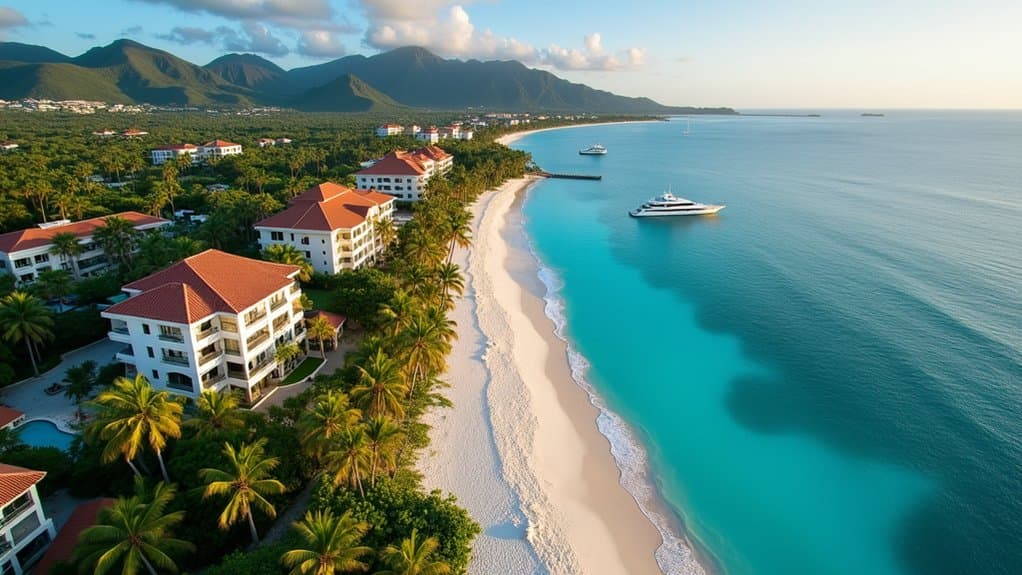
Last Tuesday, while navigating the stretch between Encuentro Beach and Cabarete, I noticed something that tells a bigger story than any government report could. Seven new boutique condo projects going up, cranes everywhere, the usual construction noise. But what caught my attention was the parking lot at the organic market in Sosúa—DN plates from Santo Domingo, DF from Santiago, lined up like a caravan. When Dominicans with money start moving capital to the North Coast, you know something fundamental has shifted.
I've been working with foreign buyers in this market for over twenty years, and I've watched it transform from a retiree hideaway to a legitimate asset class. But I've also watched investors get burned because they treated Dominican Republic real estate like buying a condo in Miami. It's not. The rules are different, the risks are real, and the people selling you properties often have no legal obligation to tell you the truth.
So let me be clear about what this article is: a reality check from someone who has seen every variation of the North Coast real estate deal go sideways. If you're looking for hype about "Caribbean paradise" and "guaranteed returns," close this tab. If you want to understand why smart money is moving here—and how to avoid becoming tuition for the next investor—keep reading.
Key Takeaways
- Currency Advantage: All transactions occur in USD, providing a natural hedge against currency fluctuation affecting European and South American markets.
- Legal Framework: Law 108-05 created a GPS-based title system (Deslinde) that protects foreign buyers, but roughly 40% of rural land still lacks proper demarcation.
- Realistic Returns: Well-managed properties deliver 5-7% net rental yields after accounting for 20-25% management fees, electricity, and tropical maintenance costs.
- Infrastructure Reality: Starlink has solved internet reliability issues at approximately RD$3,800/month (about $64 USD as of January 2026), but grid instability remains—solar integration now delivers ROI under three years when you factor in the 75% tax credit amortized over that period.
- Market Timing: Pre-construction prices in Cabarete have jumped from $1,800/sqm in 2022 to $2,400-$3,000/sqm for 2025/2026 projects, signaling strong momentum.
The License Plate Indicator: What's Actually Happening
The influx of domestic wealth to the North Coast isn't just anecdotal. According to MITUR's 2024 statistical bulletins, Santiago residents have become the second-largest demographic of second-home buyers in the North Coast after foreigners. That organic market I mentioned? Three years ago it was mostly expats buying imported cheese and gluten-free crackers. Now it's Dominican families from the capital loading up Range Rovers with weekend groceries.
This shift matters because it changes the fundamental investment thesis. When a market is purely tourism-dependent, you're vulnerable to every hurricane season and every shift in airline routes. When wealthy locals start treating an area as their weekend escape, you've got a floor under property values that tourism alone can't provide.
But here's where the online data diverges from street reality. Point2Homes and local MLS systems show approximately 1,200+ active listings in the Sosúa/Cabarete corridor. Local brokers estimate only 20-25% have updated Deslinde titles ready for immediate transfer. The rest? Legal limbo. Properties with "Constancia Anotada" titles that grant you a percentage of a larger plot without specific GPS boundaries. Properties where the seller doesn't actually own what they're selling yet. Properties where three different people think they have legitimate claims.
The inventory number looks impressive until you start filtering for what's actually investable. Clean title. Modern construction. Proper electrical infrastructure. Suddenly that 1,200 listings becomes maybe 200 properties worth serious consideration.
The Grid, The Power, The Reality Nobody Mentions
Let me address the elephant that every glossy brochure ignores: the power grid in the North Coast is unreliable. Edenorte, the local energy provider, reports technical losses and grid instability that cause scheduled maintenance blackouts lasting 4-8 hours in non-privatized zones. This isn't occasional. This is regular enough that you need to factor it into every investment decision.
Three years ago, this was a dealbreaker for many foreign buyers. Today, it's a solvable problem that's actually creating investment opportunities. Here's why.
Solar integration has crossed the ROI threshold. Law 57-07 grants a tax credit of up to 75% of the cost of investment in renewable energy systems, amortized over a three-year period. It's a tax credit—deducted from the tax you owe, not just from your gross income—which makes it more valuable than a simple deduction. With residential electricity rates pushing over $0.30 USD per kWh for high consumption (common with AC usage), a properly sized solar system with battery backup now pays for itself in under three years when you factor in this credit structure. Properties with full solar autonomy are commanding 10-15% higher occupancy rates in the rental market because tourists are leaving bad reviews for Airbnbs that lose power.
The arrival of Starlink has solved the other infrastructure headache. Average fixed broadband speed in the DR is 32.8 Mbps according to Speedtest.net's 2024 Global Index. Starlink consistently tests between 100-200 Mbps in the North Coast. For approximately RD$3,800 per month (about $64 USD as of January 2026), you've decoupled your property value from local ISP infrastructure. Digital nomads will pay premium rates for properties that advertise verified Starlink connectivity.
So the infrastructure challenge isn't a reason to avoid the market. It's a filter. Properties without backup power and reliable internet are being left behind. Properties that have solved these problems are appreciating faster than the market average.
Law 108-05: The Legal Framework That Changes Everything
Most foreign buyers glaze over when you start talking about title law. That's a mistake that costs people hundreds of thousands of dollars.
Law 108-05 (Registry of Real Estate) replaced the old "Constancia Anotada" system with GPS-based "Certificado de Título." This isn't bureaucratic minutiae. This is the foundation of whether you actually own what you think you're buying.
The old system allowed for percentage ownership of larger plots without specific boundaries. Two people could both have legitimate claims to the same physical piece of land because the boundaries were described in vague terms ("from the large tree to the stone wall"). Law 108-05 implemented the Torrens system with GPS georeferencing. Every Deslinde title is supported by unique GPS coordinates, making it technically impossible for two titles to overlap.
Once a property has a Certificado de Título resulting from a Deslinde, the Dominican State legally guarantees the title. This is an indefeasible right of ownership. The current Certificate of Title is the single, absolute proof of ownership, cleared of all past history and claims.
But—and this is critical—the Judicial Branch of the Dominican Republic estimates that nearly 40% of rural land in the DR still lacks a proper Deslinde. That "bargain" land you're looking at in the hills above Sosúa? There's a reason it's cheap. Without a Deslinde, you're buying into a boundary dispute waiting to happen.
The Deslinde process involves a judicial phase where all neighbors are notified and must formally agree to the boundaries. This prevents future border disputes, but it also means the process can take months or even years if a neighbor contests. I've seen deals where buyers put down deposits on "Constancia Anotada" properties thinking they could complete the Deslinde after purchase. Two years later, they're still in court with a neighbor who claims the boundary line is three meters different from what the survey showed.
Never—and I mean never—put a deposit on a property without a verified Deslinde unless you have a specific legal roadmap and you're prepared to wait. The clause we insert in every Promise of Sale protects your deposit if the title search reveals a blockage. Most sellers' notaries won't include this protection. That should tell you something.
The CONFOTUR Advantage: Tax Benefits That Actually Matter
Law 158-01 (CONFOTUR) offers tax exemptions that significantly impact ROI, but most investors either don't know about it or misunderstand the requirements.
Properties under CONFOTUR are exempt from the 3% transfer tax and the 1% annual IPI tax for 15 years. On a $300,000 property, that's $9,000 saved at closing and $3,000 saved annually. Over 15 years, you're looking at $54,000 in tax savings—a meaningful boost to your net returns.
But CONFOTUR benefits apply only to newly approved properties. You can't buy an existing condo and retroactively claim CONFOTUR status. The developer has to register the project with the CONFOTUR council before construction begins, and the property has to meet specific tourism-related criteria.
This creates a two-tier market. Modern condos in developments like Encuentro Residences or Sosúa Ocean Village that secured CONFOTUR approval are appreciating faster than comparable properties without the tax advantage. When you're comparing two similar beachfront units, the one with CONFOTUR status delivers 12-15% better net yield simply because of the tax structure.
The catch? You need to verify CONFOTUR status independently. Developers will claim they're "applying" for CONFOTUR or that it's "in process." Unless you see the official CONFOTUR certificate with the project registration number, assume you're not getting the tax benefits.
Sosúa vs. Cabarete: Understanding the Micro-Markets
The North Coast isn't a homogeneous market. Sosúa and Cabarete are fifteen minutes apart but attract completely different demographics and deliver different investment profiles.
Sosúa is transitioning from its nightlife reputation to a residential expat community. The Ayuntamiento de Sosúa has actively closed certain bars on Pedro Clisante street and increased lighting and policing to attract families. It's working, slowly. The town now features Supermercado Playero and Super Pola with vast selections of imported North American and European products. Centro Médico Cabarete (CMC) is minutes away—a premier private hospital with English-speaking specialists, MRI, and ICU facilities.
Sosúa real estate remains 20-30% cheaper than comparable beachfront areas in Cabarete, offering a lower barrier to entry. Modern condos here are generating net rental yields of 6-9% annually, driven by a consistent year-round expat demographic and bachelor tourism. The town is walkable—retirees can reach Playa Alicia (a quiet, pristine beach) and restaurants without needing a car. Gregorio Luperón International Airport (POP) is 10-15 minutes away, making it the most accessible beach town for short-term weekend travelers from the US.
The infrastructure considerations are standard: fiber optic from Delancer or Cable Atlántico delivers 100-300 Mbps in town. Properties need hybrid backup systems (solar panels plus inverter batteries for silent night operation, backed by a diesel generator for long-duration grid failures). Cisterns should hold at least 1,500 gallons per bedroom to survive a 3-4 day municipal water cut.
Cabarete commands a premium because of geography and culture. The bay is geographically limited by the reef and main road. There is essentially zero remaining developable beachfront land in the center. Zoning laws generally restrict building heights to 3 or 4 stories to preserve the skyline, severely limiting the density of new supply.
Kite Beach has wind conditions consistent 300 days a year according to Windguru historical data, driving rental occupancy rates of 70-80% in high season (December-April) specifically for the kitesurfing demographic. Beachfront properties can see gross yields as high as 10-12% during peak wind seasons (January-March and June-August). Renters will pay 30-50% more to be directly on this specific stretch of sand for launching kites.
Pre-construction prices in Cabarete have risen from approximately $1,800/sqm in 2022 to over $2,400-$3,000/sqm in 2025/2026 projects. Properties in complexes like Ocean One or Ultravioleta rarely come on the market. When they do, buyers must pay significantly above market rate because owners simply don't sell.
Perla Marina, situated between Sosúa and Cabarete, has seen land prices jump from $80/sqm to $150+/sqm in three years due to scarcity. It's a gated, oceanfront community offering security without the noise of the town center. The high HOA fees support private water and security infrastructure, creating a "luxury tax" that maintains property values.
The Starlink factor is bigger in Cabarete. The reliability has supported the growth of coworking spaces (at Drifter or Maraja), cementing Cabarete's reputation as the #1 Digital Nomad hub in the Caribbean. Properties marketing "Dual Internet" (Fiber plus Starlink) command a premium from high-net-worth professionals who need redundancy for trading or remote work.
The Financial Reality: What Returns Actually Look Like
Let me dismantle the myth of "12-15% guaranteed returns" that you'll see in marketing materials.
Well-managed properties in the North Coast deliver 5-7% net rental yields after accounting for all costs. Here's what eats into that gross revenue number everyone loves to advertise:
Property management takes 20-25% of gross rental income. This covers check-in/check-out, cleaning coordination, and marketing. You cannot self-manage an Airbnb from abroad. The need for physical cash payments for minor repairs and the lack of automated systems makes it nearly impossible.
Electricity is expensive without solar. High consumption—anything exceeding 700 kWh/month, which is common in vacation rentals with Air Conditioning—pushes rates over $0.30 USD per kWh when you factor in the tiered structure, fixed charges, and fuel adjustments. If you're running AC for guests, you're looking at $200-300 monthly in electricity alone during high season.
Maintenance reserves should be calculated at 1.5-2% of property value annually due to salt air corrosion and humidity. Electronics and standard metals can fail in 1-2 years without specific marine-grade protection. This is higher than the US standard of 1%.
HOA fees vary wildly. In Tier A gated communities (Sea Horse Ranch, Sosúa Ocean Village), backup generators are automatic and fees reflect that infrastructure. In Tier B neighborhoods, you're covering those costs yourself.
The 27% withholding tax on rental income applies to foreigners not registered under specific corporate structures. The Dominican Tax Code establishes this withholding tax on payments of Dominican-source income to non-residents—property management companies are legally required to withhold this amount if you're a non-resident individual without a local corporate structure. Many investors deduct expenses to lower the effective rate, but you need proper accounting to do this legally.
High season (December-March) occupancy averages 85%. Low season (September-October) can drop to 40%. Annualized averages for well-managed units are 60-65% according to AirDNA market data for Puerto Plata Province. Those are realistic numbers, not marketing projections.
Now, the appreciation side looks stronger. Modern condos in Cabarete have seen 8-12% appreciation year-over-year from 2022-2024 due to the lack of beachfront land. Market analysis forecasts 7-12% appreciation for prime North Coast locations in 2025 due to dwindling inventory of developable beachfront land.
But here's the distinction that matters: Tier A properties (modern, solar-equipped, clean Deslinde) are appreciating at the high end of that range. Tier B properties (older, grid-dependent, legal issues) are flat or declining in value. The market is bifurcating. Quality assets are becoming scarce. Everything else is becoming harder to sell.
| Market | Entry Price (Beachfront) | Net Rental Yield | Property Tax | Residency Threshold |
|---|---|---|---|---|
| DR North Coast | $2,500-$3,500/sqm | 5-7% | 1% (on excess value) | $200k investment |
| Portugal (Algarve) | $4,500+/sqm | 3-4% | 0.45% + stamp duties | Pathway closed (2023) |
| Dubai (Marina) | $5,000+/sqm | 4-6% | None (4% transfer fee) | $200k+ investment |
The currency advantage matters more than investors realize. All Dominican Republic real estate transactions occur in USD. The Dominican Peso has historically depreciated against the USD by roughly 3-5% annually according to Banco Central RD historical exchange rates, but your asset is denominated in dollars. You're holding USD-denominated real estate as a hedge against currency fluctuation affecting European and South American markets.
Compare that to Portugal, where you're transacting in Euros and vulnerable to currency risk if you're a US-based investor. Or Turkey, where the Lira's volatility can wipe out your gains even if property values rise in local currency terms.
Residency Pathways: Beyond the Real Estate Transaction
Foreign buyers often treat residency as an afterthought. That's backwards. Your residency status impacts your ability to open local bank accounts, secure financing, and manage your property efficiently.
The Pensionado option requires proof of stable monthly income of $1,500 USD (plus $250 per dependent) according to Law 171-07. This is designed for retirees with pension income. Processing takes approximately 6-8 months through the Directorate General of Migration (DGM).
The Rentista (Investment Income) residency threshold is $2,000 USD per month derived from investments like rents or dividends, not salary. Same law, same processing timeline.
The Residency by Investment program requires a minimum investment of $200,000 USD in a registered company or property, often linked with ProDominicana. This is the fastest path for active investors buying property anyway. Processing takes 6-8 months, significantly faster than Portugal's former Golden Visa program before it closed its real estate pathway in late 2023.
Banking infrastructure matters more than people realize. Sosúa serves as a financial hub for the North Coast with major branches of Popular, BHD, and Banreservas. Opening a bank account as a foreigner requires a passport, reference letter from your home bank, and tax returns. It can take 2-4 weeks to approve according to Banco Popular and Banreservas requirements. Without residency, some banks won't even consider your application.
Local financing is available but expensive. Scotiabank DR offers mortgages to US/UK/Canadian citizens with typical terms of 25 years, up to 70% LTV, and interest rates around 9-11% (variable). That's significantly higher than US mortgage rates, which is why most foreign buyers pay cash.
The forced heirship laws are worth understanding. The DR has "Reserva Hereditaria" (forced heirship) laws for citizens that can entitle children to a portion of property regardless of a will. Foreigners can often bypass this by holding property in a Dominican Company (SRL) or via specific testament jurisdiction selection under international private law. But you need proper legal structuring from the beginning. Trying to fix this after purchase is expensive and sometimes impossible.
The Due Diligence Protocol: What You Actually Need to Check
Every Tuesday, someone walks into my office with a property they're "about to close on" and asks for a quick title check. By the time they're asking, they've already put down a deposit. Sometimes I can help. Often I can't, because the problems are baked into the deal structure.
Here's the protocol you should follow before you put down a single dollar:
Step 1: Verify the Deslinde status. Request the "Status Jurídico" from the Title Registry. This document certifies if a property has liens or encumbrances. It's valid for 30-45 days. If the seller can't produce a current Status Jurídico, walk away. If the property has a "Constancia Anotada" instead of a "Certificado de Título," understand you're buying into a boundary dispute risk. The specific clause we insert in Promises of Sale protects your deposit if the title search reveals a blockage. Most sellers' notaries won't include this protection.
Step 2: Hire an independent surveyor. Always hire an independent surveyor (Agrimensor) to verify the GPS points according to CODIA (Dominican College of Engineers, Architects and Surveyors). "Overlap" (superposición) is a common issue where titles physically overlap on the map. The surveyor's job is to confirm that the physical boundaries match the title description.
Step 3: Check the "Cargas y Gravámenes." This certification confirms if the property is used as collateral for a loan. It's distinct from the title status. A property can have a clean title but be mortgaged to a bank. If the seller doesn't pay off that mortgage at closing, you inherit their debt.
Step 4: Verify HOA solvency. Unpaid HOA dues stay with the unit, not the owner, according to Law 50-38 on Condominiums. Request a "Certificate of No Debt" from the Condominium Administration. I've seen buyers close on properties only to discover they owe $15,000 in back HOA fees from the previous owner.
Step 5: Inspect infrastructure during rain. The North Coast receives approximately 1,500-2,000mm of rain annually according to ONAMET (National Meteorological Office). Visit the property after a storm. Drainage failures that are invisible on dry days become obvious when water is pooling in the driveway or leaking through the ceiling.
Step 6: Verify backup power capacity. Check if the property has an inverter (battery backup) for short outages or a full diesel generator for extended grid failures. Test the system. I've seen properties advertised with "backup power" where the generator hasn't been serviced in three years and doesn't actually work.
Step 7: Confirm CONFOTUR status independently. If the developer claims CONFOTUR tax benefits, verify the official CONFOTUR certificate with the project registration number. Don't accept verbal assurances.
Step 8: Review the Promise of Sale carefully. The "Promesa de Venta" is a binding contract in the DR. Standard deposit is 10%. If you default, you usually lose the deposit. If the seller defaults, they must return double the deposit according to Article 1590 of the Civil Code. Make sure the contract specifies what happens if the title search reveals problems.
Step 9: Consider buying pre-construction through a Fideicomiso. Law 189-11 on Mortgage Market Development and Trusts allows developers to use a "Fideicomiso" (Trust) where a bank manages the funds, not the developer directly. This offers higher security for pre-construction purchases.
Step 10: Verify earthquake resistance for towers. Ensure the building complies with R-001 (Seismic Analysis and Design regulations) according to MOPC (Ministry of Public Works), especially for towers over four floors. Recent construction standards are good, but older buildings may not meet current codes.
Who Should Not Buy in the Dominican Republic
The DR is not for everyone. Some personality types and investment styles will struggle here regardless of how good the property is.
If you expect "hands-off" passive income without professional management, this market will frustrate you. The infrastructure challenges (power, water, internet) require active problem-solving. Remote management from abroad is nearly impossible without hiring local professionals you trust.
If you're unwilling to hire independent legal counsel and want to rely on the seller's notary to "handle everything," you're going to get burned. The seller's notary works for the seller. Their job is to close the deal, not protect your interests.
If you cannot tolerate "Island Time" bureaucracy, you'll hate the process. Permits take three times longer than in the US. The World Bank's Ease of Doing Business Index (historical data) consistently ranks the DR in the bottom half for administrative efficiency. Utility connections can take weeks. Government offices close for lunch and aren't open on weekends. This is the reality.
If you're sensitive to noise, understand that the DR is loud. Noise laws exist (Law 287-04) but are rarely enforced. Music, roosters, motorcycles—it's part of the culture. Buyers sensitive to noise should only buy in strictly gated communities with active security.
If you're expecting First World healthcare access, understand the limitations. Private care is good at Centro Médico Cabarete (CMC), but complex emergencies often require transport to Santiago (1.5 hours) or Miami. If you have serious health conditions requiring specialized care, this may not be the right retirement destination.
If you're looking for "bargain" rural land, understand the title risks. That cheap land in the hills probably lacks a Deslinde. You might be buying a lawsuit, not a property.
If you can't handle driving conditions, you'll struggle with daily life. The DR consistently ranks high for traffic fatalities per capita according to World Health Organization (WHO) Road Safety Reports. Driving at night is not recommended for nervous drivers.
The Strategic Frontier: Why Smart Money is Moving Here
The Dominican Republic welcomed 10 million visitors in 2023 according to UN Tourism (UNWTO), a record high. The economy grew by 5.1% in the first half of 2024 according to the Central Bank of the Dominican Republic. Tourism and real estate sectors combined accounted for over 45% of total FDI in 2023/2024 according to ProDominicana.
But the real story isn't in the government statistics. It's in the license plates at the organic market. It's in the Santiago families buying weekend homes in Perla Marina. It's in the digital nomads extending their stays from one week to three months because Starlink solved the connectivity problem. It's in the retirees who are choosing Sosúa over Portugal because the math simply works better.
The market has matured. The wild west days of buying land with no title and hoping for the best are ending. Law 108-05 has created a framework where foreign buyers can actually own property securely, provided they follow the rules. CONFOTUR has created tax advantages that meaningfully improve ROI. Solar technology has solved the grid reliability problem. Starlink has solved the internet problem.
What remains are the fundamental advantages: USD-denominated assets, lower entry prices than comparable Caribbean markets, strong rental yields, and a government that actively courts foreign investment through residency programs.
The investors who succeed here are the ones who treat this as a real investment requiring real due diligence. They hire independent lawyers. They verify titles before putting down deposits. They visit properties during rainstorms. They understand that 5-7% net yield is excellent in a USD market, and they don't chase the 15% returns that marketing materials promise.
The investors who fail are the ones who treat this like buying stocks online. They wire deposits to developers they've never met. They trust verbal assurances about CONFOTUR status. They assume "gated community" means the same thing it does in Florida. They get frustrated when the power goes out and blame the country instead of their own failure to verify backup systems.
This is not a "get rich quick" market. It's a strategic, USD-based diversification play for 2026 and beyond. The infrastructure challenges are real but solvable. The legal framework is solid but requires expertise to navigate. The returns are strong but require active management.
If you're considering buying property in Dominican Republic, start with a preliminary title check on any property of interest. We offer this free of charge to demonstrate our commitment to safety first. Because in this market, the money you save by verifying before you buy is worth more than any commission you'll pay after the fact.
The North Coast is the strategic frontier for investors who understand that real opportunity comes with real complexity. Navigate it correctly, and you're holding a USD asset in a growing market with strong fundamentals. Navigate it carelessly, and you're paying tuition for the next investor.
Summary: Investor Due Diligence Checklist
Before committing to any Dominican Republic real estate transaction, verify:
[ ] Legal Verification: Obtain current "Status Jurídico" (valid 30-45 days) confirming Deslinde title with GPS coordinates, not Constancia Anotada. Hire independent surveyor to verify physical boundaries match title description.
[ ] Financial Audit: Request "Certificate of No Debt" from HOA administration (unpaid dues transfer with the property). Verify CONFOTUR tax exemption status with official certificate number, not verbal assurances.
[ ] Infrastructure Assessment: Test backup power systems (inverter capacity and generator functionality). Verify internet options (fiber availability or Starlink installation feasibility). Inspect cistern capacity (minimum 1,500 gallons per bedroom).
[ ] Structural Inspection: Visit property after heavy rain to assess drainage and leak issues. For towers over four floors, confirm R-001 seismic compliance certification from MOPC.
[ ] Contract Protection: Ensure Promise of Sale (Promesa de Venta) includes specific clause protecting your deposit if title search reveals liens or boundary disputes. Standard 10% deposit is at risk if contract lacks this protection.
[ ] Pre-Construction Security: For new developments, verify purchase is structured through Fideicomiso (Trust) where bank manages funds, not developer directly (Law 189-11).
[ ] Residency Planning: Determine appropriate visa pathway (Pensionado: $1,500/month income; Rentista: $2,000/month; Investment: $200k minimum) before purchase to enable local banking and financing access.