

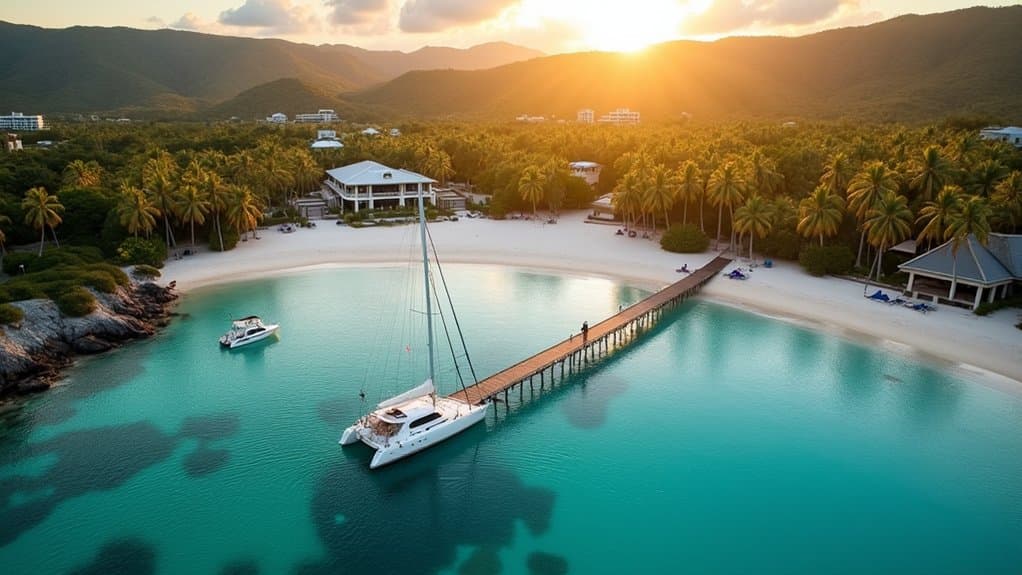
Last Tuesday, a German couple sat in my office asking about beachfront property. They'd spent three days touring Sosúa, and the wife had one question: "Is the beach really that nice, or are the listing photos just... optimistic?"
I pulled up Google Maps on my laptop and showed them the satellite view. "See that curve of sand? That's Sosúa Beach. It's real. But here's what the photos won't tell you: the vendors will approach you every fifteen minutes. The water temperature is perfect, but the public beach gets crowded on weekends. And if you buy in Sosúa Ocean Village"—I pointed to a gated community on the screen—"you get private beach access, which changes everything."
They bought a villa three weeks later. Not because Sosúa is paradise without complications, but because they understood what they were actually getting.
That's what this article is about. If you're evaluating cheap houses for sale in dominican republic or considering villas for sale in sosua, you need to know what the lifestyle actually looks like. Not the brochure version. The version where you're deciding whether to walk to the beach or drive, whether the noise from the bars will bother you, and whether your internet connection will hold up for Zoom calls.
Key Takeaways
- Beach Quality: Sosúa Beach offers calm, protected waters ideal for families and snorkeling, while Cabarete's Kite Beach attracts water sports enthusiasts with consistent wind conditions and direct beach access for gear.
- Infrastructure Reality: Puerto Plata International Airport sits 10-15 minutes from Sosúa with 10 daily flights to major hubs. Starlink costs RD$2,900 monthly (~$48 USD) and delivers 150-300 Mbps in areas where fiber is spotty.
- Community Access: Gated developments like Sosúa Ocean Village provide 24/7 armed security, backup generators, and water treatment for $300-$800 monthly HOA fees—essential for property value retention.
- Lifestyle Cost: A couple can maintain a luxury lifestyle (dining out, maid service, full AC usage) for $2,500-$3,000 USD monthly, compared to $6,000+ for similar quality in Miami or San Diego.
- Tourism Volume: The DR surpassed 10.3 million visitors in 2023/2024, ensuring consistent rental demand. Properties near beaches with dedicated workspaces command 20-30% higher nightly rates.
The Beach Situation: What You're Actually Buying Into
Sosúa Beach curves in a protected bay. The water stays calm most days because the reef breaks the waves offshore. This matters if you have kids or you're not a strong swimmer. The sand is imported—they trucked it in years ago and maintain it with periodic additions. It's not the powdery white sand of Punta Cana, but it's clean and wide enough that you can find space even during high season.
The government invested RD$600 million in 2024 to organize the vendor situation and improve lighting. It helped. The beach vendors still exist—they sell coconuts, jewelry, excursions—but they're now in designated zones rather than roaming freely. If you say "no gracias" once, most will move on. Some won't. That's the reality.
Here's what the listing photos don't show: the public beach gets packed on Dominican holidays. January through March, when North American and European tourists arrive, the beach fills up by 11 AM. If you're buying property specifically for beach access and you want solitude, you need to be in a gated community with private beach sections. Sea Horse Ranch has its own beach. Sosúa Ocean Village has a private access point. The HOA fees for these places run $300 to $800 monthly, but you're paying for the ability to walk to the water without navigating crowds.
The snorkeling is legitimately good. The reef system on the west side of the bay has decent coral coverage and resident fish populations. You'll see parrotfish, angelfish, sergeant majors. Occasionally a sea turtle. It's not Cozumel, but it's better than most Caribbean beaches at this price point.
Cabarete: The Water Sports Reality
Cabarete is fifteen minutes east of Sosúa. The vibe is completely different. Kite Beach exists because the wind conditions are consistent—trade winds blow 15-25 knots most afternoons from December through August. If you kitesurf or windsurf, this matters enormously. If you don't, it means the beach is often too windy for comfortable sunbathing.
Properties directly on Kite Beach command a 20-30% premium over non-beachfront units. I've seen condos for sale in sosua at $2,200 per square meter while equivalent Kite Beach properties sell for $2,800-$3,000. The buyers paying that premium are serious water sports enthusiasts who want to walk out their door, grab their gear, and launch within five minutes.
Modern developments in Cabarete now include dedicated gear storage lockers. This isn't a marketing gimmick—it's a response to actual demand. Kiteboards, foils, and wings take up space. Developments that didn't account for this see residents cluttering their balconies or hallways, which creates HOA conflicts.
The digital nomad presence in Cabarete has shifted the rental market noticeably. Where traditional vacation rentals focused on weekly bookings, there's now strong demand for 1-3 month stays. Properties with reliable high-speed internet (Starlink or fiber) and dedicated workspace areas rent faster and command higher rates. Airbnb data shows these units achieve 20-30% higher nightly rates than comparable properties without these features.
One practical note: Cabarete's center (the area around Pro Cab and Ocean Dream) is walkable. You can live without a car if your property is centrally located. Sosúa requires more driving unless you're in the immediate downtown area. This matters for the digital nomad demographic that prefers car-free living.
The Infrastructure Question Everyone Asks
Puerto Plata International Airport (POP) handles approximately 10 daily flights with direct connections to Miami, New York, Toronto, and several European cities. The airport is genuinely 10-15 minutes from Sosúa—not "Dominican time" estimates, but actual drive time. This makes weekend commutes viable if you're maintaining a business or family connections in North America.
The road quality varies. The main highway from the airport to Sosúa is well-maintained asphalt. Once you turn off into residential developments, conditions depend on whether you're in a gated community with private road maintenance or relying on municipal upkeep. Some side streets in Sosúa proper have potholes that will test your suspension.
Internet connectivity improved dramatically when Starlink became available in late 2022. Hardware costs approximately RD$27,000 ($450 USD) and monthly service runs RD$2,900 (~$48 USD). The service delivers 150-300 Mbps in areas where fiber optics might be unreliable or unavailable. For villas in more remote locations or developments where fiber infrastructure hasn't reached, Starlink solved a major problem.
Electricity remains the persistent infrastructure challenge. The national grid (Edenorte) has improved, but power outages still occur. Properties in "circuito 24" zones receive 24-hour power, which is the gold standard. Outside these zones, backup systems are standard. Modern villas increasingly integrate hybrid solar systems. The Dominican Republic has a net metering law (Law 57-07) that allows you to sell excess power back to the grid, making solar installations financially viable with ROI under three years in many cases.
Water supply follows a similar pattern. Gated communities typically have their own water treatment systems and backup wells. Properties outside these communities often rely on municipal supply supplemented by private cisterns. This isn't a crisis—it's just the operational reality you need to budget for.
The Social Infrastructure: Schools, Healthcare, Shopping
The International School of Sosúa (ISS) is accredited by SACS (Southern Association of Colleges and Schools), which means credits transfer to US colleges. Tuition ranges from approximately $7,450 to $9,000 USD annually depending on grade level—note that total annual costs can reach $13,000 when you factor in the one-time New Family Fee (typically $3,000+), uniforms, and books. ISLA Academy in Cabarete offers another option with similar pricing. These aren't cheap, but they're significantly less expensive than international schools in Miami or major European cities.
Healthcare improved substantially with the opening of Cabarete Medical Center (CMC), a modern facility located between Sosúa and Cabarete. The center offers specialized care and accepts international insurance. For routine medical needs, it's adequate. For serious emergencies or complex procedures, most expats travel to Santiago (about 90 minutes) or Santo Domingo (about four hours) where hospital infrastructure matches international standards.
A new public-private hospital investment is under construction—the Hospital General Traumatológico—with over RD$820 million in funding. This will significantly upgrade local emergency capabilities once completed.
Shopping infrastructure exists but requires adjustment if you're coming from North America or Europe. Super Pola and Playero Supermarket stock imported goods, but selection is limited compared to what you're used to. Expect to pay premium prices for imported brands. Local products are significantly cheaper. Most long-term residents adjust their shopping habits accordingly—buying local produce and meat while splurging on specific imported items they can't live without.
The Expat Community Reality
Sosúa has a large, established expat population—primarily Germans, Canadians, and Americans. This creates natural social entry points. The Jolly Roger is a common hangout. Various Facebook groups coordinate activities, from beach volleyball to hiking trips. The community is welcoming but not intrusive. You can integrate as much or as little as you want.
Gated communities like Sosúa Ocean Village and Sea Horse Ranch function as social hubs. They offer amenities like water parks, gyms, tennis centers, and restaurants that are open to the public (though residents get preferred access and pricing). These communities host events, organize activities, and provide built-in social networks. For some buyers, this is the primary attraction. For others, it feels too insular.
The cultural integration question depends on your Spanish skills and interest level. You can live in Sosúa speaking only English—many people do. But your experience will be limited to the expat bubble. If you make an effort to learn Spanish and engage with Dominican culture, the experience deepens considerably. The local population is generally friendly toward foreigners, though the relationship can feel transactional in heavily touristed areas.
What This Means for Property Values
Tourism volume drives property values on the North Coast. The Dominican Republic surpassed 10.3 million visitors in 2023/2024, making it the #1 Caribbean destination. This volume ensures consistent rental demand for well-positioned properties.
Properties in Sosúa appreciated approximately 10.7% year-on-year as of May 2025, according to Global Property Guide data. This outpaces many Caribbean markets but trails Costa Rica. Beachfront properties and units in established gated communities appreciate faster than inland or standalone homes.
Cabarete property values grew 6% in 2024 and are projected to grow another 4-7% in 2025. The luxury segment (Sea Horse Ranch, Encuentro area) sees appreciation of 7-9% driven by high-net-worth buyers seeking privacy and direct beach access.
Pre-construction investments can show equity gains of 15-20% upon completion as developers raise prices during the build phase. This is where buying property in sosua through established developers with CONFOTUR approval makes financial sense. Law 158-01 grants CONFOTUR-approved projects a 0% transfer tax (saving 3% of purchase price) and 0% annual property tax for 15 years. These savings compound significantly over time.
The rental yield data matters here. Professionally managed villas generate 6-9% net annual yields, with high-occupancy units near beaches reaching 10-12%. Median occupancy rates hover around 34%, but well-managed properties with good amenities achieve 68-75% occupancy. The median monthly revenue is approximately $1,281, while top-tier properties generate over $5,000 monthly.
Properties with features specifically targeting digital nomads—high-speed internet, dedicated workspaces, longer-term rental flexibility—are seeing faster absorption and higher yields. This demographic shift from 1-week vacations to 1-3 month stays stabilizes occupancy during traditional shoulder seasons.
The Lifestyle Cost Breakdown
Here's what actually matters: a couple can maintain a luxury lifestyle in Sosúa for $2,500-$3,000 USD monthly. This includes dining out regularly, employing a maid service, running air conditioning, and enjoying entertainment. Comparable quality of life in Miami or San Diego requires $6,000+ monthly.
| Expense Category | Monthly Cost (USD) | Notes |
|---|---|---|
| Housing (Rent or HOA) | $800 - $1,500 | Gated community villa or beachfront condo |
| Utilities (Electric, Water, Internet) | $200 - $400 | Higher with full AC usage; Starlink adds $48 |
| Groceries | $400 - $600 | Mix of local and imported products |
| Dining Out | $300 - $500 | 3-4 restaurant meals weekly |
| Maid Service | $120 - $200 | 2-3 times weekly |
| Transportation | $150 - $250 | Gas, maintenance, occasional taxi |
| Entertainment | $200 - $350 | Activities, bars, beach clubs |
The cost of living in sosua creates lifestyle arbitrage opportunities for retirees and remote workers. Your Social Security or pension stretches further. Your remote income buys more. This isn't about living cheaply—it's about living well for less.
Medical insurance costs depend on age and coverage level. International health insurance plans for expats typically run $200-$500 monthly for comprehensive coverage. Local Dominican insurance is cheaper but more limited in scope.
The Residency Connection
The dominican republic retirement visa (Pensionado) requires proof of $1,500 USD monthly pension income (plus $250 per dependent). This visa grants a one-time exemption on import taxes for household goods and a vehicle. The application process takes approximately 6-8 months through the General Directorate of Migration.
For those too young to retire, the Rentista Visa requires proof of $2,000 USD monthly passive income (from dividends, rent, or annuities) documented over the previous five years. This pathway suits digital nomads with established investment income.
The Investment Visa offers the fastest route to permanent residency—approximately 6-8 months—for foreigners purchasing property valued at $200,000 USD or more. This bypasses the temporary residency stage entirely.
Residency isn't required to buy property. Article 25 of the Dominican Constitution grants foreigners the same civil rights as nationals regarding property ownership. But residency provides practical benefits: easier banking, lower inheritance taxes, and the ability to import goods tax-free.
What the Beaches Actually Mean for Investment
The beach proximity drives rental rates and occupancy. Properties within walking distance of Sosúa Beach or Kite Beach command premium pricing. Median nightly rates for vacation rentals hover around $138, while beachfront units command $246 to $421+ per night according to AirROI data.
Peak season runs December through April, with February showing the highest occupancy. There's a secondary peak in July and August. Properties that can capture both the winter tourists and summer digital nomads achieve the highest annual yields.
The 20-30% premium for beachfront properties reflects genuine demand, not speculative pricing. Buyers are paying for immediate beach access, ocean views, and the ability to market their rental properties with beach photos that actually represent the property location.
The reef system and water quality matter for rental appeal. Sosúa's protected bay and snorkeling opportunities are legitimate selling points. Properties that can advertise "snorkeling from the beach" or "calm waters for families" rent faster and command higher rates than properties requiring a drive to reach the beach.
The Honest Assessment
Sosúa and Cabarete offer tangible lifestyle value at prices significantly below saturated markets like Mexico's Riviera Maya or Costa Rica. The beaches are real. The infrastructure works, though it requires backup systems. The expat community provides social integration without isolation.
The trade-offs are equally real. Bureaucracy moves slowly. Power outages still happen. You'll need to adjust your expectations about shopping selection and service speed. The cultural adjustment is significant if you're coming from North America or Europe.
For buyers evaluating villas for sale in sosua or condos for sale in sosua, the lifestyle appeal comes down to whether you value beach access, warm weather, and cost savings enough to accept infrastructure quirks and cultural differences. Some people thrive here. Others find it frustrating.
The rental income potential is legitimate for well-positioned properties. The 6-9% net yields are achievable with proper management. The appreciation rates are steady without being speculative. The CONFOTUR tax benefits create real savings for buyers in approved developments.
But the investment only makes sense if you understand what you're buying into. The beaches are beautiful. The lifestyle is affordable. The infrastructure is improving. None of this means it's the right fit for everyone.
If you're serious about understanding how the lifestyle factors into property values and rental potential, you need to see it firsthand. Walk the beaches during peak season and shoulder season. Visit the gated communities. Talk to expats who've been here for years, not just months. Check the internet speed at the property you're considering. Drive the roads you'll use daily.
The data supports the investment thesis. The lifestyle either fits or it doesn't. My job is to make sure you have clean title and legal protection when you buy. Your job is to make sure you actually want to live with what you're buying.