

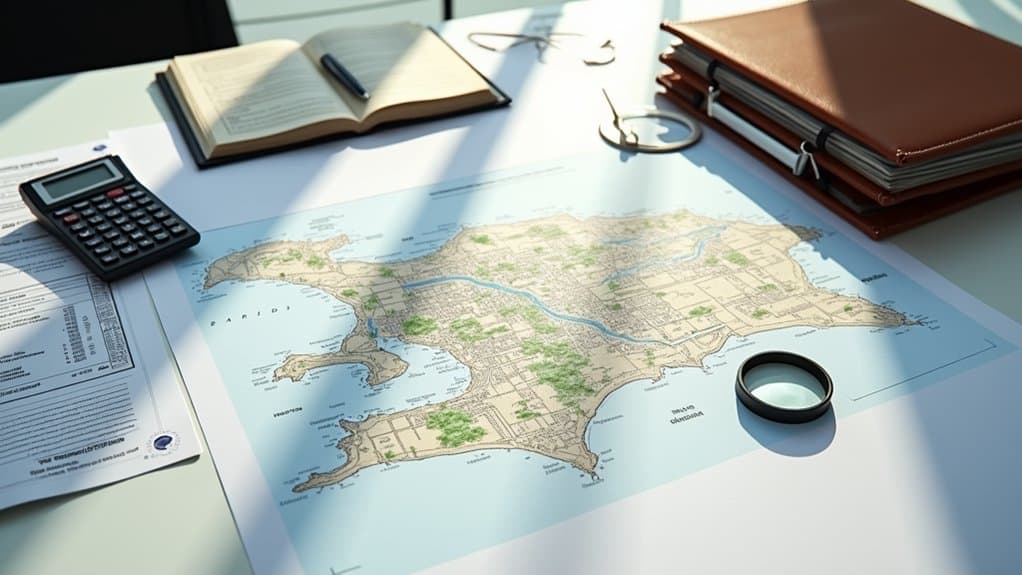
The couple walked into my office in Sosúa last month with a printed email from a developer promising them a "turnkey condo, ready to close in three weeks." They had already wired $15,000 as a deposit. I asked to see the title search. They looked at me like I'd asked them to produce a moon rock.
"The developer said everything's clean," the husband told me.
I pulled up the Registro de Títulos database right there on my laptop. The property had two mortgages attached to it and an unresolved boundary dispute with the neighbor. The developer hadn't lied, exactly—he just hadn't bothered to check. If they'd closed in three weeks like he promised, they would have owned a condo with $80,000 in debt attached to it and no legal way to use the parking space.
This is the reality of buying a condo in the Dominican Republic. The system works, but only if you use it correctly. And "correctly" means accepting that a secure transaction takes time—sixty to ninety days minimum if you're doing it right. That extra month you spend waiting for the Deslinde verification and the IPI tax clearance? That's not bureaucracy slowing you down. That's the legal framework protecting you from inheriting someone else's problems.
Key Takeaways
Timeline Reality: Plan for 60–90 days from offer to final title registration, not the 30-day myth circulating online. The Title Registry alone takes 30–45 days to issue your new certificate after closing.
The Deslinde Requirement: Law 108-05 mandates that for a property to be transferred with a Certificado de Título (clear title), it must undergo the Deslinde process to define its GPS coordinates. Properties without this cannot legally transfer as distinct parcels and will not qualify for bank financing.
Closing Costs: Budget 4–5% of purchase price for transfer tax (3%), legal fees (1–1.5% plus VAT), and registry stamps. The seller pays the real estate commission, not you.
Cash Market Dominance: Roughly 80–90% of North Coast transactions are all-cash deals. If you need financing, expect rates of 8–13% and LTV limits of 50–70% for non-residents.
Post-Closing Tax: For the 2025 fiscal year, properties valued over RD$10,190,833 (approximately $172,000 USD) face a 1% annual IPI tax on the excess amount. Owners over 65 are exempt if it's their primary residence.
The "Paper vs. Reality" Timeline
Google will tell you that closing on Dominican Republic property takes thirty to forty-five days. Real estate agents will nod along with that timeline because it sounds professional and efficient. Then you actually try to buy something.
In 2024, the average transaction my firm handled on the North Coast took seventy-three days from signed Promesa de Compraventa to the moment the client held their new Certificado de Título. That's not because we're slow. It's because the government operates on its own schedule, and banks require extensive compliance checks before they'll accept an international wire transfer.
The breakdown looks like this: You sign the initial agreement and put down your reservation deposit—usually $5,000 or 10% of the agreed price, held in our escrow account, not the seller's. Then we enter the due diligence phase, which takes two to three weeks if everything goes smoothly. During this window, we're pulling the title history, verifying the Deslinde exists and matches the physical property, checking for liens and unpaid utility bills, and confirming the seller is current on their IPI property tax.
After due diligence clears, we schedule the closing. But you can't just walk into a notary's office tomorrow. The Dirección General de Impuestos Internos needs to appraise the property for transfer tax purposes, which takes five to ten business days. If you're closing remotely—and roughly 60–70% of foreign buyers do—you need a Power of Attorney legalized at a consulate, which adds another seven to ten days.
So you finally close. You sign the deed, the money transfers, you technically own the property. But the Title Registry still hasn't updated the public record. That takes another thirty to forty-five days. During this gap, we typically hold back $2,000 to $5,000 in escrow as leverage to ensure the seller's attorney actually pushes the registry to issue your new title. Without that holdback, you'd be surprised how many attorneys suddenly become unreachable once they've been paid.
This timeline frustrates people. I get it. But rushing is how you end up like that couple from last month—excited about a "quick close" until they discover the property comes with $80,000 in undisclosed debt.
Location Scouting: The Sosúa vs. Cabarete Decision
The North Coast isn't a monolith. Sosúa and Cabarete sit fifteen minutes apart, but they attract completely different buyers and generate different yields.
Sosúa condos for sale typically offer higher raw returns—6–9% net annually—because entry prices are lower. The town runs on nightlife tourism. Visitors come for three to five days, they want to be within walking distance of bars and restaurants, and they don't mind noise. The best-performing properties are inside gated communities like Hispaniola or Sosua Ocean Village, where you get security and amenities without the chaos of the town center. These complexes achieve 68%+ occupancy rates year-round because there's always demand from short-term visitors.
Cabarete operates differently. It's the water sports capital. People come to kite surf and windsurf, and they stay longer—two to four weeks typically. Cabarete condos for sale command a 15–20% price premium per square meter if they're on Kite Beach, because the location is the entire value proposition. You're buying access to consistent wind conditions and a captive audience of active lifestyle tourists.
The tradeoff: Cabarete's rental market is more seasonal. High season (January to March) sees vacancy rates drop to 4–8% for beachfront units, but shoulder months can be slow. Sosúa's nightlife operates year-round, so occupancy stays more consistent. If you're optimizing for yield, Sosúa often wins. If you're optimizing for appreciation and lifestyle, Cabarete makes more sense.
Property prices in established North Coast communities saw an estimated 6–8% appreciation in 2024, driven primarily by a lack of new beachfront inventory. Developers aren't building on the beach anymore—environmental regulations and the reality that there's no beach left to build on have pushed new construction inland. That scarcity is pushing resale values up, particularly for anything with direct ocean access.
One thing both markets share: roughly 90% of foreign-grade inventory sits inside gated communities. Security matters here, and buyers have learned that lesson. The days of buying a standalone condo in the middle of town are mostly over, at least for the international market.
The Art of the Offer
Making an offer in the Dominican Republic is culturally different than making an offer in the US or Canada. Aggressive lowballing—starting 20% below ask—is considered insulting here, and sellers will often refuse to negotiate further if you open that way. It's not just pride; it's a cultural norm around respect and seriousness.
The standard trading gap between list price and final sale price is typically 5–10%. If a property is listed at $200,000, a realistic offer is $185,000 to $190,000. You might get them down to $180,000 if the property has been sitting for six months, but starting at $160,000 just kills the conversation.
Once you agree on price, nothing is real until you sign the Promesa de Compraventa. Verbal agreements have zero legal standing here. A handshake over beers means nothing. The Promesa is the legally binding promise of sale, and it includes penalty clauses. If the seller backs out without legal cause, they legally owe you double the deposit amount. If you back out without cause—meaning we didn't find a title defect or lien during due diligence—you typically forfeit 30–50% of your deposit.
The reservation deposit is usually $5,000 or 10% of the agreed price, whichever is higher. This money goes into your attorney's escrow account, not the seller's. If the seller's agent insists the deposit goes to them or to the seller directly, walk away. That's a red flag.
Currency matters here. The real estate market in tourist zones like Sosúa and Cabarete is effectively dollarized to protect against currency devaluation. While the Dominican Peso is the legal tender, approximately 95% of transactions involving foreigners on the North Coast are quoted and transacted in USD. If someone quotes you a price in pesos, they're either targeting locals or trying to confuse you with exchange rate fluctuations. Insist on USD pricing and USD contracts.
In prime complexes—Ocean Dream in Cabarete, for example—pocket listings (off-market properties) account for roughly 15–20% of sales because demand exceeds supply. If you're serious about buying in a specific building, it's worth asking if there are any units the owner might consider selling that aren't publicly listed. Sometimes the best deals never hit the MLS.
Forensic Due Diligence: The "Guido Perdomo Standard"
This is where forty years of practice matters. Due diligence in the Dominican Republic isn't a formality you rush through to get to closing. It's the entire point of hiring competent legal representation.
Law 108-05, enacted in 2007, modernized the registry system and made the Certificado de Título the absolute proof of ownership. Before 2007, the system was a disaster—properties were sold as "shares" of larger parcels, boundaries were undefined, and disputes could drag on for decades in the old Land Court system. Law 108-05 fixed most of that chaos by requiring GPS-verified surveys (the Deslinde) and creating a digitized registry.
But the law only protects you if you use it correctly. Here's what we verify during the due diligence window, which typically lasts fifteen to thirty days:
The Title Search: We pull the Certificación de Estado Jurídico from the Registro de Títulos. This document is valid for thirty days from issuance and reveals every lien, mortgage, and judicial embargo attached to the property. If the seller has a bank mortgage, it shows up here. If a contractor filed a lien because the seller didn't pay for the kitchen renovation, it shows up here. If there's a lawsuit pending regarding registered rights (a "Litis sobre Derechos Registrados"), it shows up here.
We search using the property's Parcel Number (Designación Catastral), not the owner's name or street address. This is critical because the registry is organized by parcel, not by person. If you search by name and the property is held in a company, you'll miss it entirely.
The Deslinde Verification: Law 108-05 mandates that for a property to be transferred with a Certificado de Título (clear title), it must undergo the Deslinde process to define its GPS coordinates. This transforms a "Constancia Anotada" (which is just a share of a larger plot) into a Certificate of Title with a unique cadastral designation.
Properties without a Deslinde cannot be sold as distinct parcels. They also cannot be mortgaged—banks will not lend against them. The Deslinde process is judicial, meaning it requires approval from the Land Court after neighbors are notified and given a chance to object if boundaries are incorrect.
Many older properties, particularly in rural areas, still lack a Deslinde. This is the number one cause of boundary litigation in the country. If you buy one of these properties, you are inheriting a legal mess that can take years to resolve. We don't touch them.
IPI Tax Clearance: The Certificación de IPI confirms the seller has paid their annual property tax. If they haven't, the debt stays with the property, not the person. You inherit their tax liability. We've seen buyers get hit with three years of back taxes plus penalties because they skipped this check.
For the 2025 fiscal year, the Dominican tax authority (DGII) officially set the IPI (Impuesto Patrimonio Inmobiliario) exemption threshold at RD$10,190,833 (approximately $172,000 USD). You pay 1% annually only on the amount exceeding that threshold. So if your property is valued at $200,000, you pay 1% on the $28,000 difference—about $280 per year. Property owners over 65 years old are exempt from IPI if the property is their primary residence and they own only one property in the DR.
Condo Regime Verification: For condos, we must verify the Régimen de Condominio (Condo Regulations) is registered with the Title Registry. Without it, you're not buying a specific apartment unit—you're buying a share of land. This sounds technical, but it's critical. If the condo regime isn't registered, you don't have individual title to your unit, which means you can't sell it independently or mortgage it.
We also pull a certification from the condo administration confirming the seller is current on HOA dues. Unpaid condo fees can be substantial, and in some buildings, the administration has the legal right to prevent the sale until arrears are cleared.
Utility Debt Check: Unpaid electricity bills are attached to the meter and property, not the person. If the seller has been skipping EDENORTE payments, that debt transfers to you. We request a "no debt" certificate from the utility company before closing. Same with water bills, though those are typically smaller amounts.
Survey Verification: Even if the Deslinde exists on paper, we hire an independent surveyor to physically verify that the boundaries on the ground match the title plan. Encroachment is common here. The neighbor's fence might be two meters onto your property. The shared driveway might not actually be shared according to the legal description. These issues surface during the physical survey, and they're fixable before closing—but only if you check.
Inheritance Trap: If the seller has died and the heirs are trying to sell, the property cannot transfer until a Determination of Heirs (Determinación de Herederos) is completed. This process can take six to twelve months. We've had clients fall in love with a property only to discover the seller died two years ago and the estate is still in probate. Walk away from these situations unless you're willing to wait indefinitely.
We maintain a direct contact at the Title Registry office in Puerto Plata, which manages titles and deslindes for the North Coast. This relationship allows us to verify documents quickly and catch discrepancies that might take weeks to surface through official channels. After forty years in this market, we know which registry clerks are competent and which ones will lose your paperwork.
Financial Compliance & Funding
The Dominican Republic real estate market is overwhelmingly cash-based. Roughly 80–90% of North Coast transactions are all-cash deals, meaning the buyer wires the full purchase price without financing. This happens for two reasons: local financing is difficult to obtain, and foreign buyers often prefer the simplicity of a cash transaction.
If you do need financing, the options are limited. Local banks—Scotiabank, Banco Santa Cruz, Banco Popular—offer mortgages to foreigners, but the terms are not favorable compared to US or Canadian mortgages. Interest rates typically range from 8–13% as of 2024/2025. Loan-to-Value ratios are capped at 50–70% of the appraised value, which is often lower than the market value. So if you're buying a $300,000 condo, the bank might appraise it at $250,000 and lend you $175,000 at 10% interest. You're still bringing $125,000 in cash to closing.
Banks also require extensive documentation: tax returns from your home country, proof of income, a credit score of 660–680 or higher, and often a personal guarantee. The approval process can take three months or more, which is why most buyers who need financing end up negotiating owner financing or developer financing instead.
Developer financing is more common for pre-construction projects. Developers often offer interest-free payment plans during the twelve to twenty-four month build phase, with a balloon payment due at completion. These deals typically require 50% down and don't involve credit checks, which makes them attractive for buyers who don't want to deal with banks.
Owner financing exists in the resale market but is rare—maybe 10–15% of sellers will consider it. Terms are usually 50% down, three to five years, and 6–8% interest. The seller holds the title until you pay off the balance, which creates risk for both parties. We structure these deals carefully to protect the buyer's deposit while giving the seller security.
Regardless of how you're funding the purchase, you need to understand Anti-Money Laundering (AML) compliance. Law 155-17 (Anti-Money Laundering and Terrorism Financing) classifies real estate agents, notaries, and lawyers as "obligated subjects." We are legally required to perform due diligence (KYC) and verify the source of funds for transactions, particularly those involving cash or amounts exceeding the $10,000 USD reporting threshold. This isn't optional. Before you wire money to the Dominican Republic, your bank—and the receiving bank—will demand documentation proving where the money came from.
We've had transactions delayed by weeks because buyers didn't prepare this paperwork in advance. The bank wants to see tax returns, stock sale records, inheritance documents, loan agreements—whatever proves the money is legally yours. If you're selling a property in the US to fund the DR purchase, you need the closing statement from that sale. If you're withdrawing from retirement accounts, you need statements showing the account history.
International wire transfers take three to five business days to clear due to intermediary banks and internal compliance checks. Plan accordingly. If closing is scheduled for Friday and you wire the money on Thursday, it's not arriving in time.
One critical detail: always transfer USD to a USD account in the Dominican Republic. If you transfer USD to a Dominican Peso account, you lose 1–2% on the exchange rate spread. There's no reason to take that hit. Most law firms and escrow agents maintain USD accounts specifically to avoid this.
The Closing Process & Costs
Closing in the Dominican Republic happens at a notary's office, usually in the presence of both parties and their attorneys. But you don't have to be physically present. Roughly 60–70% of foreign transactions close remotely using a Power of Attorney (Poder Consular) granted to your attorney.
The POA costs approximately $150–$300 to draft and legalize at a Dominican consulate in your home country. It grants your attorney the authority to sign documents on your behalf, transfer funds, and complete the transaction without you being in the country. We handle dozens of these every year. It's routine.
On closing day, the deed (Contrato de Compraventa) is signed before a Public Notary. The notary authenticates the signatures and verifies the identities of the parties. There's a separate notary fee for this service, typically $500 to $1,000 USD depending on complexity.
The buyer pays the Impuesto de Transferencia, which is a flat 3% of the government-assessed value. The DGII (tax authority) appraises the property, and that appraisal is often lower than the purchase price. So if you're buying a condo for $250,000 but the DGII values it at $200,000, you pay 3% of $200,000—$6,000 in transfer tax. This is due within six months of signing the contract to avoid penalties and interest.
Legal fees are standard at 1% to 1.5% of the purchase price, plus 18% VAT (ITBIS) on the fee. So for a $250,000 purchase, you're paying $2,500 to $3,750 in legal fees, plus $450 to $675 in VAT. There are also miscellaneous registry stamps and filing fees totaling around $200–$400 USD.
Total closing costs typically run 4–5% of the purchase price. Budget accordingly.
The seller pays the real estate agent commission, which is typically 5–10%. You pay zero commission as the buyer. This is standard practice in the Dominican Republic.
Title insurance exists—companies like Stewart Title operate here—but it's rarely used. Less than 5% of deals involve title insurance because the Law 108-05 registry system is considered secure enough. The state guarantees the validity of the registered title, which eliminates most of the risk that title insurance would cover in the US.
After closing, there's a gap. You've signed the deed, the money has transferred, you technically own the property. But the Title Registry hasn't updated the public record yet. This takes thirty to forty-five days. During this window, we hold back $2,000 to $5,000 in escrow to ensure the seller's attorney actually follows through with the registry filing. Without that leverage, you'd be surprised how many attorneys suddenly stop returning calls once they've been paid.
When the new Certificado de Título finally arrives, it's the only document that matters. It's the state-backed proof of ownership. Keep it in a safe place.
Ownership & Ongoing Obligations
Owning a condo in the Dominican Republic comes with ongoing costs that many buyers underestimate.
HOA fees in Sosúa and Cabarete generally range from $2.50 to $4.00 USD per square meter per month. A 100-square-meter condo (about 1,075 square feet) costs $250 to $400 per month in condo fees. These fees cover security, common area maintenance, pool upkeep, and sometimes water. Electricity is always separate.
EDENORTE, the North Coast electricity provider, uses a tiered tariff system. Consumption over 700 kWh per month triggers the penalty tier where the price per kWh increases significantly. If you're running air conditioning constantly, your bill can easily hit $150 to $200 USD per month. There's also a fixed meter charge of roughly $3–$5 USD even if your usage is zero.
High-speed fiber optic internet from Claro or Starlink costs approximately $40–$60 USD per month. Starlink has solved the reliability issues that plagued North Coast internet for years, but it's not cheap—around RD$2,900 per month (roughly $50 USD).
Hurricane and fire insurance typically costs 1% to 1.5% of the property's replacement value annually. For a $250,000 condo, that's $2,500 to $3,750 per year. Many condo associations include master insurance policies in the HOA fees, but you should verify coverage and consider supplemental policies for your personal belongings.
If you rent the property, you need to budget for management fees (typically 15–20% of gross rental income), cleaning between guests, maintenance reserves, and the inevitable repairs. Rental yields of 6–9% net assume you're managing these costs tightly.
The annual IPI property tax is due in January. The government sends no bill. It's your responsibility to calculate and pay. If you miss the deadline, penalties and interest accrue quickly. For properties valued over the 2025 exemption threshold (RD$10,190,833, approximately $172,000 USD), you pay 1% on the excess. For a $250,000 condo, that's roughly $780 per year.
Cost of living in Sosúa and Cabarete is significantly lower than major US cities. A couple can live comfortably for $2,000 to $2,500 USD per month, including rent or HOA fees. A typical "Plato del Día" at a local comedor (plate of the day with rice, beans, meat, and salad) costs $4–$6 USD. A visit to a private specialist at Centro Médico Cabarete runs about $40–$60 USD without insurance.
If you have school-age children, the International School of Sosúa (ISS) and ISLA Academy (Cabarete) are the premier English-based private schools on the North Coast. Tuition ranges from $6,000 to $8,000 USD per year—significantly lower than the $25,000+ for comparable US private schools.
Domestic help is affordable. A full-time housekeeper typically costs $300 to $400 USD per month, plus mandated Christmas bonus and benefits. This is standard practice among expats and makes daily life easier.
Sosúa has one of the oldest expat communities in the Caribbean, originally founded by Jewish refugees in 1940. That history created a deeply ingrained culture of welcoming foreigners, which makes integration easier than in many other Caribbean destinations.
Why the North Coast vs. Global Alternatives
We position the Dominican Republic as an investment alternative to Dubai, the UAE, Cyprus, Portugal, Turkey, and other well-known tax-optimization real estate markets. The comparison is worth examining.
The Dominican Republic Ministry of Tourism officially celebrated reaching the milestone of 10 million visitors (combined air and cruise arrivals) in December 2023, and the trend continued through 2024, solidifying its status as the most visited destination in the Caribbean. Tourism infrastructure is mature and stable. The Puerto Plata Airport (POP) handled 880,091 passengers in 2024, representing a 20.25% increase over the previous year. The North Coast is accessible—two hours from Miami, three and a half hours from New York.
Rental yields of 6–9% consistently outperform saturated markets like Miami (3–4%) or southern Spain (3–5%). The entry price is lower, the occupancy rates are higher, and the operational costs are manageable.
Residency paths are straightforward. Under the General Law on Migration and Decree 950-01, you can qualify for Investment Residency with a $200,000 USD property purchase, compared to €500,000+ in many European "Golden Visa" programs. Retirees can qualify for the Pensionado program under Law 171-07 with a guaranteed monthly pension of just $1,500 USD (plus $250 per dependent). The process takes six to twelve months and doesn't require you to renounce your original citizenship.
The DR has averaged 5–6% annual GDP growth over the last decade, leading the Caribbean region. The Central Bank reported 3.30–3.35% inflation for 2024, one of the lowest in Latin America. The Dominican Peso has remained relatively stable, depreciating predictably at roughly 2–3% per year against the USD, avoiding the volatile crashes seen in other Latin American currencies.
Political stability is not perfect, but it's better than most alternatives in the region. The government has been pro-business and pro-tourism for decades. Infrastructure is improving—slowly, but improving. The road from Cabarete to Santiago is finally drivable, though the potholes near the entrance are still a headache.
The comparison to Dubai is interesting. Dubai offers zero property tax and no income tax, which sounds attractive. But entry prices are significantly higher, yields are lower, and the cultural adjustment is more dramatic. The Dominican Republic offers a lifestyle that feels more accessible to North Americans and Europeans—Spanish is easier to learn than Arabic, the food is familiar, and the timezone works for remote workers.
Portugal's Golden Visa program is being phased out, and prices in Lisbon and the Algarve have skyrocketed. Cyprus has banking instability and political complications. Turkey offers high yields but currency volatility that can erase gains overnight.
The Dominican Republic isn't perfect. Electricity is unreliable. Bureaucracy is slow. Corruption exists, though it's less pervasive than it was twenty years ago. But for investors who prioritize yield, accessibility, and a clear legal framework, the North Coast offers a compelling alternative to the usual suspects.
The Value of "Slow" Real Estate
That couple who walked into my office last month with the "quick close" email eventually bought a different property. We took ninety-two days from offer to title registration. They complained about the wait. Then they received their Certificado de Título with zero liens, zero boundary disputes, and zero surprises.
The developer who promised them the three-week close? His project is currently tied up in litigation over unpaid contractor debts. The buyers who rushed through are now stuck in a legal mess that will take years to resolve.
Real estate in the Dominican Republic rewards patience. The legal framework exists to protect you, but only if you use it. Law 108-05 eliminated most of the chaos that plagued the old system, but it didn't eliminate the need for competent legal representation. The Deslinde requirement prevents boundary disputes, but only if you verify the Deslinde actually exists and matches the physical property. The Title Registry guarantees ownership, but only if you pull the title history and check for liens before you wire the money.
We've been doing this for forty years. We've seen every scam, every shortcut, every corner that gets cut when buyers prioritize speed over security. The pattern is always the same: the buyers who rush are the buyers who regret it.
A $1,500 legal verification fee often saves $150,000 in future headaches. Verify first, trust later. That's the only way to ensure your Caribbean condo is a generational asset, not a liability.
If you're serious about buying a condo in the Dominican Republic and you want it done correctly, the conversation starts with due diligence. Not with financing. Not with viewing properties. With verifying that the property you're considering actually exists as described, with clean title, clear boundaries, and no hidden debts. That's the foundation. Everything else is negotiable.